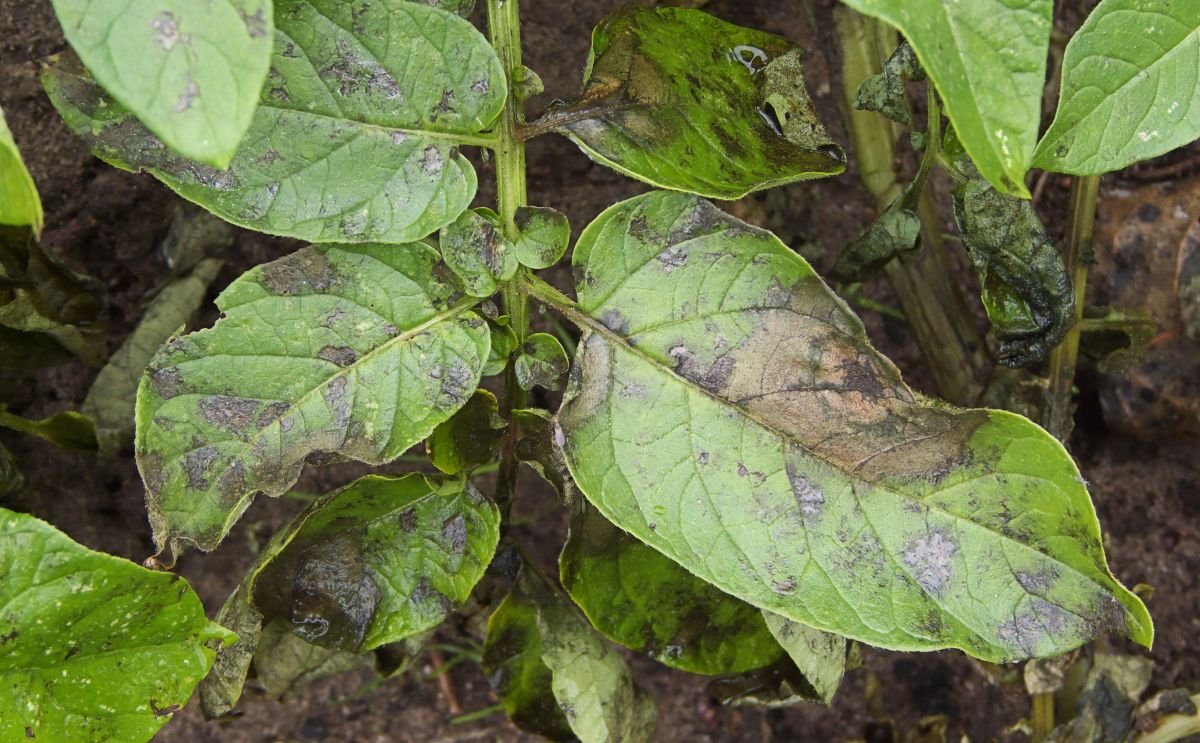
Potato is the third most important food crop in the world after rice and wheat in terms of human consumption. But potato world production is threatened by potato late blight, one of the most devastating potato diseases which causes globally 3-10 billion euros in yield loss and management costs annually. With his PhD study, WUR researcher Daniel Moñino-López made a breakthrough in fighting the disease.
With the gene editing technology CRISPR/Cas, he made potato plants resistant to late blight disease caused by Phytophthora infestans. He did so without the insertion of foreign DNA in the potato genome.
Moñino-López defended his PhD Thesis on Friday April 14 at Wageningen University & Research (WUR). His research was funded by the Dutch Research Council (NWO) and the Dutch Ministry of Infrastructure and Environment.
Faster and more precise breeding
Moñino-López used the gene editing technology CRISPR/Cas to modify non-functional resistance genes from potato varieties that are susceptible to late blight into gene variants that are found in wild potato species, which are resistant to Phytophthora infestans. Such edited plants allow a drastic reduction of pesticides to control the late blight disease.
Conventional breeding to introduce resistance genes from wild relatives of potato into new potato varieties that have sufficient quality for cultivation and use takes decades, while the disease quickly adapts. The CRISPR/Cas technology has the potential to change the food and agricultural industries by making the breeding of new, improved varieties faster and more precise. Moreover, this technology has the potential to be employed for a wide range of traits, including resistances to other diseases and pests, nutritional contents, and flavor.
Although the technology can be deployed in any crop, it is of particular interest in crops (like potato) with tedious, time-consuming breeding processes. This prevents a timely response of farmers to the occurrence of new strains of a pathogen or other environmental changes. So, editing of genes that are native to crops that already have a history of safe use, is a fast, precise and safe way to improve popular varieties and lower their environmental footprint.
Regulation of CRISPR/Cas in Europe
Following the European Farm to Fork Strategy, which aims to accelerate the transition to a sustainable food system by reducing by 50% the use of chemical pesticides by 2030, alternative strategies are crucial to control major crop diseases in agriculture. In his PhD thesis, Moñino-López advises the European Commission to regulate gene editing on a product basis, using scientific biosafety evidence of the new variety, rather than process-based regulations which are inherently ambiguous.
The regulation of gene edited crops in Europe is currently under debate. Following the ruling of the European Court of Justice in July 2018, gene edited crops are subject to the strict genetically modified organism (GMO) regulation. However, when compared to random γ-irradiation or chemical mutagenesis, which are exempted from GMO regulation, precise gene editing technology used for targeted mutagenesis ensures that the desired traits are introduced more precisely and because of the selection of specific events, without collateral damage in the genome of random mutagenesis.
The European Commission has concluded that the current legislation is not fit for purpose for targeted mutagenesis and that it needs to be adapted to scientific and technological progress. The Commission will propose a new regulation in 2023, which will be discussed by the member states.
Great Famine
Potato late blight is caused by the oomycete Phytophthora infestans. In Ireland and in mainland Europe in the mid-19th century, it led to millions of deaths. This event, known as the Great Famine, shaped the history of Ireland and many countries in the Western world. Currently, potato production relies on multiple times chemical control of the disease, presenting both heavy economic and environmental costs associated to potato production.
Source - https://www.freshplaza.com