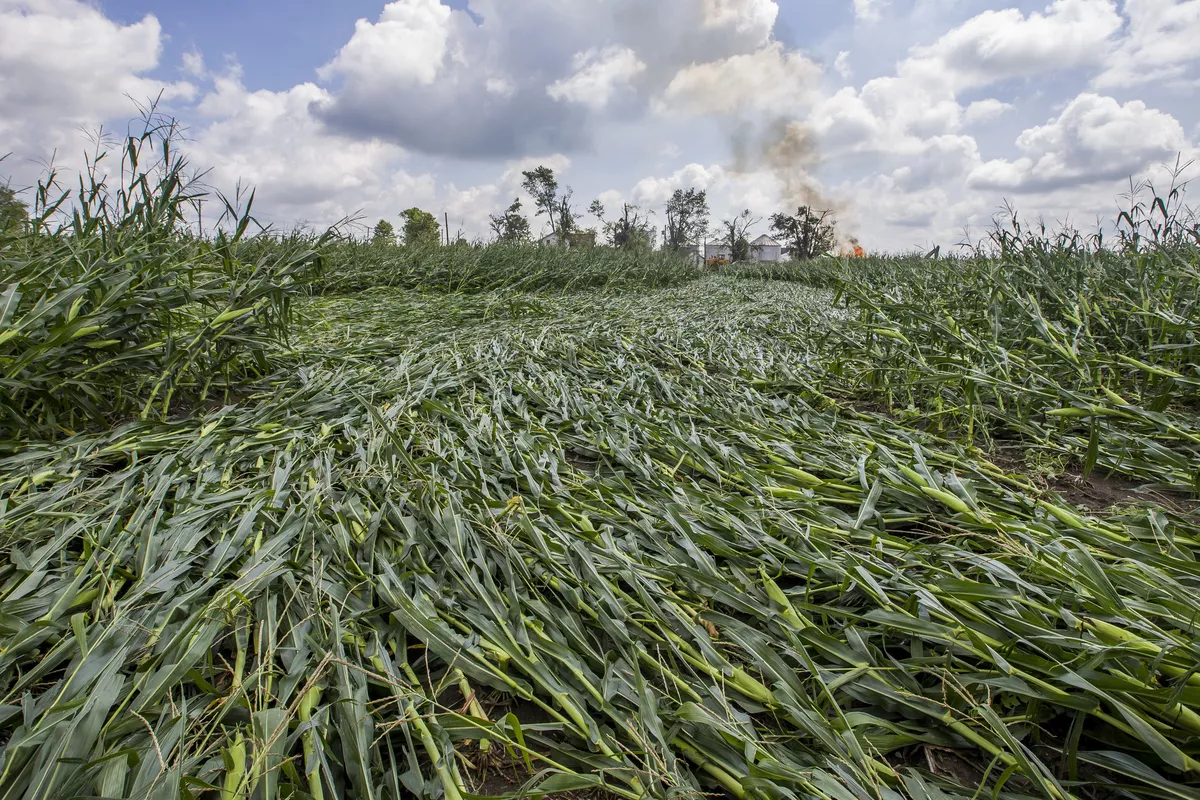
Preliminary findings of a new report show following Cyclone Gabrielle, Hawke's Bay will have ongoing economic losses that could total $3.5 billion over the next 10 years if no government support arrives immediately.
The report, carried out by Boston Consulting Group (BCG), was commissioned by Horticulture New Zealand and apple company Rockit.
The projected loss comes on top of the horticulture sector's own findings putting a $1.5b price tag on crop losses and re-establishment costs just for 2023.
The BCG report has yet to be fully released, but Rockit chair John Loughlin said post-Cyclone Gabrielle, Hawke's Bay's horticulture sector is at a fork in the road: One path leads to future growth and greater prosperity for the local economy, the other to shrinkage.
"The path that the sector will ultimately find itself on will be determined by one factor: Whether the government is willing to listen to industry and local advice to act effectively within a narrow window of time."
So far the government has pledged $78m for farmers and growers impacted by Cyclone Gabrielle.
Loughlin said with no further funding, horticultural production from the Heretaunga Plains would halve and "that drag in lost opportunity" was worth billions.
"What we are assuming is that those who remain will have suffered significant financial damage and only have the capacity to rebuild, [well] some will rebuild fully, some will leave and some will rebuild partially.
"Our estimate is about 50 percent of what has been damaged won't be able to be recovered."
Loughlin said $750m of government support was needed because orchardists, vineyard owners and vegetable producers were starting to make business decisions for next year, this autumn.
"If we lose this window [growers] won't commit to nursery plants, they won't commit to crops so stock and station firms probably won't import the volumes of seed that they otherwise would.
"If they're having to assume that, they're going to be smaller businesses. They have to make decisions on staffing sooner rather than later. Hence in the absence of clarity and assistance, people have to assume the worst and protect themselves as best they can and in doing that protect the staff that they can keep on."
Loughlin said he recognised the government had multiple areas needing support, such as roading infrastructure and re-location decisions, but horticulture's biological clock did not stop.
Gabrielle struck at the worst possible time for most growers, just prior to harvest when growers had sunk all their input costs into the crop for the year.
That put them deep in the red for this season and looking down the barrel of up to a five- to seven-year planting and restoration period before their farms and orchards were back fully earning again, Loughlin said.
He said getting the funding right was critical as any key dates missed now risked losing a full year.
"The longer you leave it the worse it becomes."
Two weeks ago, Agriculture Minister Damien O'Connor said the government was still waiting for one comprehensive report from the Hawke's Bay Recovery Agency before making any financial decisions.
He acknowledged more financial help was needed but would not be drawn on any figure.
O'Connor said he has already talked with Cyclone Recovery Minister Grant Robertson about the need to move quickly with financial support packages once the report was received.
He was aware timing for horticultural producers was important for crop establishment and tree planting.
Source - https://www.odt.co.nz