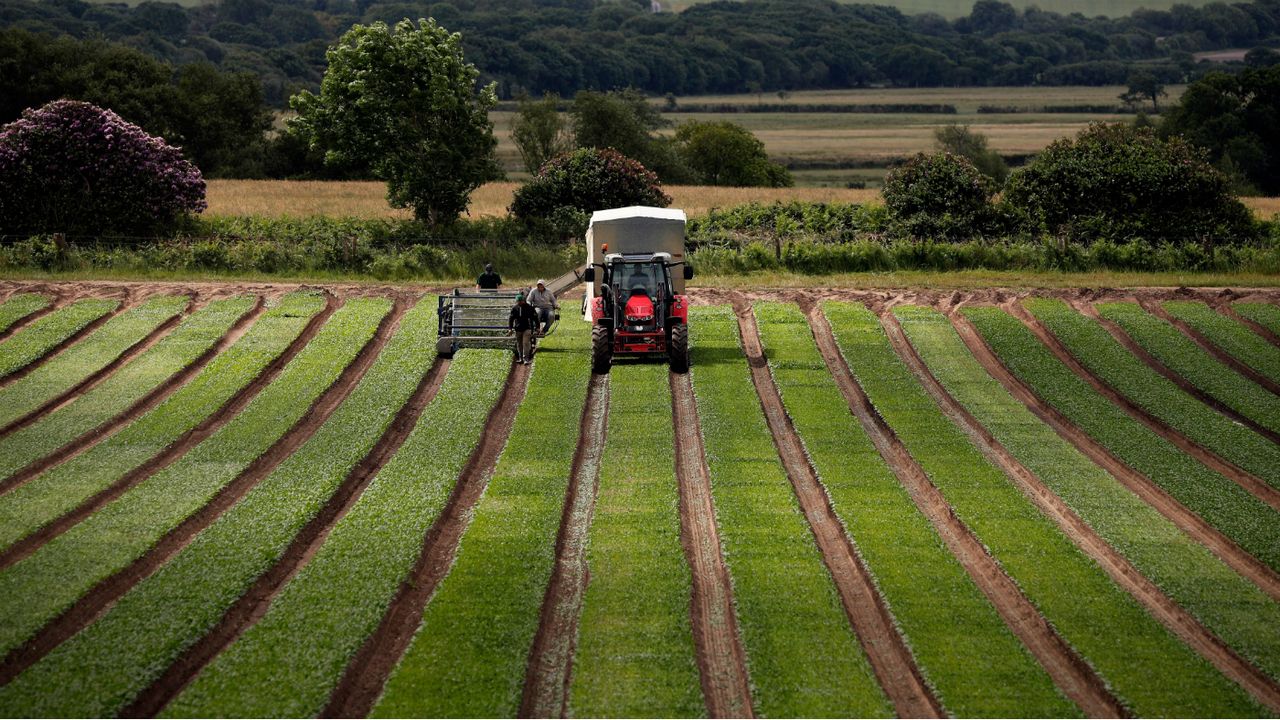
Wheat farmers in Katsina State have expressed concern over the weather swing experienced in the last two weeks as the crop prefers cold all through its production stages.
Wheat farming in the state is fast gaining ground courtesy of CBN’s intervention last year and the crisis rocking the Russia/Ukraine axis that put pressure on the produce’ supply globally.
Our correspondent who visited some farms reports that the farmers are concerned that the changing weather may spell doom to their productivity this year if it remains as it is.
Usman Musa Mairuwa, a wheat farmer in Faskari LGA, said most farmers tried taking off early this year so that the production stages of the crop would be covered in the cold season for optimum yield.
He said, “Despite challenges in sourcing the right seeds and high cost of inputs, farmers this year took off from the month of October and November so that the crop will enjoy the cold season of November, December, January and February, but to our surprise the weather completely changed to hot season in the last two weeks; a situation that has a serious effect on the crop.”
Mairuwa added that they were apprehensive, especially that they had no control of the situation.
Another wheat farmer, Murtala Suleiman, said the crop was seriously affected by hot weather, especially at its panicle and milk stages.
He said, “A week of hot temperature can seriously cause yield loss, especially at heading, panicle and milk stages. The best a farmer can do is to plant early as we did and also imbibe mixed cropping with cabbage, lettuce or onion to mitigate chances of loss in case of weather swing.”
He added that though the situation was gradually reverting to normalcy, there was fear among the farmers of possible yield loss this year.
He further said, “In the last two days the wind’s direction has changed and we began to have cold in the morning and evening; but two weeks ago our temperature here was reaching up to 37°C.”
An irrigation farmer and expert in wheat production, Iliyasu Umar Farouk, said farmers needed to be acquainted with the seasonal weather forecast by the National Meteorological Centre so that they could make the best choice of the crop to be planted and when.
He said, “At its heading and filling stages, wheat requires a temperature of 12°C to 22°C for optimum yield; anything above 25°C is detrimental to the crop, and at 31°C chances of losing 50 per cent of the yield is very high. To mitigate this situation, we should learn to plan our irrigation farming according to the seasonal weather forecast by the National Meteorological Centre.”
Farouk called on farmers not to relent; that they should adequately water their crops and at average intervals make the farms’ temperature bearable to the wheat.
He noted that, “A hot temperature of 30°C and above, plus long intervals of watering, would put wheat plants in much stress leading to wanton yield loss.“
Source - https://dailytrust.com