Pacific North West farmers having to protect crops from extreme heat

07.12.2022 766 views

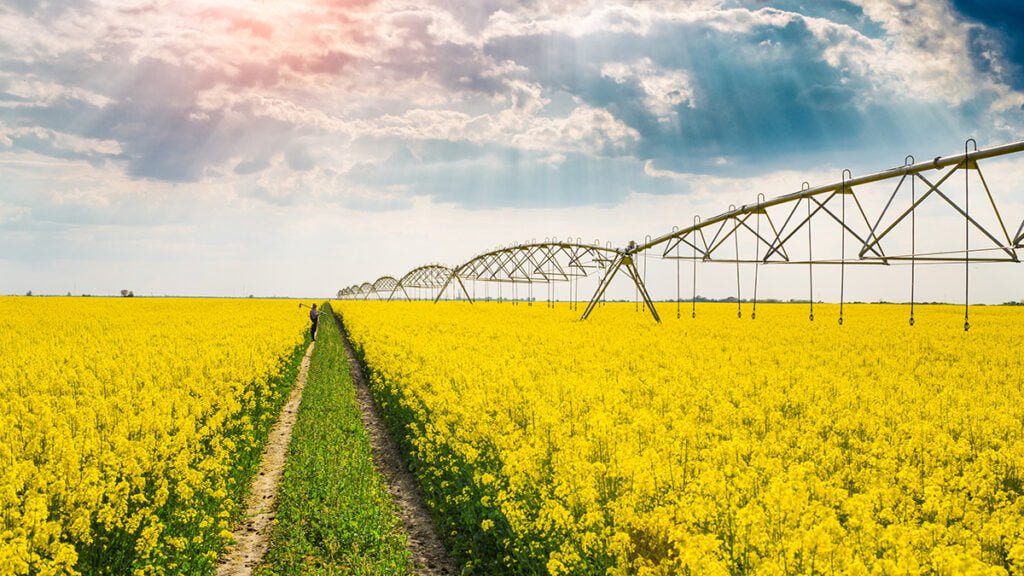
Hotter temperatures are changing the agricultural landscape in the Pacific Northwest, especially for tree fruit growers.

More and more people are covering their crops with shade netting or some other type of material, and then they’re looking at misters, which are like foggers that help create a cooler atmosphere in the orchards, sometimes a combination of both, said one farmer.

The farmer installed evaporative cooling at about 90 percent of his sites, covering about 30 percent of his crops. He also uses calcium and kaolin clay sprays, which physically cover fruit to protect it. In his experience, mitigations lead to about 20 percent to 30 percent less damage.

Washington leads the nation in producing apples and sweet cherries, but it’s not just tree fruit crops under threat in the region. A large portion of the country’s processed berries are grown in the Pacific Northwest, as are much of the nation’s potatoes. During the deadly heat wave of 2021, researchers found that berries dried up on the vines and potato plant leaves were scorched and curled inward, an indicator of heat stress that can impact quality.

As growers work to preserve crops in hotter temperatures, regulators have also been working to ensure workers are protected as well. Farmworkers have long lacked protections from dangerous condition caused by the climate crisis, leading Oregon to pass heat and smoke regulations. Advocates in Florida have pushed for safeguards, and Washington passed smoke and heat regulations after the 2021 event.

Climate data continues to show a trend of warmer temperatures across the U.S., with growing impacts in the historically mild Northwest. Summer 2022 in the contiguous U.S. was the third-hottest recorded in 128 years, t he National Oceanic and Atmospheric Administration (NOAA) reports, with an average 2.5 degrees Fahrenheit above average. Idaho, Washington, and Oregon each had the warmest August on record. Data from Climate Central’s Climate Shift Index tool, which measures the fingerprint of climate change in daily weather, found most of the Northwest experienced 15-30 days of daytime high temps that were made at least twice as likely by climate change.

Source - https://www.freshplaza.com

27.01.2026

New Zealand growers report limited crop damage but logistics disruption

Early reports indicate that most growers in New Zealand came through the recent heavy rain and flooding with limited impacts, according to Horticulture New Zealand chief executive Kate Scott. While the weather created operational challenges, there have been no widespread crop losses or major damage to orchard infrastructure reported so far.

27.01.2026

USA - Row crop farmers continue to face financial stress amid federal payments

As the U.S. Department of Agriculture prepares to give $11 billion to farmers across the U.S., row crop producers are continuing to see a yet another year of financial strain.

27.01.2026

FAO Boosts Food Security in Haiti and the Dominican Republic with Emergency Agriculture Support

A high-level mission from the Food and Agriculture Organization of the United Nations (FAO) to Haiti and the Dominican Republic highlighted the critical need for coordinated action to address food security across the Caribbean. 

27.01.2026

US$9,4m drive to climate-proof Zimbabwe agriculture launched

Zimbabwe is taking bold steps to safeguard its agriculture against climate shocks with the launch of the US$9,4 million Resilient Agriculture Cluster Project (RACP), a pioneering initiative supported by the African Development Bank (AfDB) and IFAD.

27.01.2026

Kenyan Small-Scale Farmers Gain Crop Insurance Amid Climate Shocks

In Kenya, crop production is gradually shifting from a struggle for survival to a pathway for economic opportunity. For many years, farmers have faced unpredictable weather, fragile soils, limited drying options, and uncertainty about where their harvest would be sold.

27.01.2026

USA - Winter storm takes a toll on agriculture in the South

Freezing temperatures and ice of the past weekend have impacted industries from timber to sugar cane, crawfish to cattle. 

26.01.2026

EU streamlines farm rules, promising €215m savings for agriculture

The European Commission has adopted nine new legal acts to cut administrative requirements under the EU’s Common Agricultural Policy (CAP), including changes it said could save farmers across the bloc up to €215 million a year.

26.01.2026

Uzbekistan, Canada Discuss Joint Agricultural Research

Uzbek Minister of Agriculture Ibrokhim Abdurakhmonov has held a working meeting with Ben Bradshaw, Assistant Vice-President for International Cooperation at the University of Guelph (Canada), to discuss prospects for joint scientific research.