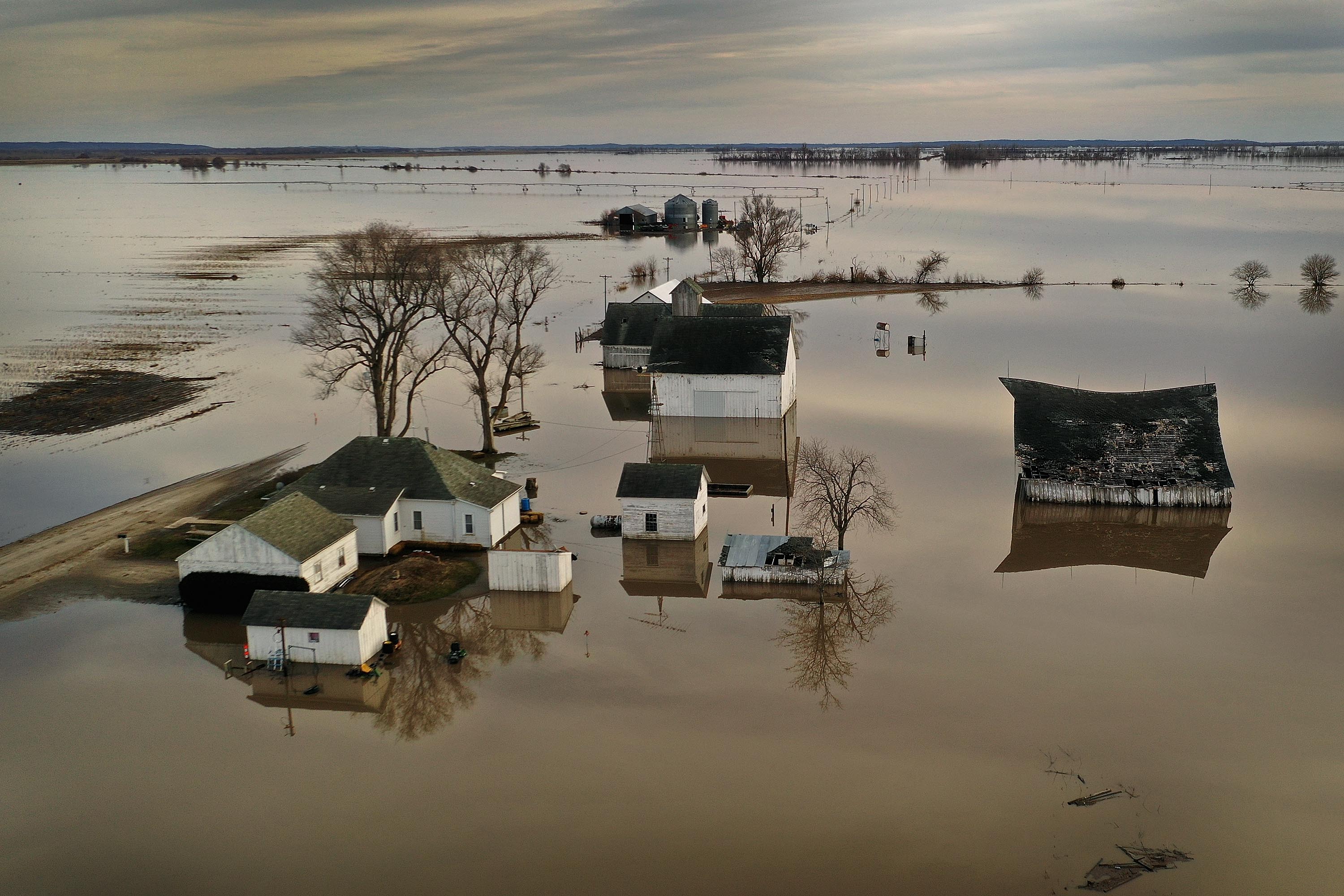
On a gloomy August night, rural Pakistani residents in Khairpur shelter in their home, praying for the two-month continuous rain to come to an end. Yet, the night holds a chilling turn of events. One farmer, Zahid Al-Jalalini, describes an instant water level rise of 10 meters submerging houses and drowning residents. Al-Jalaini races through the dark to help residents climb out of their caved-in roofs and escape drowning in their homes.
For Aziz Kingrani, a farmer in Dadu City, homelessness wasn’t the only fear brought on by the massive floods. A destruction of crops worth more than $18 million in rupees means Kingrani won’t be able to feed his extended family of 18. His son, who was pursuing a college education away from home, has been forced to return in order to help his family make ends meet. Another rice farmer, Abdul Bashir Jatoi, faces a loss of $2 million rupees, and says he can only turn to God for help now.
Kingrani and Bashir are among millions in Pakistan’s Sindh province who have lost everything they had to these apocalyptic floods. Pakistan is facing its worst humanitarian crisis in over a decade due to climate change. The lingering water bodies that resemble small oceans hinder reconstruction and a return to normal life. Villagers now reside in refugee camps on little sustenance and are too afraid to return to their annihilated home areas. Floods are affecting 33 million of the country’s 220 million residents. Thousands have died, and hundreds of thousands have become climate refugees, displaced in dire need of humanitarian aid.
In the months following the catastrophic floods, Pakistan still faces the threat of disease and widespread hunger. Vast bodies of stagnant water are perfect breeding grounds for waterborne illnesses. The floods hitting the heart of Pakistan’s agriculture cause looming threats of severe food shortages: Up to 90% of available crop yields have been destroyed, with an estimate of four million hectares of farmland having been decimated by the disaster.
Ravaged by an incalculable amount of property and farmland destruction, Pakistan now faces a severe economic downturn. Agriculture makes up a significant portion of Pakistan’s GDP, yet Punjab and Sindh (two major agriculture sectors) were the hardest hit, causing a disastrous loss in crop yields. Another significant portion of GDP is the textile industry, which unfortunately relies on the agricultural sector to produce cotton and has consequently been hard hit.
These catastrophic floods weren’t just bouts of poor weather: Rather, they resulted from an unprecedented surge in rainfall exacerbated by melting glaciers in Northern Pakistan, both of which are results of human-induced climate change. The rainfalls weren’t the only climate disaster to hit Pakistan. The previous summer brought record high heat, making some regions simply “uninhabitable” while causing a massive drought. From water scarcity to torrential deluge in a matter of months, Pakistan is facing the extremes of climate change.
While it may seem as if nature is waging a war on Pakistan, victims can place some blame on the developed world for this devastating battle. Pakistan, home to millions, contributes only less than one percent of total global carbon emissions, which pales in comparison to the U.S. and China, responsible for 14% and 29% of emissions, respectively. The U.S. and China aren’t the only culprits: Other developed countries have greatly exceeded their per-capita carbon emissions with huge corporations making up a sizable share.
The meaning of this inequality is far more disturbing: The countries with the lowest carbon emissions often fare worse economically, facing the full brunt of climate change. Pakistan and other developing countries, such as Afghanistan and Bangladesh, are among the most vulnerable to climate change since they have suffered the worst fatalities and GDP loss from climate-related incidents in recent decades; they are expected to face more disaster in the future. In coming years, these countries will be subject to upcoming large-scale submergence of land, lethal heat waves, and intense floods while millions more will face displacement and serious danger. To make matters worse, polluting countries of the developed world do not have to compensate adequately for their despicable contribution to climate-induced disaster in vulnerable countries — the epitome of climate injustice.
China, the U.N., and the U.S. have offered some relief to victims, but Pakistani officials cite the assistance as a “drop in the ocean.” With damages estimated to be over $40 billion dollars, and millions of Pakistanis expected to fall into poverty, the meager millions offered by these nations is evidently inadequate. The relief pledged by the U.N. promises to assist 5 million people out of the 33 million affected in total. This falls short of providing significant aid in its best case scenario. Holding polluting countries liable for the destruction their emissions have caused is an important step in achieving climate justice — this would entail a lot more compensation for Pakistani victims.
Moreover, Pakistan requires climate adaptation solutions beyond financial aid, especially given the political corruption and lack of proper infrastructure that have hindered Pakistan’s flood response efforts. It is increasingly clear that Pakistan and other vulnerable nations must invest in innovative protective systems as climate change intensifies. Annual climate adaptation costs are estimated to sit at $30 billion by 2030 for developing nations, yet little to none of this money is coming from the U.N. or polluting nations. If climate mitigation targets are breached by polluting countries, as they may be on track to do so, climate adaptation costs could soar to $500 billion — many developing countries will be unable to adapt. Pakistan is among the first recipients of the “Global Shield,” a COP27 initiative that develops an insurance program for countries most vulnerable to climate change effects. Yet, some are worried this program is a tactic to sidestep “loss and damage” grants, which are full payments from polluting countries to vulnerable, developing ones.
Reparations and investment in adaptation by polluting countries aren’t enough to remedy the climate injustice developing countries face: Mitigation measures are another important step. If carbon emissions continue to rise, climate change will have increasingly devastating effects. Many countries have made pledges to reduce emissions, yet they are missing effective, promising policies. Formalized plans to slash emissions by 50% by 2030 in the U.S. are lacking significant progress, largely due to resistance to change within. It’s also important for developed countries to invest in renewable energy and make it a cheaper option for developing countries. This is an effective way to slash emissions and encourage growth among developing countries. Demanding progress on climate mitigation and investment into renewable energy is an important way to hold countries accountable.
In light of the recent Pakistan floods, it’s clear that developing countries face disproportionate impacts of climate change, and very little is being done about it. While Pakistan and other developing countries are trying to grow and achieve stability, they now face natural disasters that seriously damage their progress. These disasters destroy the developing economy, kill thousands, and displace hundreds of thousands. Developed, high-polluting countries, although responsible for almost all carbon emissions, are giving only nominal values of aid to victimized countries, thus bearing almost no responsibilities for their actions.
In order to mitigate the unfair consequences of climate change faced by low-emitting, vulnerable countries, the U.S., China, and other high-polluting countries must take responsibility for their actions by paying meaningful reparations to countries ravaged by climate disasters, including adequate funds for substantial relief, adaptation investment and migration measures. They must also take rigorous action to mitigate emissions while investing significantly in renewable energy. It’s time to hold polluting countries accountable and demand climate justice for developing nations.
Source - https://harvardpolitics.com