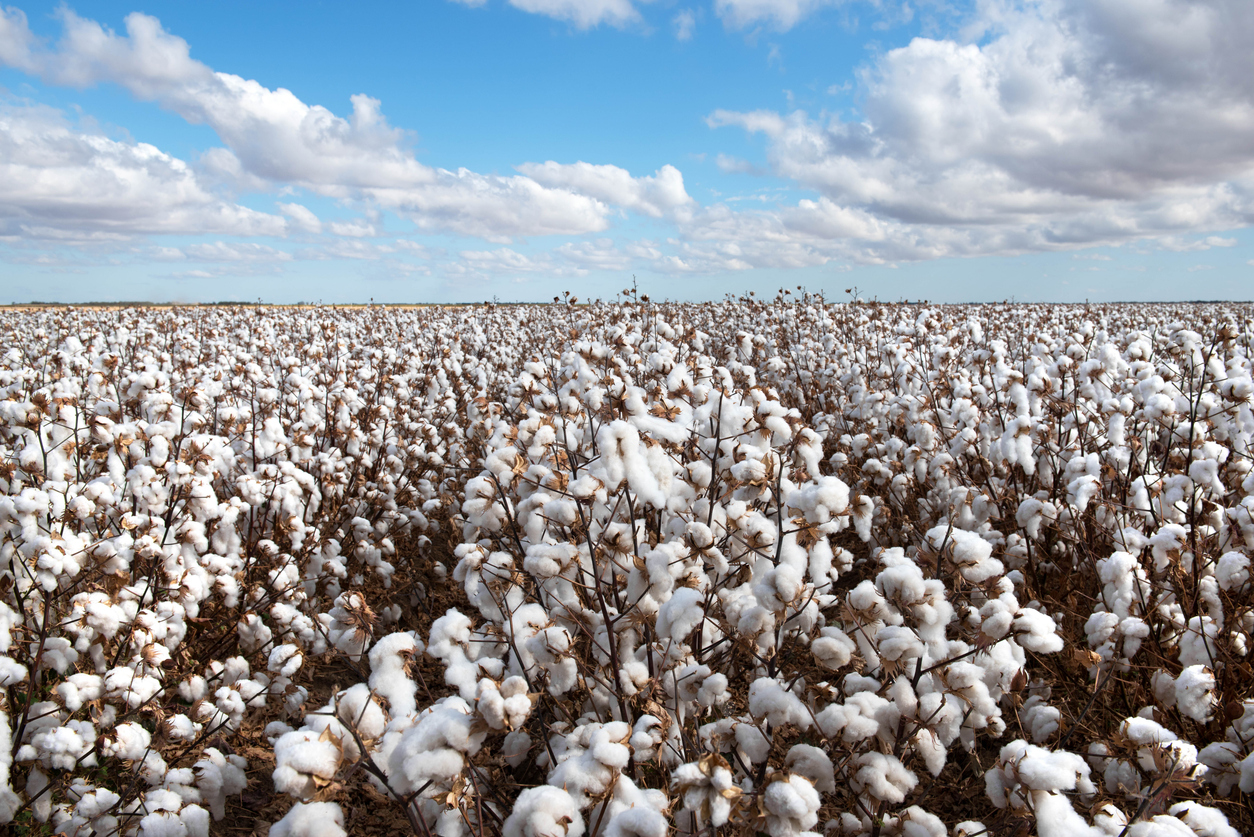
The post-flood assessment of damage to standing kharif crops spells doom for the Pakistan’s cotton value chain. Several estimates place the extent of damage to anywhere between 50 – 70 percent, enough to bring the spinning industry to a grinding halt. Is the exporting industry at the verge of declaring fibre emergency?
Not so fast. Despite frightening forecasts of damage to crop, world prices are yet to respond to the reduced output forecast from Pakistan. Even though USDA places Pakistan’s share in global production at nearly five percent, cotton prices during August 2022 averaged lowest since the beginning of calendar year. In fact, the halting upward movement in cotton prices during mid-August followed the release of monthly WASDE report, which significantly lowered forecast of US output due to droughts in major producing regions in that country. If the cotton crop of world’s fifth largest producer (Pakistan) has really been decimated, why have world prices failed to respond?
There may be no clear-cut answers yet. Obviously, prices owe their movement both to supply- and demand forces, and the recessionary sentiments in the global apparel market seem to be restraining wayward behavior. However, crop damage assessments appear to picture the worst case scenario, which given the slow pace of relief and rehabilitation efforts, cannot be written off altogether.
What’s not contested, however, is the severity of damage to standing crop in Balochistan and Sindh. Although the former region is an up-and-coming player in cotton production – scoring remarkable yields in recent years – fortunately, the sown area in the province makes only a fraction of national production (under two percent). On the other hand, cotton output from Sindh contributes as much as one-third of national production. If the worst comes true, the damage in Sindh alone could set back national production by as much as two million bales (of 170kg).

Will that happen? Two factors will determine the performance of crop in Sindh. First, crop yield in Sindh exceeds national average by as much as 25 percent. Even if some or most of the sown area is salvaged, it is hard to imagine a scenario where yield would not have been adversely affected due to standing water. Second, all six districts on the right bank of Indus – namely, Ghotki, Khairpur, Nawabshah, Matiari, Sanghar, and Mirpurkhas – responsible for as much as 70 percent of Sindh’s cotton production (as well as high yield) have been declared calamity hit by the PDMA. That means as much as 1.5 million bales of cotton may be at risk, with little hope of timely rescue.
Does that mean most of Sindh’s planted crop will be abandoned? There may be some hope here. Sector watchers will note that cotton picking in lower Sindh begins as early as July, with as much as one-third of provincial output received by August end. As per Pakistan Cotton Ginners’ Association, cotton arrivals in Sindh by month end were only one-third less than last year. Ergo, even if half of the yet-to-arrive crop in Sindh is lost to floods, that would mean loss of no more than 1.5 million bales from the province. For context, that’s nearly 20 percent of forecast national production of 8.5 million bales. Terrible? Yes, but not nearly as catastrophic as the worst-case scenarios painted in the press so far.
The impact of Sindh’s lost crop shall fortunately be lower because planted acres in the province were already lower by 20 percent compared to last year. In fact, earlier forecasts of increased national cotton production pinned all hopes on increased acres in Punjab, where hefty profits last year finally helped bring farmers back to fiber crop. Fortunately, the damage to sown area in Punjab’s cotton acres has been limited, already reflected in the spectacular rise in cotton arrivals in the province so far – by 30 percent – as per PCGA.
Of course, it is too early to issue statements with certitude, but the extent of damage to crop at national level thus far appears to be no more than one-third of expected output. That has already thrown a spanner in the works viz. demand for imported cotton, but cotton crop performance may be no worse than 2020 kharif season. The real catastrophe, in fact is humanitarian, as local cotton farmers alone may have suffered loss of nearly $1 billion in abandoned acres. Instead of looking ways to bail out the spinning industry, state must continue to focus all its efforts on ensuring rescue and rehabilitation of those who have not only lost their livelihood, but are also battling for their lives.
Source - https://www.brecorder.com