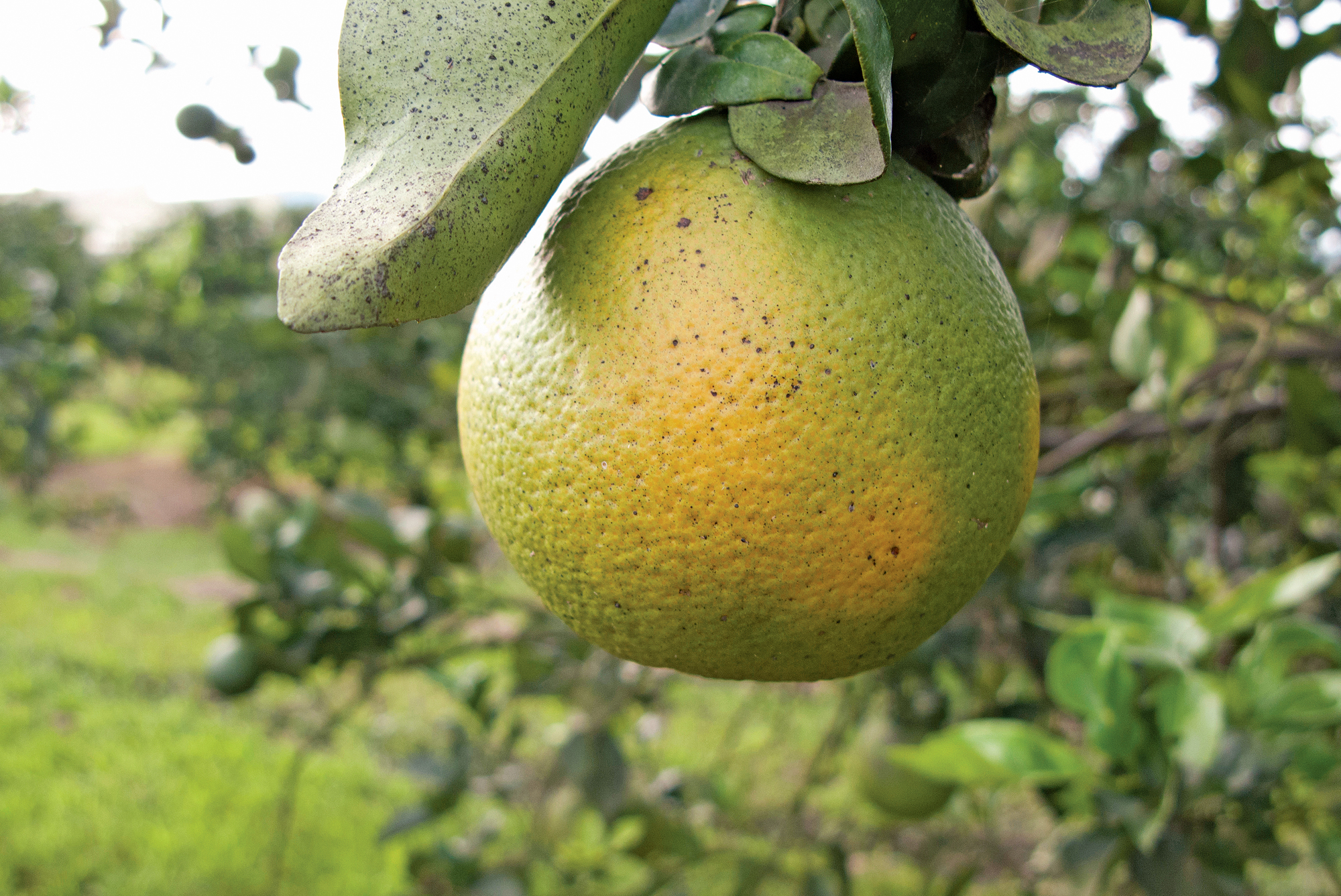
The HLB vector was first detected in the Portuguese citrus region of the Algarve, Aljezur, in October 2021. A year later, the Trioza erytreaehas colonized about 200 kilometers of the southernmost Atlantic coast of Portugal and is already less than 120 km away from the first plantations of Huelva, in Ayamonte. Since it was detected in Porto in 2015, the dreaded psyllid has expanded without interruption all over the coast of the neighboring country and it has also colonized part of Galicia, Cantabria, Asturias, and the Basque Country.
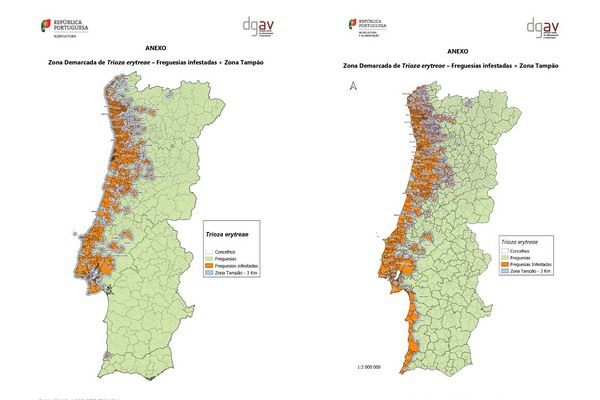
Areas infested with Trioza erytreae on October 1, 2021, and October 14, 2022, according to the Direcçâo Geral de Alimentaçâo e Veterinària de Portugal
In addition, authorities in Israel confirmed in January the presence of the other vector of this disease, Diaphorina citri -which has a greater capacity to adapt to Mediterranean climates and which transmits the Asian strain (which is more aggressive) and the African strain - in their country; something that could put at risk the future of Spanish citriculture in the medium-term, stated Inmaculada Sanfeliu, the president of the Citrus Management Committee (CGC).
The fight against this vector that spreads the disease in Israel, Florida, and Brazil is based on the constant use of phytosanitary treatments with products that, for the most part, are banned in the EU and that at least serve to mitigate or slow down the damage caused byCandidatus Liberibacter asiaticus.
According to a study prepared by the CGC itself, which extrapolated data on the progression of this disease in Florida, Spanish citrus farming would be reduced by half in 7 years and could disappear in less than 15 years if the HLB bacteria arrives in the country. That's why the association insists on the need for the EC to strengthen border controls to the extreme and calls for an urgent review of the Community strategy on synthetic products. "Biological control, as evidenced by the results obtained by the Tamarixia dryi parasitoid in the Canary Islands or Galicia, works and obtains results against the Trioza but, as the situation in Portugal demonstrates, it is not enough. We need to have all tools available at our disposal to face the worst disease,” Sanfeliu remarks.
The CGC has well-founded hopes in the line of investigation opened at IVIA. The Moncada Center works hand in hand with the Institute of Molecular and Cell Biology of Plants in obtaining peptides with antibacterial activity for the control of HLB; in the genetic improvement of citrus varieties with resistance to Candidatus Liberibacter asiaticusand in the edition of citrus protoplasts by CRISPR/Cas-9.
Source - https://www.freshplaza.com