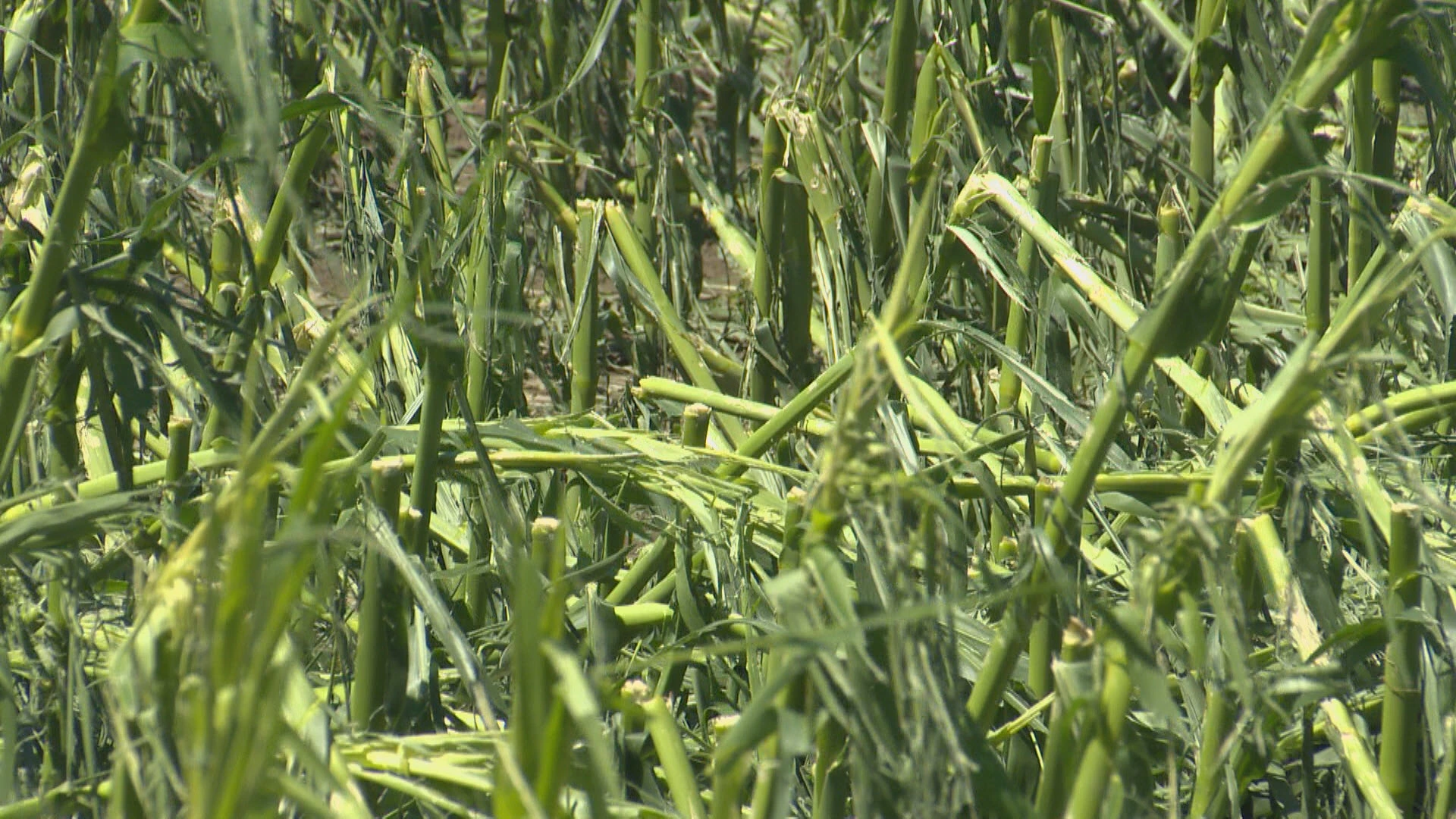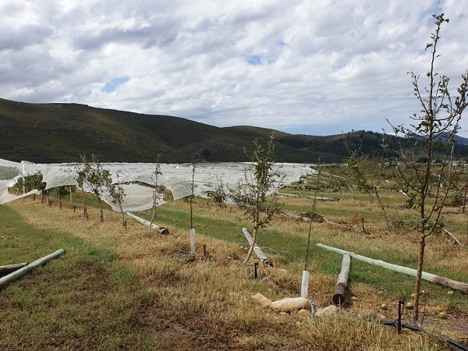
This weekend the Langkloof, straddling the Eastern and Western Cape, had hail for the third time this summer over an area extending through almost the entire valley from Avontuur and Uniondale in the west to Joubertina and Krakeel, with perhaps most damage around Misgund.
The topfruit harvest is around a third of the way through in the Langkloof.
“We were meant to start harvesting Forelles today but the crop has been wiped out,” says Langkloof farmer Marius van der Westhuizen who is Hortgro’s representative to the area.
Yesterday heavy rain was still falling and farmers couldn’t enter orchards to determine the extent of the damage. Hortgro’s board will meet next week to discuss the impact of the hail, but it will be significant, Marius says, and exacerbated by the fact that juice factories are already oversupplied with fruit.
In the Eastern and Western Cape, juice factories have introduced quotas limiting intakes or only accepting volumes again a few weeks hence.
Juice factories already inundated with apples and pears
“There is an enormous bottleneck at juice factories where there’s a tremendous over-accumulation of fruit at the moment. In the past you’d simply deliver your hail-damaged fruit to a juice factory and then you didn’t have a complete loss, but at the moment juice factories are inundated with product."
He continues: "During some weeks juice factories have already been receiving 200% more fruit than ever before and there are queues of trucks stretching back for kilometres, waiting to offload more fruit at the juice factories.”
Juice factories are an outlet for the products that have become price-marginal. Marius notes that at the juice factory in the Langkloof supply was over 3,000 crates per day, which can be expected to increase after the hail.
Apart from inflation on other aspects like packaging and electricity (ironically rising by 19% this year), plus the annual increase in the minimum wage, massive diesel expenditure has become a new cost item for packhouses and cold stores.
Farmers are now faced with a difficult decision: if the fruit not irrevocably damaged by hail cannot be delivered to a juice factory as before, is it then worthwhile to store that fruit together with Class 1 fruit in a Controlled Atmosphere room until later this year when the juice factory might accept it? Storage costs are rendered even more expensive by the fact that for many hours of the day, diesel generators are needed to maintain the cold chain.
“And moreover, you’re in fact ‘stealing’ space in the CA room that you would otherwise have been allocating for export product, just to try and avoid a complete loss – but with no guarantee of success.”
Marius remarks that it is out of the question that the situation at the juice factories can normalize within the coming two or three months.
“That’s why I’m saying that the fruit industry in the Eastern Cape is experiencing a perfect storm. All of these factors are working against producers and it’s placing a big question mark over the profitability of apple and pear producers this season.”
Sending fruit to the municipal markets introduces another element of risk as some markets are battling with cooling amid the relentless power cuts and cash-strapped municipalities’ inability to supply markets with diesel, amid South Africa’s many social needs.
“From absolutely all corners we are assailed with challenges and growers are faced with almost impossible decisions. One can’t sugarcoat the reality.”
He observes that growers learn to pick up the pieces as quickly as they can.
“That’s what producers are busy with today – adjusting their cooling and their marketing plans because this has an impact ranging far along the value chain. That is where organisations like Hortgro and the rest of organized agriculture play such a valuable role, in helping farmers move through these setbacks together.”
Source - https://www.freshplaza.com