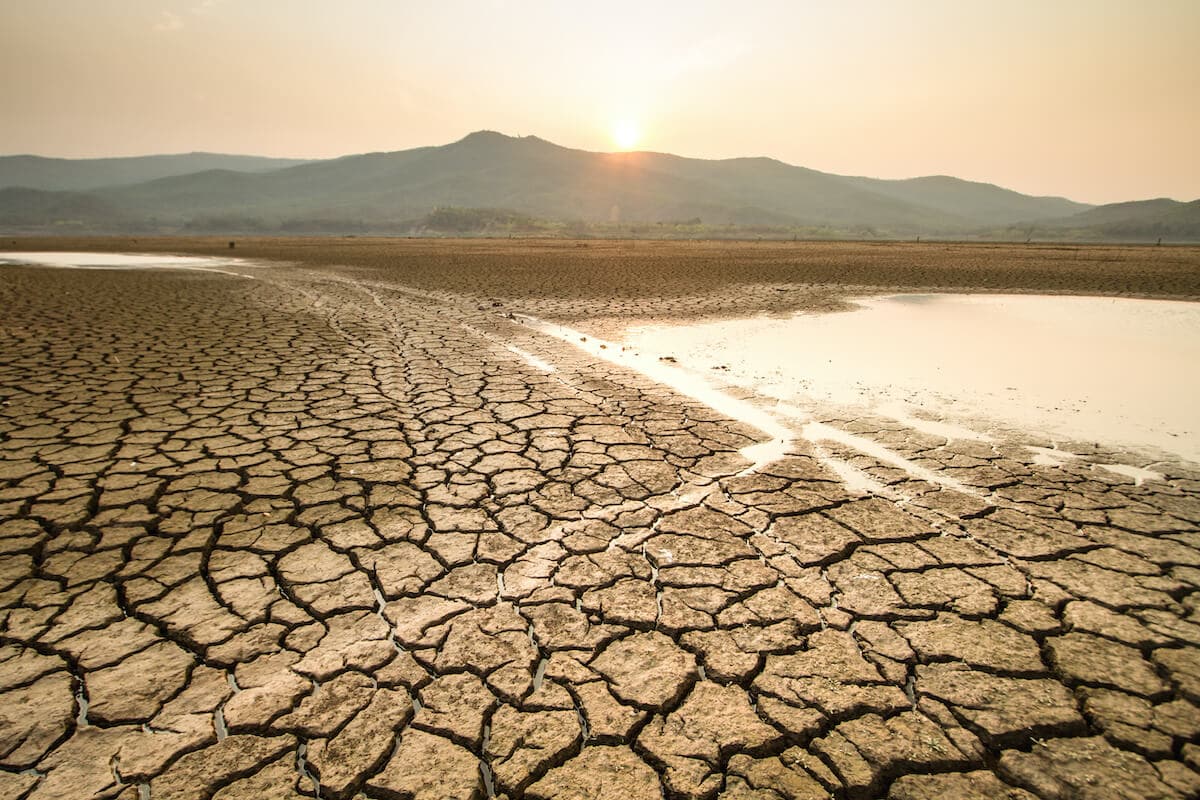
Despite modest rainfall every now and then, the Gamtoos Valley’s drought is, alas, still with farmers who have now experienced six years of water restrictions. Over that period citrus and vegetable farmers have had to make do with 40% and then 20% of their usual water allocation. It is expected that the new water year, which starts in June, could continue in the same vein.
Khaya Katoo grows citrus on Threepence Farm between Hankey and Patensie, where he has lost up to 80% on a block of Satsumas this year.
“I’ve lost quite a lot of my crop this year and it’s worse than last year. It is as a result of the drought and the inadequate irrigation. It could also be because it is an off season, but the orchard has been giving me good yields over the past five years.”
He remarks that he has had to cut down some of his bigger citrus trees to rather irrigate young ones with the smaller amount of water available to him, and as a result most of the trees on his farm are young trees.
“It’s actually the older trees that are suffering. The Satsuma orchards are old: planted in 1989 and the Novas were planted in 1990.”
Khaya reckons they’re looking at a drop of 50% on Novas. The drop on late mandarins appears less than on the early soft citrus cultivars, maybe 20% or so, he says.
Other citrus growers in the area concur with an expected drop of around 20%, with sizing also affected.
“This year it’s been so frustrating,” Khaya says. “I think the drought and the water restrictions are finally catching up with orchards. Now it’s showing us its true colours.”
“Serious millimetres” needed to lift Kouga Dam levels
Usually, farmers receive 8,000 cubic metres per hectare for a year from the Kouga Dam, but for the past two years that has been cut by 80%.
The Kouga Dam, which is fed by overflow from the western side of the Langkloof, stands at 14.7%, one percentage point higher than last year. Restrictions will only be lifted when dam levels are above 65%; in 2018 the dam was briefly 55% full before dwindling to the low level where it has been hovering for a few years.
Rienette Colesky of the Gamtoos Irrigation Board notes that the Kouga Dam last overflowed in 2015; Khaya confirms that the last substantial rains fell seven years ago.
Rienette explains that the water allocation calculated for agricultural users depends on the availability of water not only from the Kouga Dam, but on the western side of the Nelson Mandela Municipality, which includes Port Elizabeth, also the Churchill and Impofu dams in the Kromrivier which are at even lower levels and receive almost no intake anymore.
To the east of Port Elizabeth water is drawn from the Metro’s quota from the large Gariep Dam, which is full, but which supplies a large population across two provinces and therefore can’t address the water shortages in the Gamtoos Valley.
Water is causing a crisis in this part of South Africa, she says.
The Langkloof, where the apple harvest is in full swing while pears have been harvested, is the Gamtoos Valley’s catchment area. The area experienced drought for six years, starting there already before it was felt by the farmers around Hankey and Patensie, until it was relieved in 2021.
At the moment the Langkloof's water availability has recovered and farm dams are in a good position.
Should the area receive good winter rainfall over the coming months, the table is lain for good excess runoff which will fill up the Kouga Dam – but “serious millimetres” are needed for that, notes Marius van der Westhuizen, Hortgro’s representative in the Langkloof, like the rain event of 2018 when 200mm fell over a day in the Langkloof.
Source - https://www.freshplaza.com