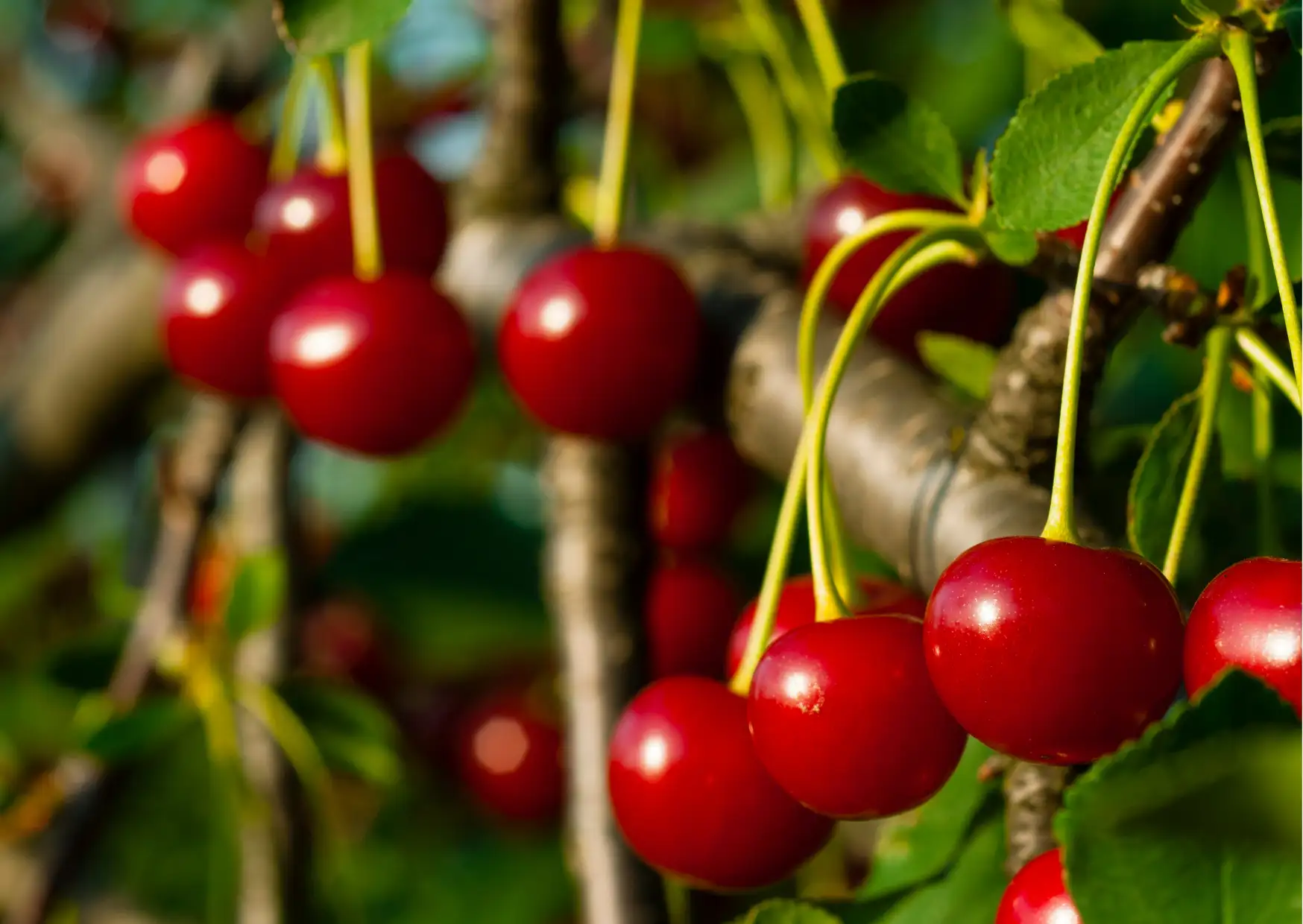
The South African cherry season has started a full month earlier than usual at Dutoit Europe, the Dutch import arm of South Africa's Dutoit Group. "It's a challenging season. A mild winter followed by heat waves has resulted in a 50% smaller crop. On top of that, we're now in peak volumes, while demand in Europe traditionally doesn't pick up until December," says Annamijn de Jong.
With 300 hectares, Dutoit is the largest cherry grower in South Africa. Half of its volume is sold on the local market, including through its own store, Cherry Time in Ceres, where cherries are very popular during the South African summer. A large share of the exports goes to the UK, where smaller sizes in particular find a ready market. Some volume is shipped to the Middle East, and the rest goes to Rotterdam.
"We export our cherries throughout Europe, but Germany is traditionally our biggest market. That's mainly because our cherries meet German retail standards on MRLs, which is often not the case for Chilean cherries," Annamijn explains. She has seen demand for South African cherries in Europe grow over the years. "But the emphasis is on December sales. After Christmas, demand often drops quickly."
Last arrivals at the end of December
The early start also means an early end to the season. "Normally we can still ship throughout January, but that won't work this year. We expect the last arrivals at the end of December," Annamijn says. "Sea freight normally arrives just before Christmas, but this year we decided to focus entirely on air freight. Prices are currently above 15 euros per kilo, but they will ease somewhat once cherries from Chile and Argentina arrive. Retail prices are fairly steady at around 10-11 euros."
The early season has made for a busy packing station in Ridderkerk, the Netherlands. "We received 800 tons of cherries in one week," the importer says. The company offers cherries in a range of packaging, including punnets, 500-gram bags and 2-kilo loose packs. "But the trend is increasingly toward clamshells," Annamijn says. The cherries are partly packed in Ceres and partly in the Netherlands, as small packs would otherwise slow down the packing process in South Africa. "Packing here is still mostly done by hand, but our goal is to keep growing in volume, and then we also want to pack retail orders by machine."
In South Africa, Dutoit grows Zaiger cherry varieties. According to Annamijn, preferences traditionally differ by country. "The UK mainly takes small cherries. In Southern Europe, buyers look more at dark color and size, while German retail is mainly looking for a red cherry." She notes that cherries never behave as expected. "That means we often have to switch gears quickly, but that's also part of the charm of cherries."
Stone fruit
Alongside cherries, Dutoit also grows stone fruit in South Africa. "We have a 25% share in nectarine production. We're particularly strong in the late season, which runs from January to March," Annamijn says. Dutoit also grows plums in South Africa, though on a smaller scale than nectarines.
She has some concerns about how the coming nectarine season will unfold. "A lot of nectarines have been planted in South Africa, but also in Chile for the Asian market. South Africa currently can't ship to the Middle East because of the war, and Asia is not very stable at the moment either. We therefore expect a large supply in Europe and the UK this year, because volumes that would otherwise go to the Middle East and China will come here instead. South Africa has been able to export nectarines to China since last season, but that requires a cold treatment, and nectarines don't tolerate it well. For plums, it's easier."
Source - https://www.freshplaza.com