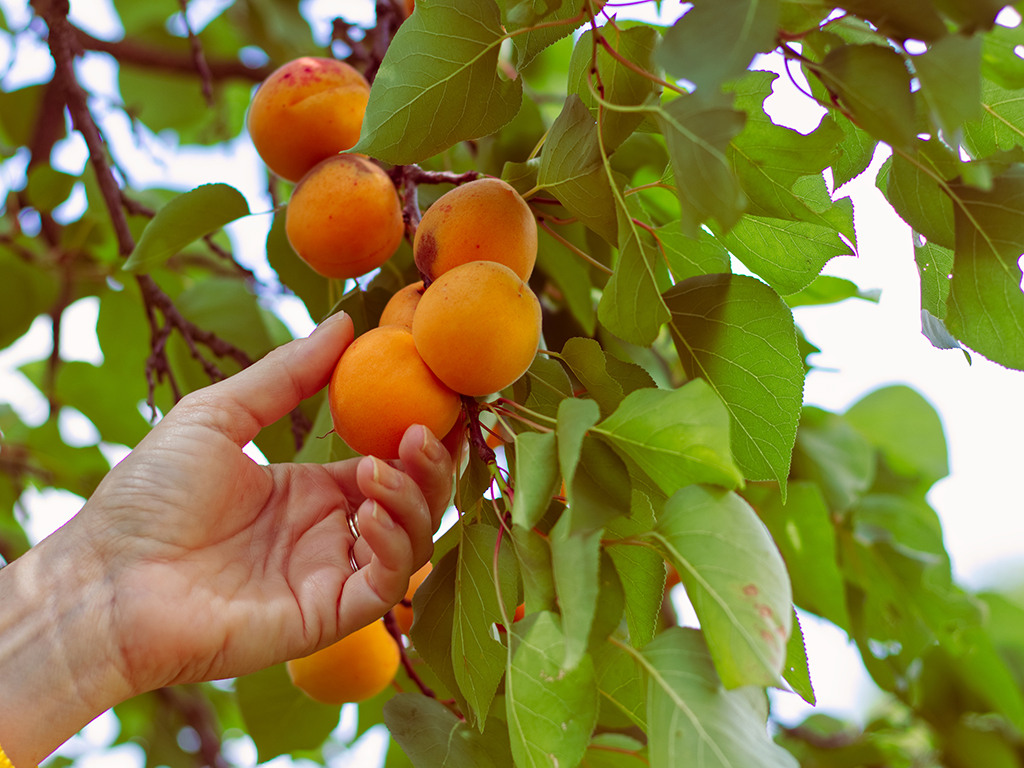
This week, small quantities of the first batches of Murcia's extra early stone fruit have started to be sold. In this Spanish region, the harvest has been delayed by between 7 and 10 days due to the impact of rains and low temperatures. Besides, producing areas such as Cieza, Calasparra and Jumilla have been hit by hail storms that have affected part of the early stone fruit harvest.
"The storms that started on Tuesday last week have discharged abundant rainfall, and hail has also taken a toll on the production expected in May," says Santiago Vazquez, manager of the Murcian company La Vega de Cieza.
"The hail damage has yet to be fully assessed by Agroseguro, although we can already say that the hailstorms were very intense in about 10% of an important fruit growing area. The violence of the storm resulted in even some car windows breaking. In the northeast and northwest of Murcia, hail has been abundant, but less virulent, although it has covered larger production areas," says the producer and exporter. "The earliest areas have not been damaged. The worst hit is the early production that is planned to be harvested from May 10."
Although there have been some occasional frosts in Murcia and the damage from the rains and hail has yet to be assessed, there will still be enough fruit available for the campaign. However, the prospect is that there will be at least 40% less apricot in the Region of Murcia compared to a normal campaign. "The frost and the abundant rains of March have had an impact on the setting of some apricot varieties, and in other areas there have been some fruit rotting issues due to the excess moisture."
According to Santiago Vázquez, Murcian stone fruit volumes will not be significant for another two weeks due to the delay in the harvest. "The campaign has started with the production at origin shaped by the cold and rainy weather, and with a good reception at destination thanks to the good weather in much of central and northern Europe. Sales have started at a lively pace and there's interest in the markets."
According to the manager of La Vega de Cieza, the biggest concern lies in being able to pass on the large increase in input costs to the final prices. "Last year's selling prices made it possible to obtain sufficient margins to cover costs, and for most producers to keep going. This year, the production costs have shot up by more than 40%, so it is very important to pass these on to the final prices to allow producers to 'survive' another year."
Source - https://www.freshplaza.com