

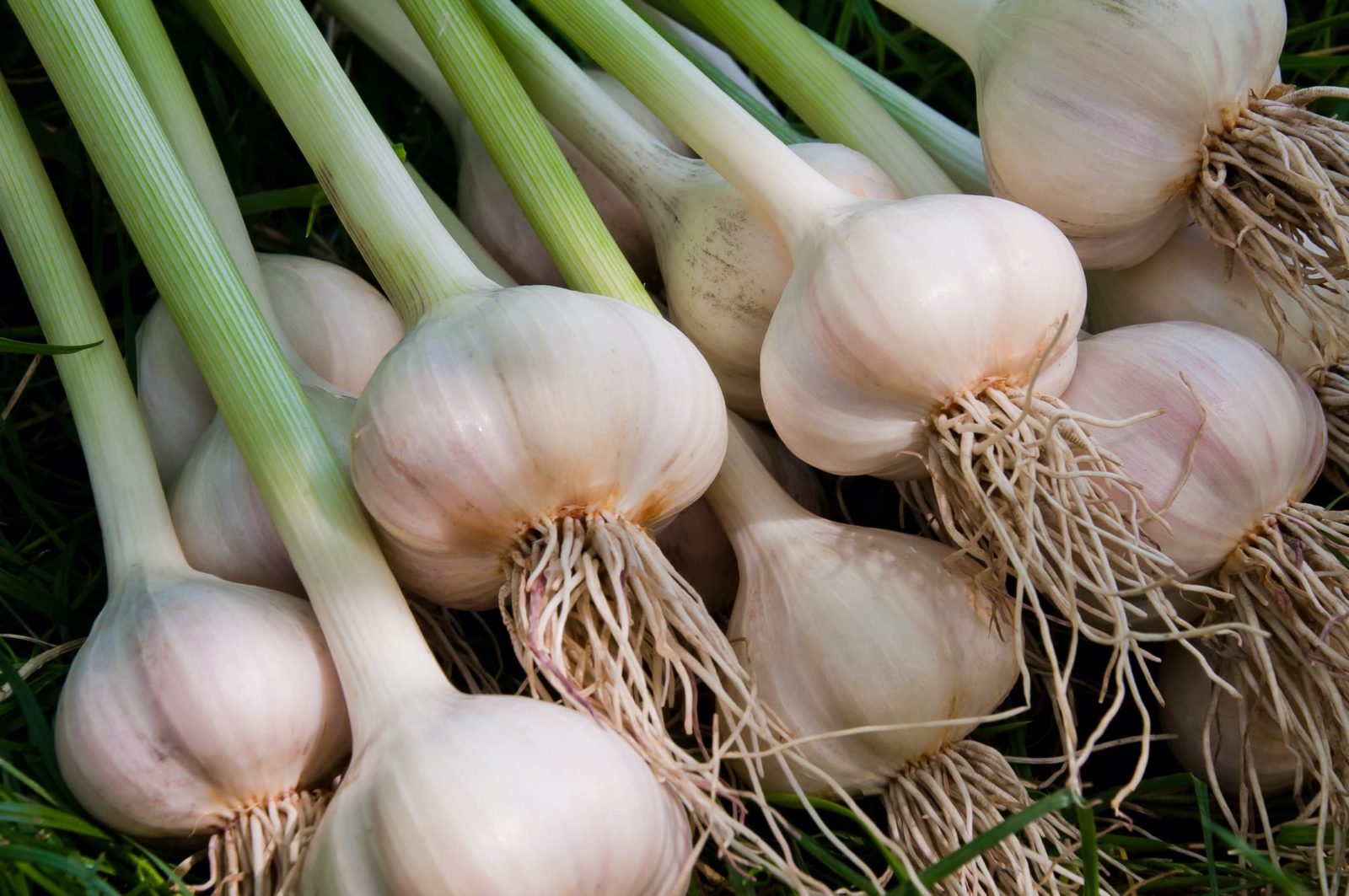
According to ANPCA records, despite having been grown in a similar area, Spain's garlic production was smaller than last year due to the adverse weather conditions the crops faced in their final stages. The cold waves during March and April, the snow at the beginning of April, and the successions of rainy fronts decreased the light hours significantly affecting the development of the plants in the two main production areas of Spain, Castilla-La Mancha and Andalusia.
In contrast, the sudden rise in temperatures in May and June caused a rapid maturation of the bulbs and, consequently, the crops were unable to reach their maximum caliber potential. As a result, the production volume was nearly 20% lower than expected.
The quality of the early varieties in the 2022 harvest has been slightly lower than the quality achieved in previous campaigns due to the lack of layers caused by early ripening. However, the quality of the purple garlic variety, which experienced a significant drop in yields due to the lack of caliber, has been exceptional.
As a result, production costs per hectare have skyrocketed. The cost of producing 1 kg of garlic has increased by 37% over the previous year because of the combination of the 21% general increase in the costs of energy, leases, inputs, and wage costs, and the drop in yields. In addition, there is uncertainty about the evolution of prices for the remaining storage campaign, which lasts 11 months in cold rooms, as the cost of energy is completely unknown.
As far as the international market is concerned, demand is very calm, and logistical costs are skyrocketing. Exports are very slow as a result of the lack of presence of Brazil at the beginning of the campaign, the remnant garlic from the previous campaign, and the increase in local harvests in the main destination countries. In addition, the sector expects to store its product for the long term. The increase in logistics costs, with a general increase in shipping companies' prices, has had a very decisive influence on the decrease in export sales to third countries, causing a general stoppage in sales.
In summary, according to the ANPCA, this new campaign will be complicated as there is remarkable uncertainty about its evolution, both in the national and international markets.
Faced with this situation, ANPCA has started a series of actions aimed at trying to improve the situation of the crop, such as demanding integrated production in garlic in the main producing autonomous community of Spain, Castilla-La Mancha, with the aim of implementing sustainable production that is more respectful of the environment. In addition, this region needs to implement integrated production due to the situation of the disposal of active substances available for cultivation.
ANPCA has held a consultation with the Directorate General for Competition of the European Union to investigate the possible existence of de facto agreements between the main shipping companies for the simultaneous increase of prices in international logistics, since they significantly affect the Spanish garlic's ability to reach its export markets, affecting a sector that exported more than 70% of its production in the previous season.
ANPCA is currently the largest European association of producers and marketers of garlic, with an associated area of 15,397 hectares this year and more than 256 million kilos marketed in the last campaign, which is more than 80% of the total volume marketed in Spain, and 65% of the total in Europe. It currently has 67 affiliated marketing companies and almost 1,800 garlic producers.
Source - https://www.freshplaza.com










