

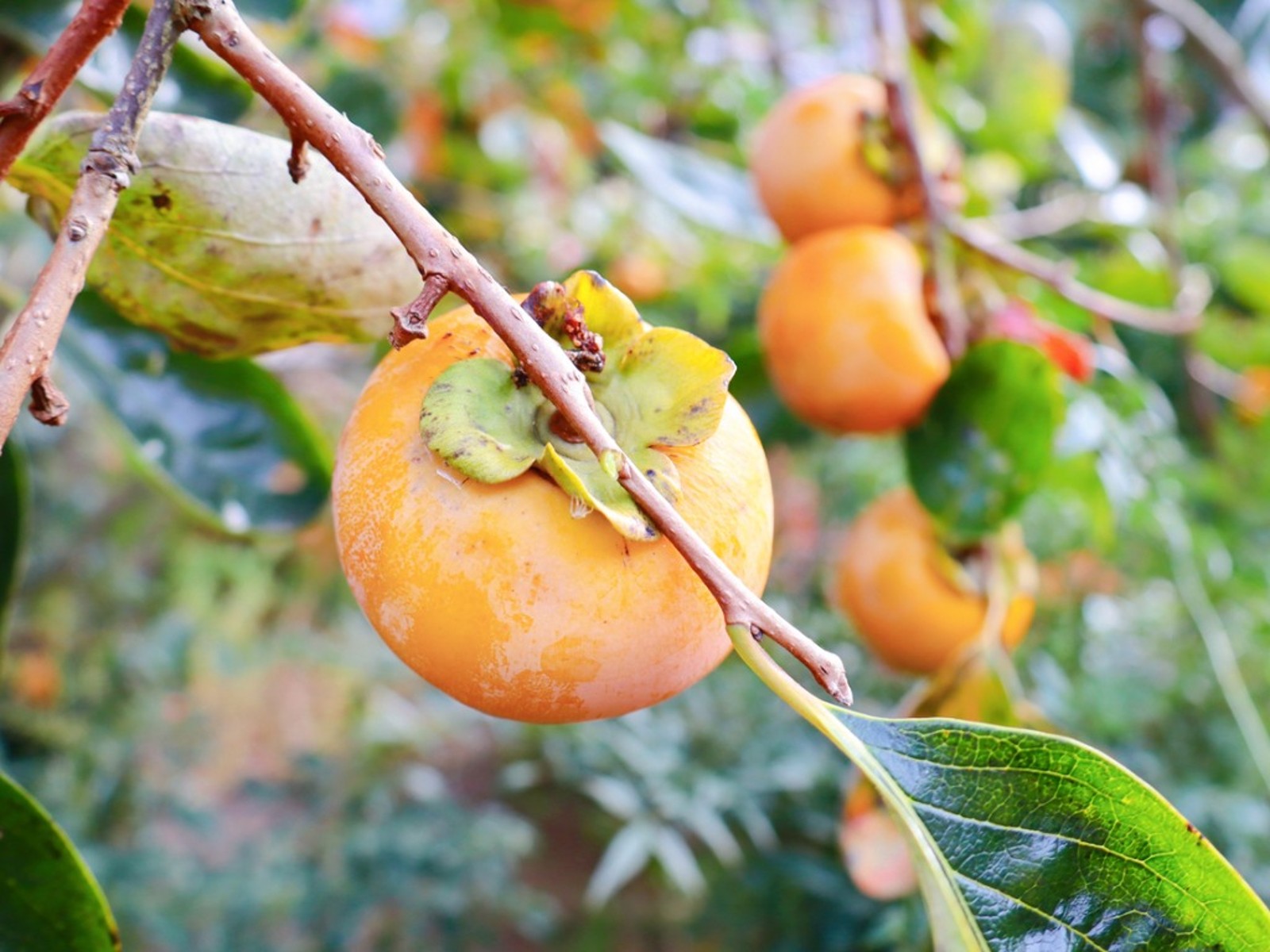
The Spanish kaki production will again be reduced by around 20% compared to the volumes harvested in the 2021/2022 season. This means that the production stands 50% below the current production potential. While around 240,000 tons were harvested last season, initial forecasts for this season point to the harvest ranging between 180,000 and 200,000 tons. The first harvests will begin in early September.
According to the president of the Spanish Kaki Association, Pascual Prats, the lack of volume will be much more noticeable in the first part of the season. "The abundant rains during the months of March and April and the lack of sunshine took a toll on the flowering. Early season deliveries will be lower in terms of volume, but if everything goes according to plan, the supply will increase from the middle of the year onwards."
Many producing areas of Ribera del Xúquer, such as Alzira, Rafel Guaraf, Carcaixent, Vilanova de Castelló or Alberic, among others, have had many problems with whiteflies and blackflies.
"In addition to the impact of the weather, the main cause of the drop in the production this year is the presence of pests and diseases in different production areas. This is a consequence of growers having been forced to reduce the amount of treatments due to the lack of profitability of recent campaigns," explains Pascual Prats, who says that "it seems that the 'cotonet' is somewhat more under control this year, given that there is less fruit in the fields. We will see how the situation develops throughout the campaign," he said.
The costs of the treatments against pests and diseases, water or inputs, as well as the harvesting, handling and packaging costs have all increased by between 30 and 50% for kaki producers and marketers before the start of the campaign.
"Producing is quite a bit more expensive this year compared to last year. For example, the cost of CO₂, which is indispensable for the ripening of kakis and to remove its astringency, has doubled compared to last season. As of today, producing a kilo of kakis is going to cost an average of 0.22 Euro more than last season. Will we be able to pass this increase on to the sales prices? That will depend on the distribution chains. What is clear is that, if we sell at the same price as last year, we will not make a profit, only losses," warns Pascual Prats.
"The costs are so high that there will probably be few producers able to cover them. We will try to irrigate just enough and treat just enough, since this is how kaki growers have been holding out in recent seasons in order to survive. We must recall that in the last 5 years practically no kakis have been planted, and in the last 3 years around 5% of the acreage has been abandoned or uprooted due to profitability issues," he says.
Belarus reopens and Peru could also open up this year, with China ever closer
However, it's not all bad news for the kaki sector, as the Peruvian market could open up this year, while Belarus may reopen and the Chinese market is getting closer and closer to opening up, as well.
"We are waiting for the Peruvian quality and plant health inspectors to visit us and for the green light to be given so that we can start exporting to this country this season already. Meanwhile, together with the Spanish Kaki Association and other producer cooperatives, we have made the necessary contacts through the Spanish Ministry of Agriculture, Livestock and Fisheries to arrange the visit of Chinese inspectors to Spanish fields by the end of October, and to continue making progress towards the signing of that protocol. We are confident that we'll be able to open that market next year. It's a destination that could absorb good volumes at interesting prices, although it is also very demanding in terms of quality. It is a project that we presented to the sector as a whole four years ago and that we hope will soon bear fruit," said the president of the Spanish Kaki Association.
Source - https://www.freshplaza.com










