

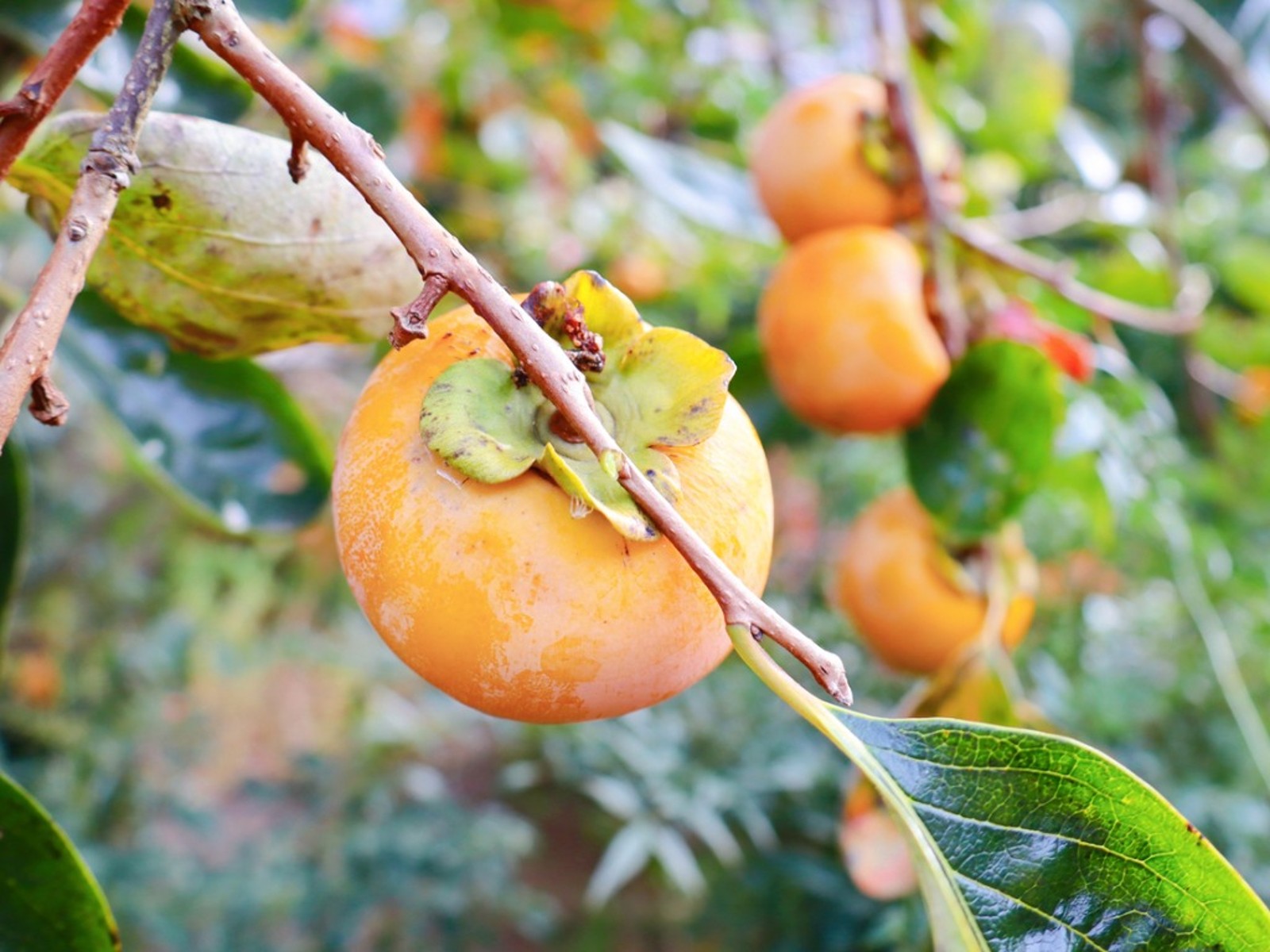
The Spanish Rojo Brillante kaki season has already started with a production that remains lower than expected. Low volumes and high production, packaging and transportation costs will be the biggest challenges this season, which has already started with higher prices compared to the previous one. Spanish exporters are already counting on the Indian market and, soon, on the Peruvian market, as well. Meanwhile, exporting to China is closer to becoming a reality.
"We are going to have a very small supply of kakis this season. Although at the beginning some talked of a 40 to 50% decrease, as we have started to harvest the fields we are seeing that this season's crop is even smaller than expected," says Juan Carlos Martínez, CEO of The Natural Hand. Such is the situation in one of our own farms where we harvested 250,000 kilos last year. This year, we had expected to harvest 100,000 kilos and in the end we harvested just 60,000 kilos," he says.
Given this situation, the first batches of kakis are reaching higher prices than last season. "Prices at origin are twice as high as they were at the same time last year, and we are confident that they will remain stable throughout the season in order to cover the production, handling, packaging and transport costs of the product, which have soared in the last year and are impossible to control and foresee. For the time being, the markets are accepting this rise in kaki prices. The demand is high, thanks in part to the cold weather in central and northern European countries," says Juan Carlos Martínez.
Despite the low production this year, the producer and exporter says that the quality is very good at the organoleptic level, although there is a great disparity in sizes, with an abundance of small fruit.
In general, kaki exports to countries outside the EU are expected to fall, given this year's low harvest. The Natural Hand is specialized in shipping kakis to distant destinations. "Since we founded this company, we have always focused on long distances, specializing in handling the fruit in every stage of the production process, so that it reaches its destination in optimal conditions in trips lasting more than 30 days," says Juan Carlos Martínez. "For that reason, although in smaller quantities this year, we will continue to serve our customers in Asia, the Middle East, Brazil, Canada, etc. Although last season we suffered complications due to the high maritime freight costs, as well as delays in the shipments, the situation seems to be slowly going back to normal."
Spanish exporters already have access to the Indian market and are planning to start exporting to Peru soon, once the protocol is approved. Moreover, plant health inspectors from the Chinese government are scheduled to visit a number of fields and kaki packing plants in November to begin negotiating an export protocol.
"The opening of new markets is a very positive step that will help decongest the European market when we have more production in the coming seasons. Sights have already been set on Peru, which is not a big market, but the fact that doors are opening to our kakis as the product is increasingly promoted among consumers is a good thing. The Indian protocol has also practically been closed, and we are confident that, over the years, our exports can grow if we manage to stimulate the product's consumption. Another country where we are working in the approval of a protocol, and where traditionally a lot of kakis are consumed and our Rojo Brillante is highly appreciated is China. If this market opens up, we could soon be able to ship large quantities, which would bring big changes in the Spanish kaki sector," says the CEO of The Natural Hand.
"We are fortunate to be able to count on this product, with Spain leading the production and facing practically no competition globally. We still do not understand why Japan won't open up, following the signing of the free market agreements with the EU. We already suffered the almost complete loss of the Russian, Belarusian and now Ukrainian markets, where we used to introduce large quantities of second class fruit. Now is the time to promote the opening of new markets, which is essential for this sector," said Juan Carlos Martínez.
Source - https://www.freshplaza.com










