On December 13, 2021, the eruption of the Cumbre Vieja volcano in La Palma came to an end; undoubtedly long-awaited news that was widely celebrated, but an end that also meant the beginning of a challenging reconstruction process, necessary to recover from the damage caused by the 85 day long phenomenon.
"The volcano eruption has been a misfortune for the island of La Palma. The whole of La Palma society and the island's economy have been affected. Many palmeros have lost their homes, their farms and their businesses. Many people have lost everything," says Javier Palenzuela, general director of the Regional Group of Banana Cooperatives of the Canary Archipelago, Coplaca.
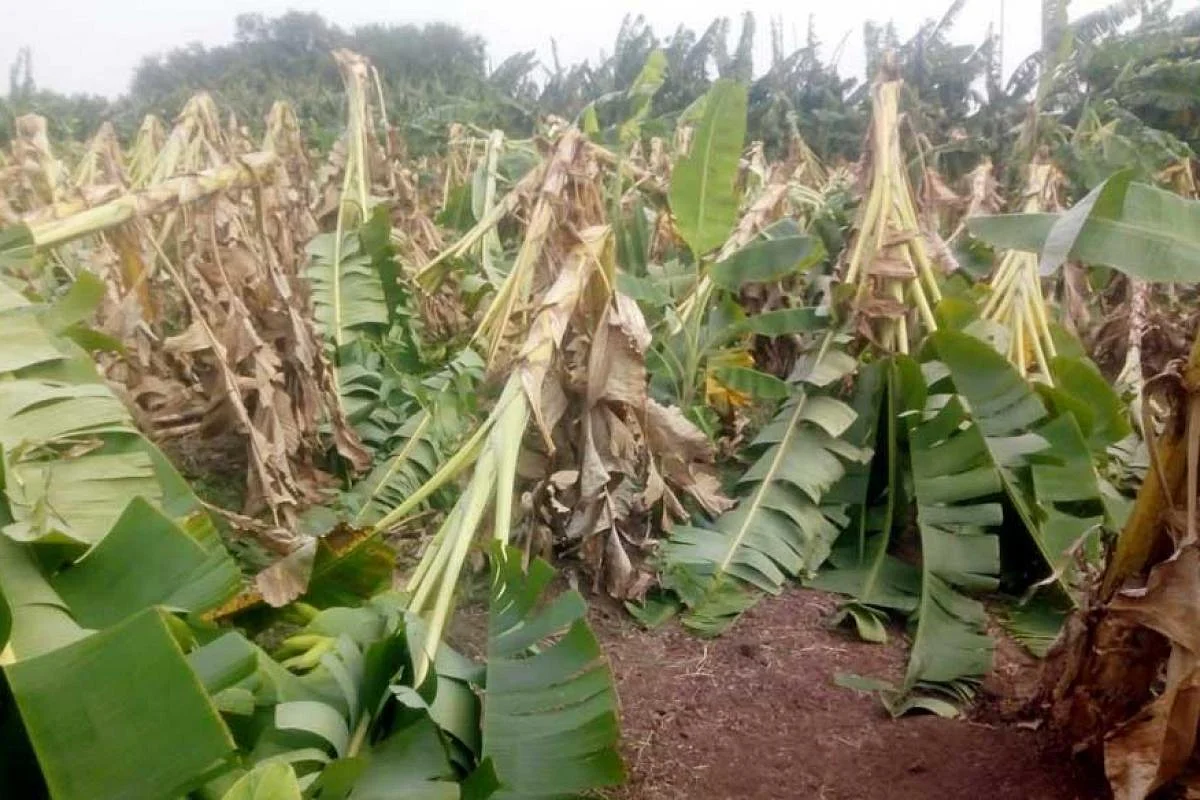
"As far as bananas are concerned, around 400 hectares were buried by the volcano's lava flows, which will be very costly and very slow to recover. Another very similar area has dried up and crops have been lost as a result of damage to irrigation systems. We estimate that the sector on the island of La Palma may have lost around 50,000 tons of fruit."
"Coplaca has been, in fact, the most affected entity in terms of surface area and producers affected. The volcano literally swallowed our Covalle warehouse and remained just 300 meters from the warehouse of Volcan de San Juan."
The recovery of La Palma will only be achieved with the restoration of its agricultural activity and more specifically of the banana industry, the economic engine of an island, which has been supplying more than a third of the total Canary banana production.
"The end consumer has responded very well in these difficult times demanding fruit. However, some chains have directly discarded it. It is important to point out that the advertising campaigns carried out jointly by the whole sector in the Canary Islands have always given very good results and have allowed us to differentiate ourselves, so consumers know how to distinguish our bananas from those of other origins."
"The reduction in the production volume as a result of the impact of the volcano of La Palma has resulted in a lower supply of bananas from the Canary Islands and prices have been much higher than they usually are at this time; however, this situation is not at all making up for all the damage that producers have suffered," says Javier.
"The possibility of the arrival of Fusarium is small, but it is not superfluous to take measures".
The second-grade cooperative Coplaca was born as a company in the early 1970's, initially integrating 12 cooperatives. Its goal was to boost the marketing of La Palma's banana production in peninsular Spain, and in 1993 they created the company Eurobanan Canarias, today known as Eurobanan Group.
"Currently Coplaca is made up of 155 first-grade cooperatives and we have 3,200 producers associated with us from all the banana-producing islands. We market 140,000 tons of bananas annually, which makes us the largest Banana Producers Organization in the Canary Islands and the EU (including Madeira and Martinique and Guadeloupe), both in terms of production and number of affiliated producers," says Javier Palenzuela. "Through our OPFH we market other fruits such as avocados, mangoes, papayas, tropical pineapples, etc.; but our main product is, logically, bananas."
The Canary Island banana is the only banana in the world with a Protected Geographical Indication (PGI) that accredits its differentiated quality. While currently focused on its full recovery after the eruption, the sector's efforts to maintain the production and quality also include protecting the fruit against one of the most serious phytosanitary threats to musaceae worldwide: the Fusarium R4T.
"According to current knowledge, the tropical race (TR4) of banana Fusarium is transmitted through soil (on shoes, tools, etc.), infected plant material, tools, water from infected soil, etc. Measures have been adopted based on this, including thorough controls at the islands' entry points (airports and docks). Perhaps the greatest risk is that some person coming from the countries where it is present (currently Colombia, Peru, Mozambique, Australia, Philippines, Oman or Jordan) will have been in some infected land and will then visit some farm in our islands."
"The chance is very small, but it does not hurt to take both informative and surveillance measures. In this line, Coplaca Sdad Coop has participated in the H2020 MUSA Project, in which a lot of information has been generated and been made available on our website. Also, within the framework of the CUARENTAGRI Project (MAC-INTERREG), the Government of the Canary Islands is carrying out sampling and surveillance works and its future objective is the drafting of a contingency plan, but undoubtedly at this moment what matters most is to spread as much information as possible about the threat posed by a potential outbreak and what this would mean for the Canary Islands, so that the entities and the producers take preventive measures in the access to their farms."
Source - https://www.freshplaza.com