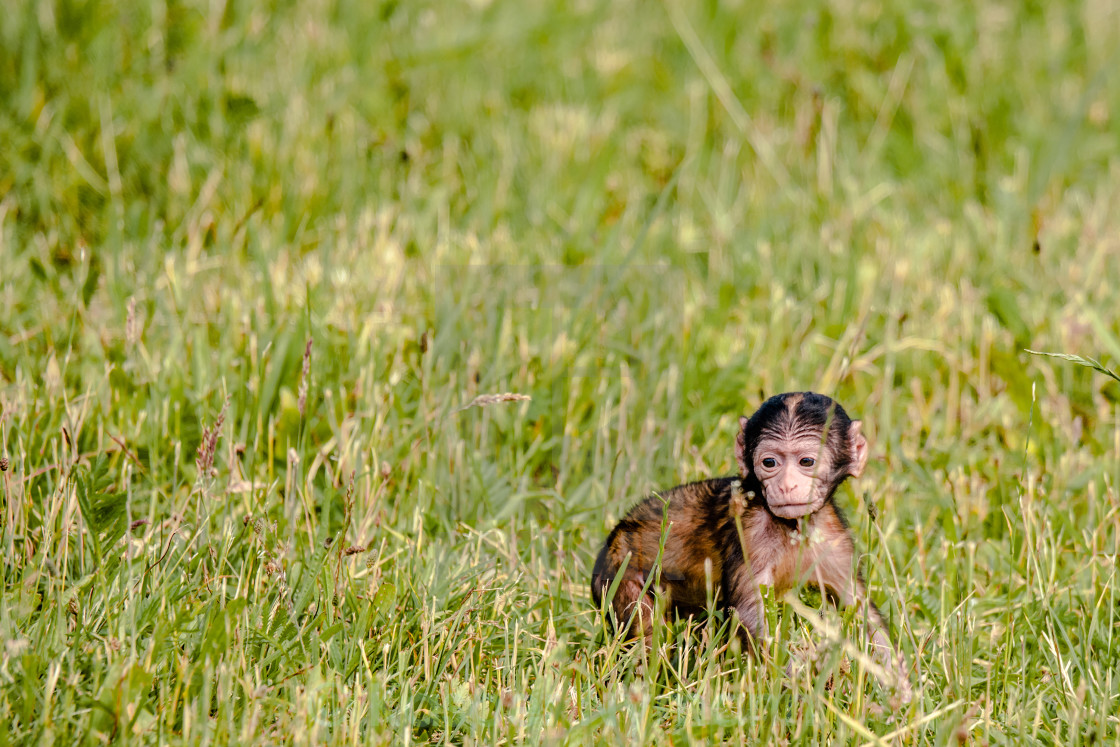
Arjuna Jinadasa owns a plot of land full of coconut trees in Kurunegala, in northwestern Sri Lanka, where he enjoys a good produce of about 3,000 coconuts a month. With Sri Lanka’s traditional cuisine heavily reliant on coconut milk, it’s a crop with high demand. Jinadasa has made healthy profits from his plantation until recently — when daily aerial attacks by monkeys started to impact the harvest.
“These monkeys destroy at least 200 young coconuts daily, and now my monthly yield is reduced to about 250 coconuts,” says Jinadasa. The farmer tried many non-lethal methods to keep the raiding monkeys away, but the success was short-lived, as the primates got used to them.
Sri Lanka has three species of monkeys, but the endemic toque macaque (Macaca sinica) is also the most problematic. Coconut plantations in many areas are also often subjected to aerial attacks by grizzled giant squirrels (Ratufa macroura), as they eat young coconuts. Sri Lanka’s minister of agriculture, Mahinda Amaraweera, says nearly 100 million coconuts are destroyed by monkeys and giant squirrels each year, causing a loss of about 6,638 million Sri Lankan rupees ($19.3 million).
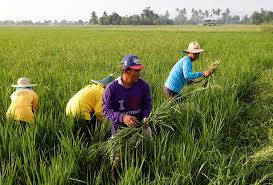
Amaraweera makes this comment based on a preliminary estimate of crop damage caused by wild animals compiled by the Hector Kobbekaduwa Agrarian Research and Training Institute. The report is based on data gathered by the Agrarian Development Department, and it lists coconut as the worst-affected crop, followed by paddy, vegetables, corn and bananas. The toque macaque tops the list of crop raiders, followed by wild boar (Sus scrofa), Asian elephant (Elephas maximus), Indian peafowl (Pavo cristatus), giant squirrel (Ratufa macroura) and Indian porcupine (Hystrix indica).
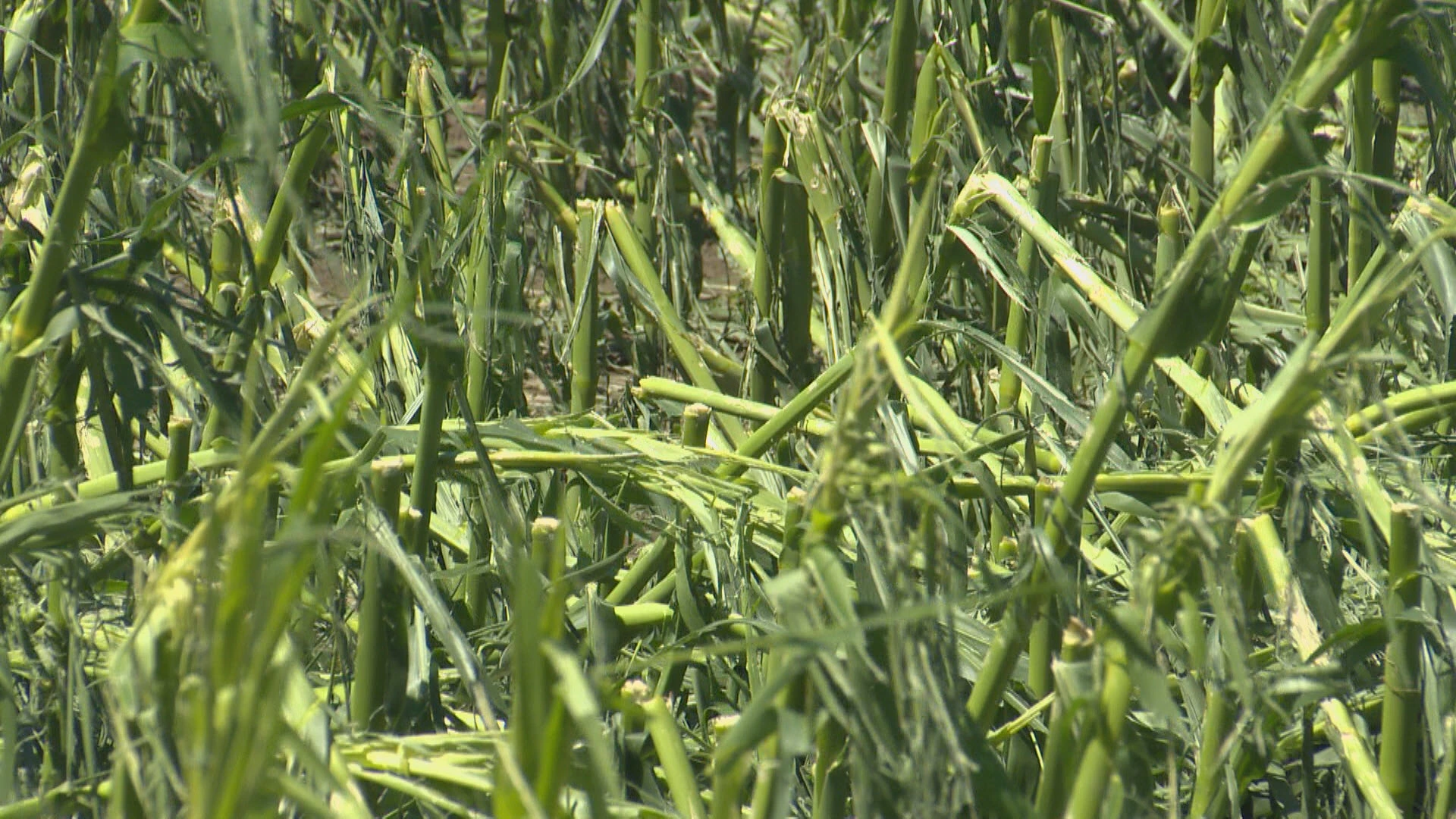
Toque macaques and giant squirrels cause the worst damage to coconuts, while elephants, wild boars and peafowl mainly target paddy (rice), Sri Lanka’s staple food. Porcupines tend to damage young coconut plants and vegetables.
Massive financial loss
The report estimates the financial loss caused by crop damage due to wild animals in the first half of 2022 as a massive 30,215 million Sri Lankan rupees ($87.5 million). “Sri Lanka is facing a severe economic crisis, and the recorded crop devastation intensifies the food crisis we already face here. The government is looking for ways to reduce the population of identified wild animals considered agricultural pests,” Amaraweera tells Mongabay.
In this backdrop, there have been many queries about the government being compelled to consider culling as a solution. “We haven’t decided yet, but we need to urgently find ways to control these pests,” Amaraweera says.
The intensification of human-elephant conflict in Sri Lanka is also linked to crop raiding. Elephants cause substantial crop damage, especially to paddy and bananas; but even though the problem continues to escalate, the animal’s status as an endangered species makes it difficult to find easy solutions and calls for urgent and alternative management practices, Amaraweera says.
In December 2022, the Ministry of Agriculture convened a meeting of experts from a variety of fields including naturalists, farmers and environmentalists to discuss solutions. “This is a complex problem that doesn’t have simple, ready-made solutions,” says Buddhi Marambe of the Faculty of Agriculture at the University of Peradeniya, who led the committee proceedings. There are different types of stakeholders and different opinions, but all agree that these troublesome, crop-damaging animal populations need to be controlled, Marambe tells Mongabay.
The committee is continuing to discuss many possible solutions ranging from translocations to sterilization and deterrence methods, but recommendations are yet to come, says Marambe.
“We agree there is a serious need for some effective controlling mechanisms, but these solutions must be based on scientific study, “says well-known environmentalist Hemantha Withanage of the Center for Environmental Justice. “We first need to identify whether these animal populations have actually increased or animals have moved from the wilds to human habitats”.
Withanage says it is necessary to enrich the habitats of protected forests so at least the problematic animals near the forest edges can be chased back to their natural habitats. Losing the ecological balance could also be a contributory factor to the problem. A reduction in natural predators can increase these pest populations. An example is the significant reduction in Sri Lankan jackal (Canis aureus naria) populations, which has led to thriving peafowl populations, he says.
It is not just crop damage; these animals also harass villagers, so their grievances, too, must be considered when seeking solutions, adds Withanage, pointing out that the toque macaque’s problem particularly goes well beyond crop damage. Monkeys swoop into houses, stealing food and messing up households, making it difficult for people to leave doors and windows open during the day, says Dilan Chathuranga. Even if we block the entrances, these highly intelligent primates find some way to get inside. Only those who face this situation understand the suffering, Chathuranga tells Mongabay.
Sterilization programs
Ashoka Dangolla of the veterinary faculty at the University of Peradeniya has been trying to deal with the problem for more than two decades and says the translocation approach does not work. The main method used is the sterilization of female monkeys and their subsequent releasing back to the troops. It is an uphill task, but it can bear long-term results, Dangolla says.
“First, you need to catch them, and then take them for surgery. Initially, we removed the wombs but monkeys often get the stitches removed and start bleeding”, he adds. “Now we perform a laparoscopy known as keyhole surgery to do the sterilization and it is relatively safer,” Dangolla tells Mongabay.
A monkey troop has an alpha male that earns the right to mate with all the females in a troop. Theoretically, this alpha male will not allow any other male to touch the females, so many think that castrating the alpha male can lead to population control among monkeys and may prove successful. “But there are young male monkeys that manage to attract females when the alpha male is not around and take the chance to mate with females, so castrating only the alpha male may fail,” says Dangolla.
Even though animal controlling mechanisms are carried out in other countries, it would be a difficult task to execute them in Sri Lanka, where cultural and religious factors including compassion toward animals are not easily challenged. Adding further complexity, some of the problematic animals are also endangered, and the grizzled giant squirrel is Sri Lanka’s national animal.
The peafowl is considered the vehicle (Vahana) of the Hindu god Skanda and enjoys special cultural status. Skanda is revered by most Sri Lankans irrespective of their faith, so people do not want to harm the peacock.
“This is why it needs a scientific approach. We need to analyze the enormity of the problem, its growth and impact on society and seek a science-based response. The old thinking can only aggravate the problem,” says Thasun Amarasinghe, a Sri Lankan herpetologist with the University of Indonesia.
“If we take the approach of no harm to animals due to religious beliefs, then one cannot get rid of mice because rat is the vehicle of Ganesh, another Hindu god,” Amarasinghe says, emphasizing the need to overcome cultural religious boundaries to find a scientific solution.
Data-driven solutions
There should be a data-driven approach to understand the population dynamics of these problematic species, researchers say. In other countries, hunting licenses are issued after scientifically assessing populations. For example, if the number of females increases, then the number that needs to be controlled would be assessed and certain licenses are issued for hunting only the permitted number of females. There may be years in which no hunting licenses are issued if the population is under control, Amarasinghe tells Mongabay.
Sudden population increases can impact native biodiversity in addition to crop damage by some of these pests. The peafowl was restricted to Sri Lanka’s dry zone, but now the bird can be found in the heart of the wet zone closer to rainforests and even in the hill country near cloud forests. These are home to a lot of endemic reptiles that peafowl feed on. This could break the critical ecological balance, Amarasinghe says.
During the past few months, there have been several indications that despite the enormity of the problem with agricultural pests, the government would not consider their killing as part of the solution.
“It is dangerous even to give such signals, as the law is not amended yet. Killing of most of these animals is still illegal,” says Jagath Gunawardana, an environmental lawyer and naturalist. Gunawardane was also a member of the committee convened in December 2022 to consider solutions, but he says even the members of the expert committee were not provided with the report on crop damage by wild animals. It is important to scrutinize the report, as the level of crop damage caused by wild animals appears very high. However, the complete report still has not been shared with the expert committee, says Gunawardane.
Source - https://news.mongabay.com