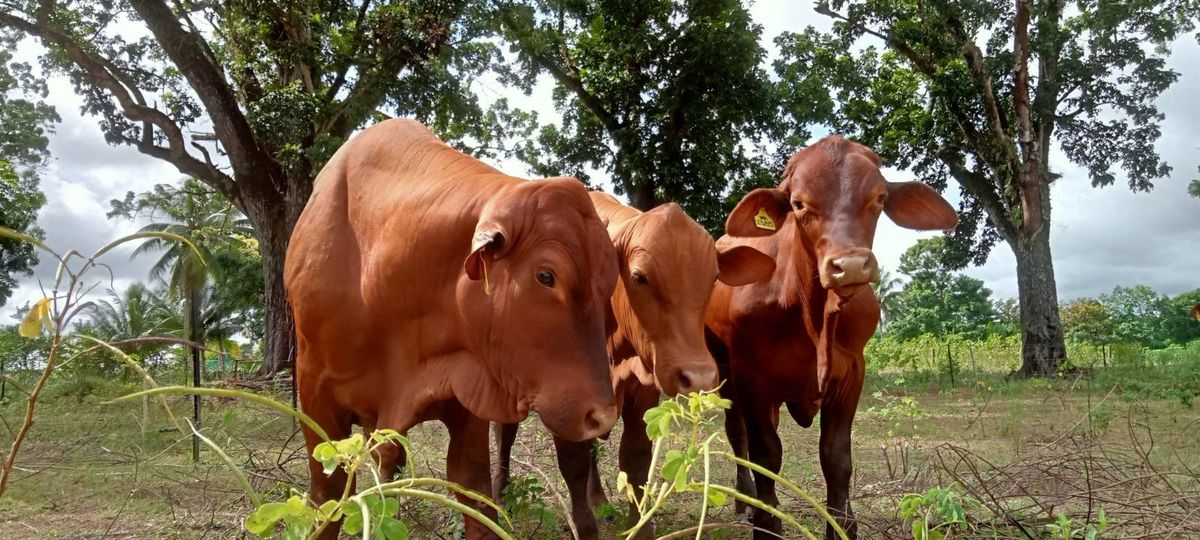
Fiji's livestock industry is recovering after years of disease related setbacks, supported by new government programs, breeding initiatives, and investment.
The Pacific nation's Minister for Agriculture and Waterways, Tomasi Tunabuna, told Parliament that animal health challenges had long limited the productivity of Fiji's cattle industry.
Mr Tunabuna said Brucellosis and Bovine Tuberculosis had disrupted beef and dairy production for more than a decade, resulting in major economic losses and reduced herd performance.
Brucellosis, caused by Brucella abortus, affects cattle reproduction and milk production, while Bovine Tuberculosis, caused by Mycobacterium bovis, impacts the respiratory system and herd productivity.
"The cattle industry is a cornerstone of Fiji's agriculture sector," he said.
"It supports thousands of rural households and contributes to our national food security through beef and dairy production.
"However, animal health challenges continue to limit the industry's growth and productivity."
Between 2018 and 2021, Fiji recorded 3,012 cases of Bovine Tuberculosis, with most in Tailevu and Naitasiri.
Earlier Brucellosis outbreaks affected 282 cattle in the Wainivesi Basin.
National control programs, including testing, culling, movement restrictions, and farm biosecurity, had reduced infection rates from more than 23 per cent to less than one per cent.
Mr Tunabuna said the Ministry maintains records of disease free farms and urged farmers to seek advice from their nearest agriculture station before purchasing cattle.
The Ministry is also implementing surveillance, breeding programs, farmer training, and improved biosecurity to strengthen the industry.
"We remain fully committed to safeguarding the health of Fiji's national cattle herd," he said.
"Through stronger surveillance, improved veterinary services, farmer education, and industry partnerships, we will drive sustainable growth in the livestock sector."
Agriculture, including livestock, contributes around seven per cent to Fiji's GDP and involves almost 23,000 farming households.
In 2023, livestock production contributed $61.5 million to the national economy.
For the 2025-2026 financial year, $19.15 million has been allocated to livestock development, including $14.5 million for capital programs and $4.6 million for operational activities across 29 projects nationwide.
The poultry sector continues to perform strongly, with egg production exceeding targets and chicken meat production reaching 93 per cent.
Over the past five years, egg and chicken output has increased by more than eight per cent.
The Ministry continues to support poultry farmers through training, shed upgrades, and equipment distribution, with half of all packages going to women and youth.
Mr Tunabuna said small-scale poultry farms play a key role in rural livelihoods and help sustain food supply chains across the country.
The dairy industry has also recorded steady growth, with milk production rising 17 per cent in three years to 6.1 million litres.
Farmers are receiving assistance for calf rearing, milk cartage, and processing of mozzarella, paneer, and ghee in Sigatoka and Nadi.
Mr Tunabuna said the expansion of value-adding facilities has helped diversify income for dairy farmers and reduce reliance on imports.
Sheep, goat, and pig production are also increasing across Fiji.
Between 2020 and 2022, sheep numbers rose by 66 per cent and goat production by 32 per cent, while pig production grew by more than 20 per cent following pandemic recovery measures.
Fiji now has more than 2,500 registered goat farms and 1,100 sheep farms.
Mr Tunabuna said these results show growing confidence among farmers supported through government programs in feed supply, breeding stock, and infrastructure.
The Ministry is focusing on sustainable production through genetic improvement, low-cost feed research, and farmer training.
Partnerships with the Korean International Cooperation Agency, the European Union, and the Australian Centre for International Agricultural Research will support feed trials using Black Soldier Fly larvae as a protein source.
The initiative forms part of broader efforts to lower feed costs and strengthen climate resilience in livestock production.
"The livestock sector holds vast potential to drive economic growth, reduce poverty, and enhance food and nutrition security," Mr Tunabuna said.
"We remain committed to working with all stakeholders to strengthen and sustain this vital industry."
Source - https://nit.com.au