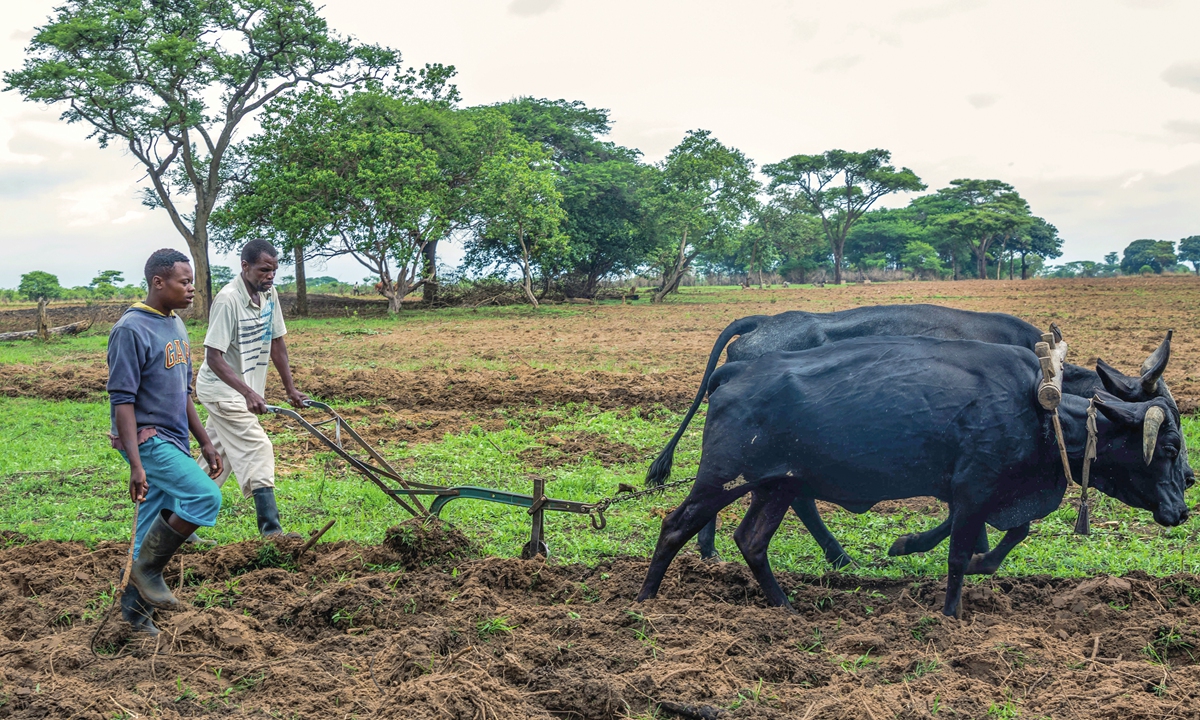
Research from the Institute for Sustainable Food at the University of Sheffield has investigated the reasons for post-harvest loss of crops produced in the Morogoro region of Tanzania.
The study, which was led by Dr. Pamela Abott from the University's Information School, focused on three perishable or semi-perishable crops—onion, tomato and sweet potato.
Farmers were surveyed on multiple stages of the food production process, including harvesting, primarily by hand; transportation, mainly through head-carrying and by motorcycle; storage, processing, and handling of crops.
The report, which was produced in collaboration with a team from the University of Dodoma led by Dr. Kalista Higini, assessed post-harvest loss at various stages of the food production cycle. Highlighting the different causes, the available technology and information and knowledge sources applied, and proposed recommendations to reduce crop losses.
The reported reasons for loss differed depending on the crop. For example, in the harvesting stage respondents attributed the crop loss in tomatoes to weather (77.27 percent), a delay in harvesting (56.82 percent), and damage when harvesting (55.27 percent).
The research illustrated how farmers are caught in a vicious cycle of continuous harvest and post-harvest loss, leading to poor profits and a subsequent inability to invest in innovations or improved techniques.
This is complicated by a lack of knowledge of the market, poor storage, transportation and handling facilities, caused by insufficient investment and a dependence on middlemen who themselves are trying to profit from seasonal crops with a short shelf life.
Dr. Pamela Abbott, a Senior Lecturer in Information Systems at the University of Sheffield's Information School, said, "The project is a good example of a global North-South cross-disciplinary collaboration to address a challenge local to the Morogoro region of Tanzania but which has far wider consequences. Smallholder farmers are thought to produce much of the food consumed across Sub-Saharan Africa while being disadvantaged through persistent systemic challenges, like the post-harvest loss problem, due to circumstances beyond their control that keep farmers in a persistent state of poverty. Our study sought to use an interdisciplinary approach to shed light on the problem."
"We found that ultimately systemic problems need systemic solutions—solutions that need buy-in from farmers, ensuring farmers are supported to transition from traditional subsistence methods to more commercialized ones, and be backed up by a plan to provide supporting institutions and infrastructures in the food system as well as movement towards balancing indigenous and 'improved' practices in the farming community."
Solutions recommended by the report included improved storage technologies such as more efficient locally-developed storage solutions, or alternative storage technologies such as charcoal coolers or refrigeration, both of which can be considered as superior alternatives to the traditionally used Kihenge.
Recommendations from the research highlighted advantages of using IT based solutions such as sensor technologies and mobile phone networks to monitor and report on key indicators of current storage efficiency. Conclusions also indicated that farmers would benefit from connecting with buyers via online markets and engaging with the farming community via mobile phones and apps.
Despite the perceived advantages, the researchers acknowledged the financial barriers and lack of support many farmers would face in implementing these solutions.
The report also highlighted process-based solutions such as the introduction of farmers' cooperatives, regulating the role of middlemen and improving the transparency of negotiations for farmers. In addition to providing resources for farmers to meet, observe and transfer knowledge about successful farming techniques.
To successfully reduce crop losses, researchers say solutions need to include buy-in from farmers, ensure farmers are supported to transition from traditional subsistence methods to more commercialized ones, and be backed up by a plan to provide supporting institutions and infrastructures in the food system.
They also highlight the need to address structural inequalities that keep farmers in a persistent state of poverty, as well as the need for a movement towards balancing indigenous and "improved" practices in the farming community.
The paper is published by The University of Sheffield.
Source - https://phys.org