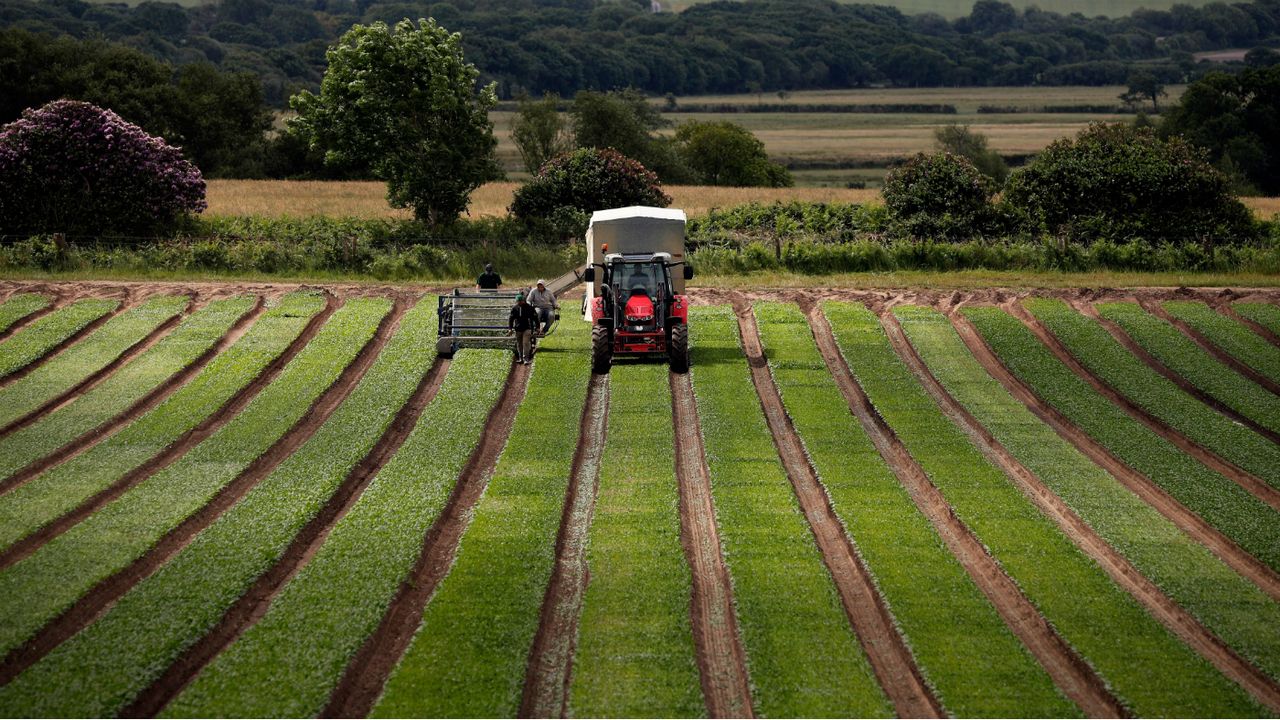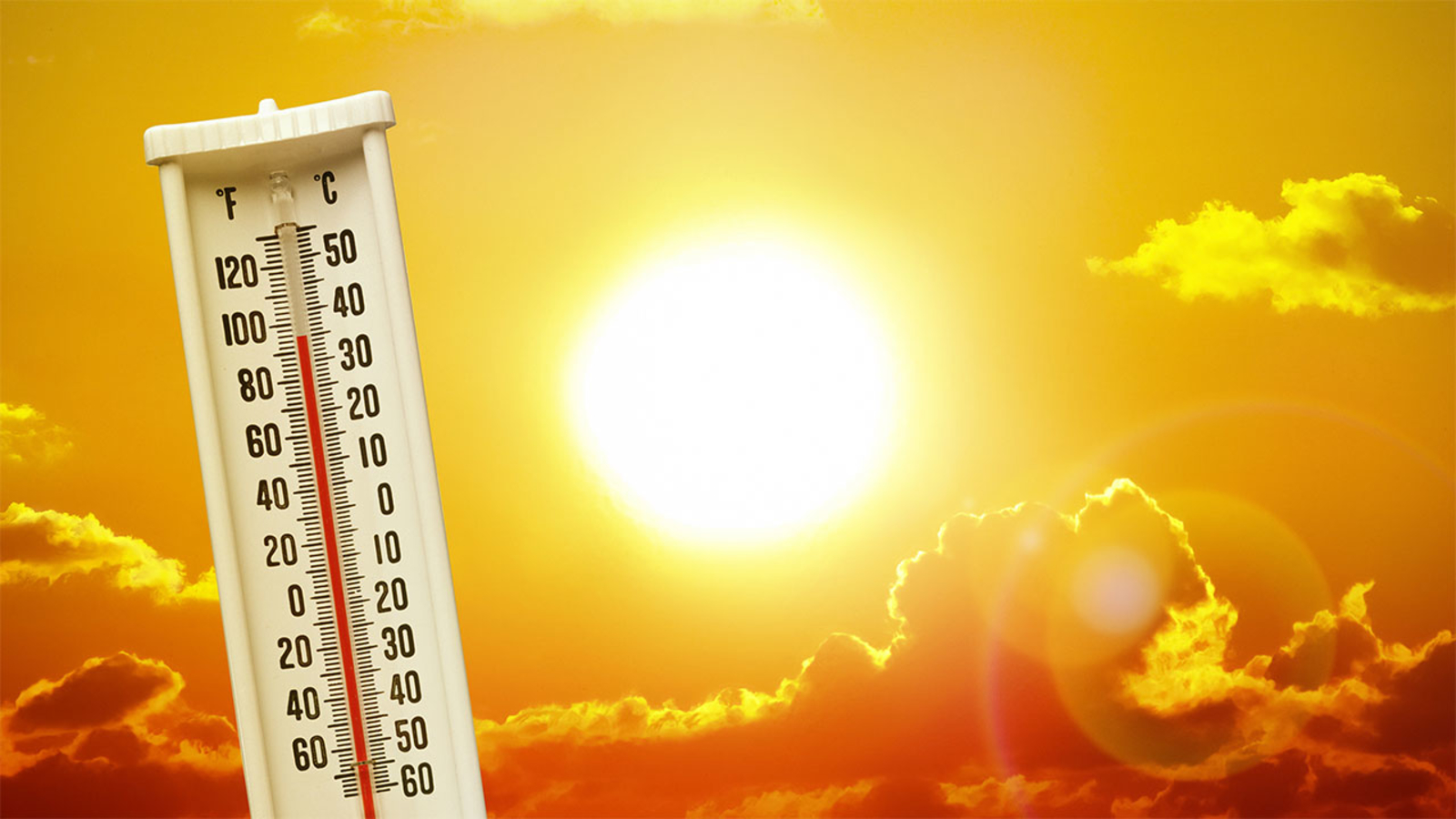
The UK heatwave has caused fruit and vegetables to die on the vine as growers fear the drought and further hot temperatures could ruin harvests this year.
Fruit and vegetable suppliers have been counting their losses after record temperatures in July caused crops to fail.
There are fears that future hot summers could affect Britain’s food security as growers experience the impacts of the climate crisis.
“It’s not just fruit – we lost entire plantings of peas, entire sowings of broad beans, things like baby spinach was lost, salad heads were lost,” said Vernon Mascarenhas, who runs the fruit and vegetable wholesaler Nature’s Choice at New Covent Garden Market in London.
He faced a shortage of berries because the heat had simply cooked them.
“We are in the height of our berry season, and we didn’t pick quite a lot of fruit during that week. There were major difficulties. The fruit is now coming back but if there is more intense heat forecast, that would be a worry.
“When we had our flowering season we didn’t have any frosts so we were very excited, we thought we were going to have our best year ever, one of our top fruit seasons, but now we don’t know because the heat has killed some of it off.
“If we are going to get another impact of hot weather, we could be in real trouble.”
Mascarenhas is also concerned that the apple and pear crop will be harmed by the hotter, drier summer.
“I would worry about the apples and pears in August if we have further heatwaves. We will still get the fruit but it will be much smaller, it won’t have grown. It could be slightly more acidic because in the last growth spurt is where the sugars develop.”
But Mascarenhas said there was a small upside: “The sunny, warm temperatures mean we can grow fruit which previously could not be grown to a commercially viable level in this country. I will soon have my first apricots for sale, for example.”
Shoppers will see smaller berries on the shelves as they have ripened faster in the heat. The British Berry Growers chairman, Nick Marston, said: “With increased and sustained heat, generally yields will be a bit lower as berries ripen faster and don’t quite make the same size as if the berries were left to grow longer.”
Suppliers and supermarkets are not hit by these losses as they have already signed contracts with the growers, but farmers will be financially hit if they lose crops.
Sugar beet and maize crops are also in danger from the recent dry spell, and farmers are also concerned about the viability of root vegetables.
Tom Bradshaw, the deputy president of the National Farmers’ Union, said: “The impacts of this prolonged spell of dry weather are hugely challenging for many farms across the country and causing concern for all farming sectors.
“The lack of rain means crops such as sugar beet and maize are showing signs of stress, while there are challenges for farmers needing to irrigate field veg and potatoes. To help, the Environment Agency has launched measures to support flexible abstraction and this will potentially give some farmers the ability to trade volumes of water with other farmers.
“The dry weather has also severely hampered grass growth which could hit feed supplies for the winter, adding additional costs to livestock farming businesses at a time when costs are continuing to increase significantly.
“With the forecast predicting more dry weather in the coming weeks, we will continue to monitor for any impacts on UK food production.”
Source - https://www.theguardian.com