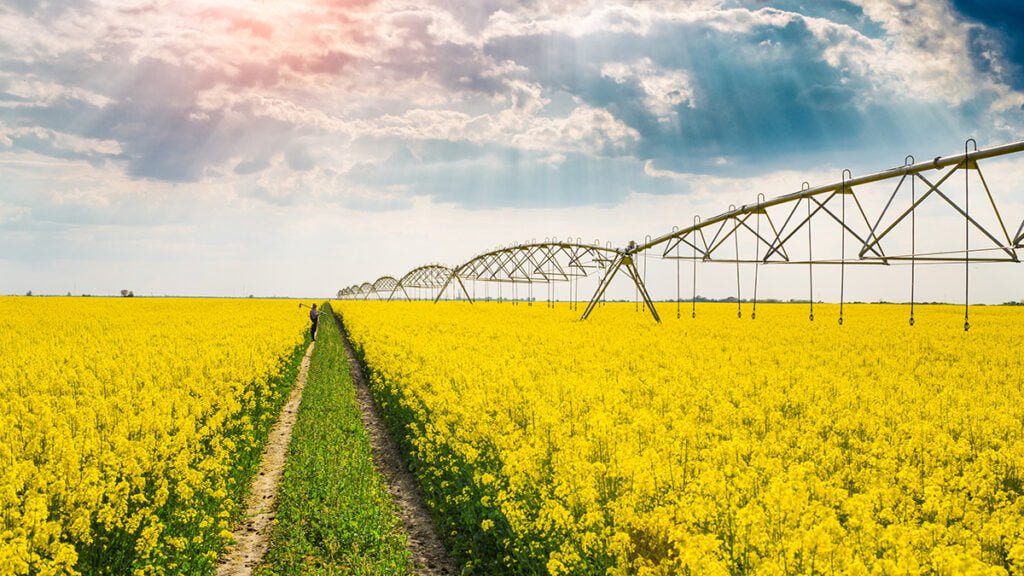
Experiments using temperature-controlled field plots have helped to explain the link between warmer winters and yield loss in arable crops.
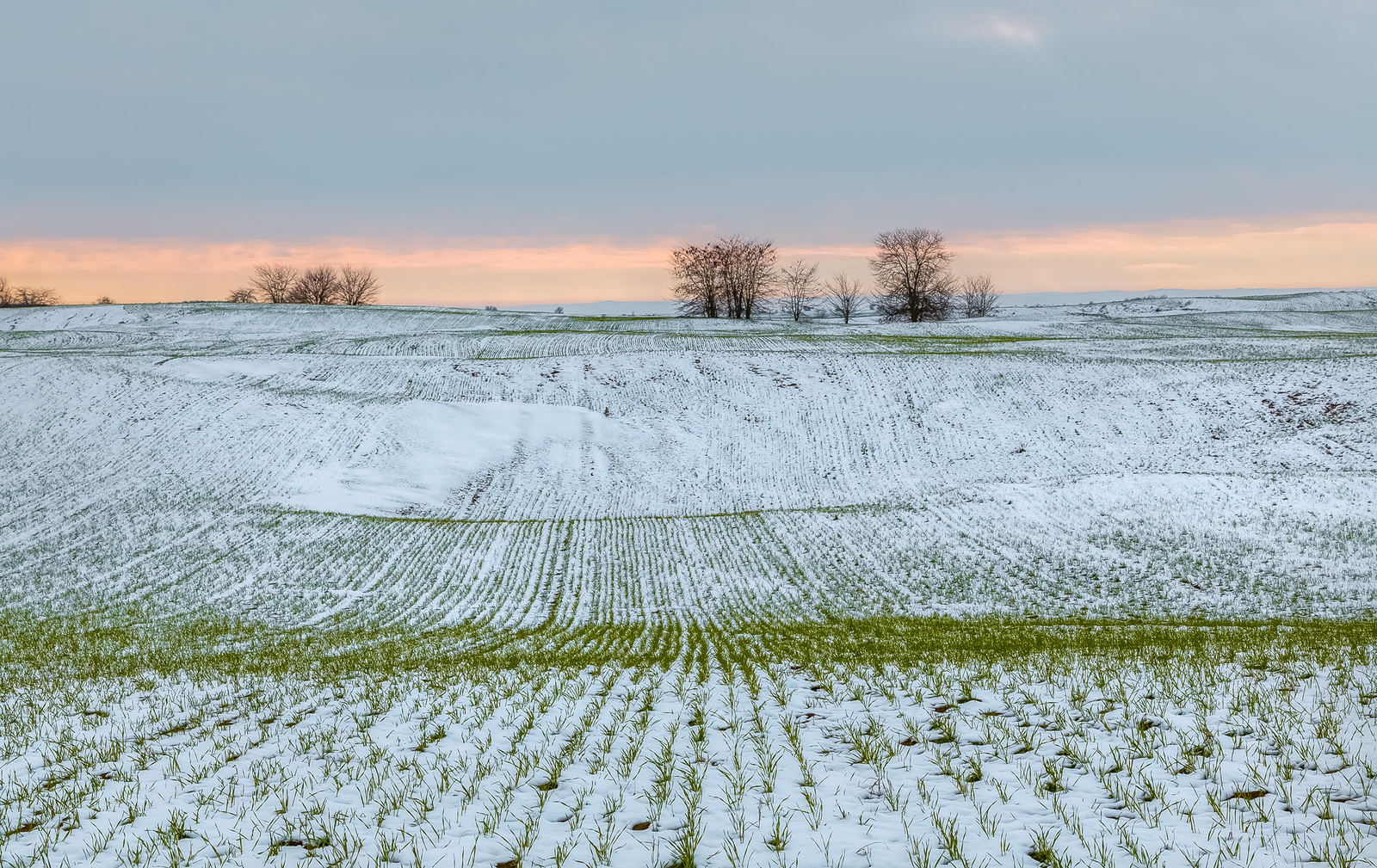
Laboratory and in-field technology enabled a team of researchers from the John Innes Centre in the UK to simulate full growing seasons and establish that chilling is important in late November/early December because it promotes growth during early floral development of the crop. Warmer winters lead to yield losses of up to 25%.
The researchers used indoor Controlled Environment Rooms programmed to simulate a winter annual growing season based on weather data collected from a farm.
Warmer winters lead to slower growth and reduced yield
Following the indoor, laboratory-controlled trial the team moved the experiment to a field trial, using a heated field plot system outdoors at the John Innes Centre’s field trials and experimentation site, Church Farm that simulate warmer winters.
The results from both the laboratory and the field trials were the same, warmer winters led to slower growth and reduced yield.
The scientists noticed oilseed rape plants can undergo a developmental phase known as flower bud dormancy if the winter temperature is too warm. This physiological process occurs as the microscopic, newly formed buds lie inactive waiting for low temperatures to signal growth and is well understood in perennial plants which grow year after year.
According to the scientists this development stage was not known to exist in annual crops; those that complete their life cycle in one growing season.
Chilled oilseed rape plants develop faster
Oilseed rape plants that were chilled at this key developmental stage developed faster and were higher yielding, producing more seeds per pod. Conversely plants grown in warmer conditions grew slowly and were lower yielding.
Strong correlation between late November-early December temperatures and yield
According to the John Innes Centre researchers previous studies have shown a strong correlation between late November-early December temperatures and yield in crops such as oilseed rape, which are winter annuals, planted in the autumn and harvested the following summer.
Colder temperatures during this weather window are linked to higher yields, while warmer temperatures result in lower yields. The differences in conditions during this important weather window account for a variation of up to 25% of total yield.
Understanding the reasons behind the statistical correlations between climate and yield is important for predicting the impact of climate change on crop production and could be used to develop strategies to adapt the crop to produce higher yields with warmer winters.
Source - https://www.futurefarming.com