The Bezos Earth Fund has awarded $9.9 million to the College of Agriculture and Life Sciences (CALS) to support a project developing low-cost virtual livestock fencing that would benefit farmers and animals, improve public health in developing countries and combat climate change.
The multidisciplinary project, housed within CALS’ new Food Systems and Global Change program, aims to improve existing virtual fencing technology, combine it with animal-monitoring technology and make it affordable and accessible to the low-income farmers who need it most.
The Earth Fund, founded in 2020 by Amazon CEO Jeff Bezos, has committed to donating $10 billion this decade to address climate change and protect natural resources. The award to CALS, announced March 15, is the second grant awarded to an educational institution, and the first to an agricultural college.
“Virtual fencing presents an exciting opportunity for grazing systems where traditional fencing may be costly and labor-intensive,” said Mario Herrero, the Nancy and Peter Meinig Family Investigator in the Life Sciences and professor of global development, who is heading the project and directs the Food Systems and Global Change program in collaboration with Julio Giordano, associate professor of animal science, and David Erickson, the S.C. Thomas Sze Director of the Sibley School of Mechanical and Aerospace Engineering in Cornell Engineering.
“This technology could enhance grazing management while increasing productivity, mitigating greenhouse gas emissions and improving livelihoods. The key is to develop a low-cost system that is accessible to the majority of producers, especially those in impoverished areas. We are thrilled to be partnering with the Bezos Earth Fund to develop and deploy these systems at scale,” said Herrero, also a Cornell Atkinson Scholar.
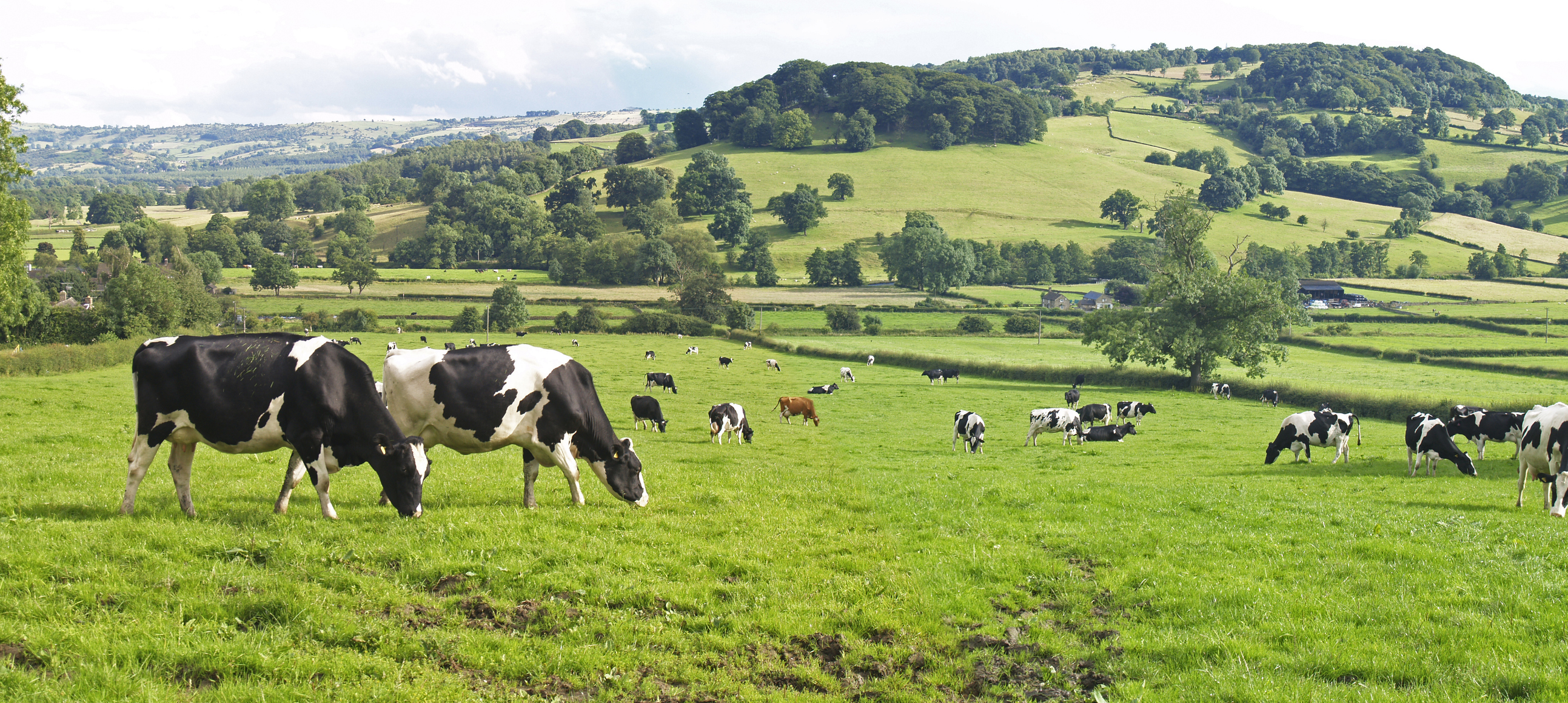
Livestock production is an enormous and growing component of the global economy and food supply: 40% of Earth’s ice-free land area is used for grazing, and livestock contribute 40%-50% of total agricultural GDP. While people in many parts of the developed world overconsume animal products, for subsistence farmers in developing countries, livestock are a critical resource. They provide additional sources of income, their manure is used to fertilize plant crops without chemical fertilizers and they offer a safety net food source in times of war or crop failure.
Some of the most promising strategies to reduce the environmental impact of livestock farming rely on fencing to prevent animals from overgrazing, protect water sources and reduce human-wildlife conflict. However, in much of the Global South, livestock producers often use hundreds to thousands of acres to support their herds, and fencing is prohibitively expensive.
Fencing prevents animals from overgrazing, which reduces soil erosion and allows plants to recover, thereby increasing their capacity to sequester carbon and combat climate change. It also keeps animals away from sensitive areas such as water sources used by humans, reducing contamination and disease transmission. And it keeps livestock away from areas with known predator populations, decreasing livestock loss and the human-wildlife conflict that often follows.
Virtual fencing involves equipping animals with wearable, GPS-enabled devices that discourage them from leaving grazing areas designated by animal managers. Existing technologies, however, are too expensive for most farmers in low- and middle-income countries.
“Our primary objective is to develop lower-cost virtual fencing systems that are more accessible in areas of the world where farmers will never be able to buy them on their own,” Giordano said. “And once you have these devices on animals, you can also monitor their behavior and physiology, which leads to opportunities for improved animal health and productivity. This ultimately benefits farmers, animals and the environment.”
Benjamin Houlton, the Ronald P. Lynch Dean of CALS, highlighted the variety of long-term efforts across campus that will both support this project and benefit from the insights it uncovers.
“This foundational support by the Bezos Earth Fund will catalyze our impactful work in the 2030 Project and AI Initiative, from local to global scales, leveraging Cornell’s unique model of collaboration,” he said. “By combining CALS’ approach to moonshot thinking with the Cornell Atkinson Center and the Cornell Institute for Digital Agriculture, these projects will enlist the power of transdisciplinary scholarship, pushing beyond the idea of discipline or domain for real-world impact.”
“The partnership with Cornell CALS, our first grant to an agricultural college, is all about knowledge generation,” said Andy Jarvis, the director of Future of Food for the Bezos Earth Fund. “We need to create knowledge in a space where others can access it. By working with CALS, we’re making this technology open access so that researchers and farmers in developing countries across the globe can access it and adapt it to their needs. These innovative solutions can significantly increase the productivity of land, reduce emissions and make livestock production more sustainable.”
Source - https://news.cornell.edu