Violent winds, tornadoes and flooding hit Midwest farms, flattening corn and raising concerns over yields, insurance claims and harvest costs.
A powerful severe-weather outbreak struck the Midwest on Tuesday, August 11, battering farms from Illinois and Indiana into Ohio with winds exceeding 100 mph, tornadoes and torrential rain. The system flattened corn fields, damaged trees and infrastructure and knocked out power to hundreds of thousands of customers. For U.S. agriculture, the timing is particularly important: corn is moving through a critical late-summer period, meaning lodging, flooding and prolonged field saturation could reduce harvestable yields, complicate crop insurance assessments and increase costs before harvest.
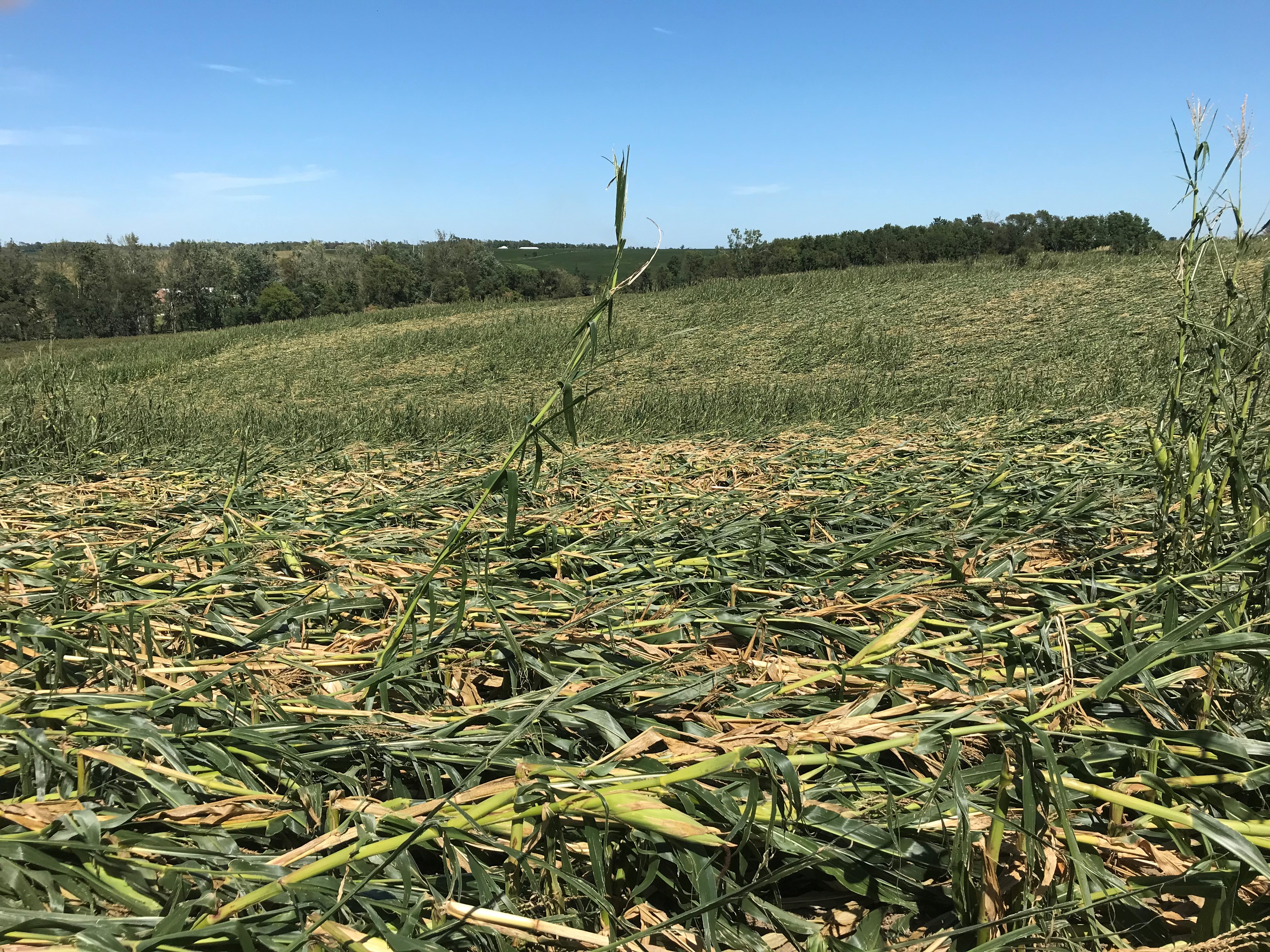
The most dramatic agricultural damage emerged where intense straight-line winds swept across productive Corn Belt counties. Wind gusts above 100 mph were recorded around Portage, Valparaiso and Chesterton, Indiana, while winds topping 70 mph reportedly pushed corn plants to the ground near London, Ohio. Radar-confirmed tornadoes were also reported around the greater Chicago region. For growers, flattened corn does not automatically mean a total crop loss, but severe lodging can make fields considerably more difficult and expensive to harvest while increasing the risk of ears being left behind.
Corn Damage Puts Yield and Harvest Economics Under the Microscope
The immediate question for producers is how much of the affected crop can recover and how much ultimately reaches the combine. The economic consequences depend on crop maturity, stalk damage, root lodging, soil conditions and the severity of wind exposure. Corn that remains heavily lodged at harvest can slow combine speeds, increase fuel and labor requirements and generate greater mechanical losses. Those additional expenses arrive after a season in which U.S. producers have already been closely managing input costs, commodity prices and margins, making even localized weather losses financially significant.
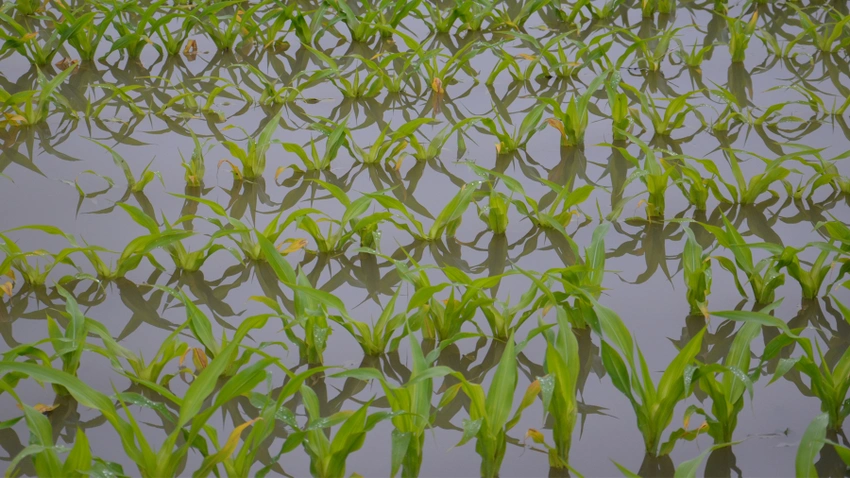
Excessive rainfall adds another layer of uncertainty. Repeated thunderstorms reportedly delivered 8 to 10 inches of rain in parts of the region, with northern Indiana among the areas experiencing extreme accumulations since Monday afternoon. Saturated soils can intensify root lodging and create standing water, while flash flooding can damage crops, rural roads, grain-handling infrastructure and farm access. Producers will also be watching for disease pressure if fields remain wet, particularly where plant injury and prolonged humidity create conditions favorable for crop deterioration ahead of harvest.
The broader market impact will depend on the geographic scale of confirmed yield losses. A dramatic image of flattened corn can show serious damage on an individual farm without necessarily translating into a major change in national production. For grain markets, the key issue is whether damage is concentrated in isolated corridors or extends across enough high-yielding acreage to alter U.S. corn production expectations. Traders will therefore be watching field reports, USDA crop-condition data, upcoming yield estimates and any revisions to production forecasts as the industry measures the storm's actual footprint.
Crop insurance could become increasingly important for affected farms. Producers with significant wind, flooding or related losses should document field conditions and follow required procedures before taking actions that could affect a claim. Coverage and indemnities depend on individual policies and the cause and extent of loss. Accurate field documentation will be critical as farmers separate cosmetic lodging from measurable production losses. Local crop insurance agents, agronomists and co-op advisers are likely to play an important role as growers evaluate whether damaged fields can still deliver economically viable yields.
The storm also produced consequences beyond crop production. More than 820,000 customers across Illinois, Indiana and Ohio were reported without power Tuesday afternoon, adding potential disruption for grain facilities, livestock operations, irrigation systems and other agricultural businesses dependent on electricity. Extended outages can become especially costly for livestock farms requiring ventilation, water pumping, feeding systems or cooling equipment, while transportation disruptions and damaged roads can create additional pressure across the agricultural supply chain.
Weather risk is now colliding with one of the most sensitive stages of the marketing year. Farmers are assessing physical crop damage while grain traders evaluate upcoming USDA supply estimates, commodity prices and harvest prospects. If surveys eventually confirm meaningful production losses across key counties, the storms could add a weather premium to corn markets. If damage proves localized, national supply expectations may remain largely intact. The next several days of field assessments will determine whether Tuesday's destruction becomes primarily a regional farm disaster or a larger factor for U.S. corn yields and prices.
For Midwest producers, the priority remains safety followed by a careful assessment of crops, farm buildings, power systems and transportation access once conditions allow. Additional severe weather and flash flooding remained possible into Tuesday evening, extending uncertainty across affected communities. What happens after the storms could matter almost as much as the initial wind damage: continued rainfall, saturated soils and delayed recovery could magnify losses. With harvest approaching, every lost bushel - and every additional pass through a damaged field - has a direct impact on farm profitability.
From Flattened Fields to Grain Markets: What Comes Next
The final agricultural cost will not be known until growers and agronomists can walk fields and determine standability, ear development and harvest potential. USDA observations and private crop tours could provide a clearer picture of whether yield expectations need to change. Precision agriculture data from combines may ultimately reveal the sharpest evidence of losses field by field. For farmers, insurers and commodity markets, the central question is no longer how violent Tuesday's storms were, but how many marketable bushels they may have taken away.
Source - https://www.agrolatam.com