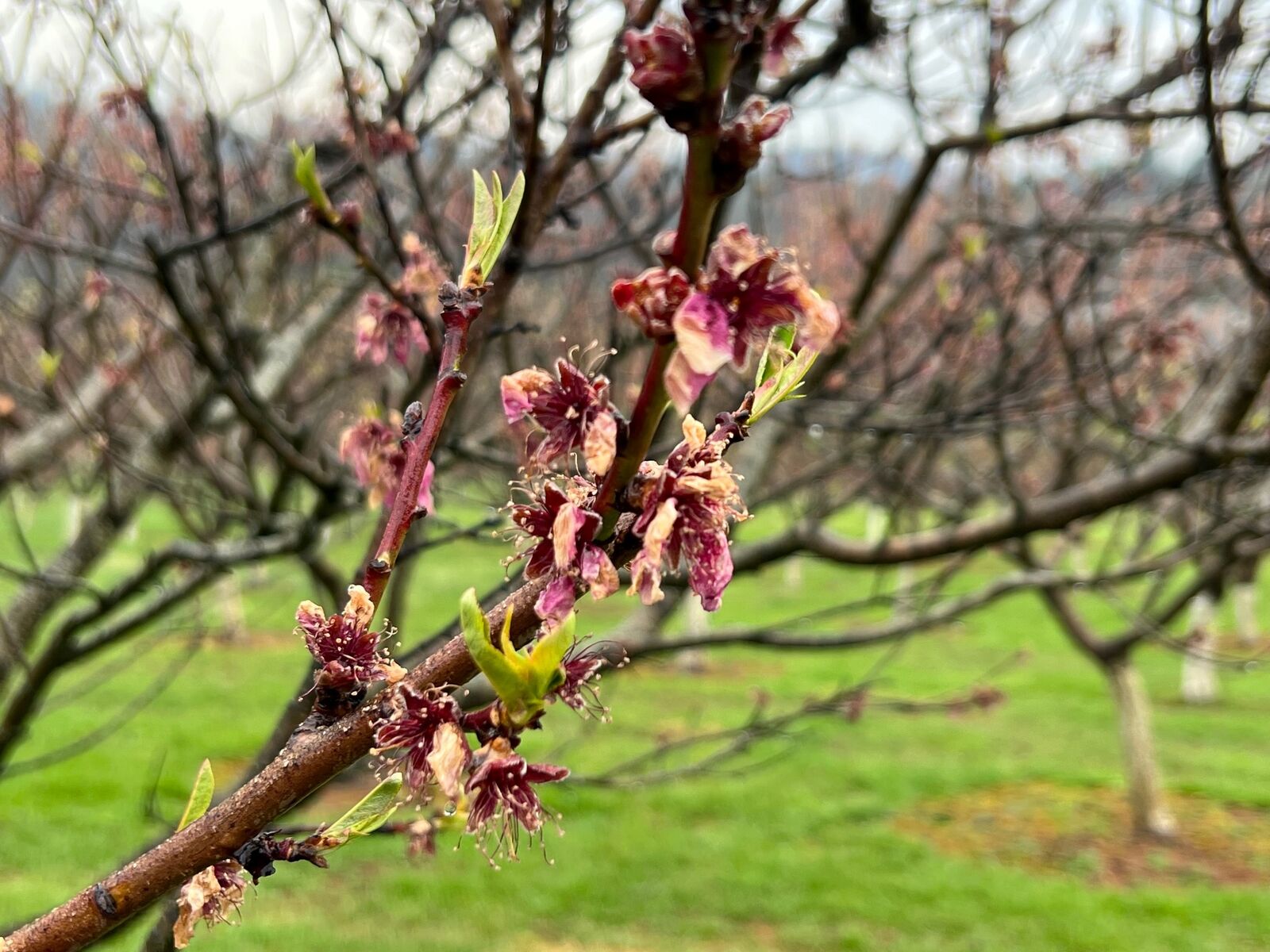
This spring has seen a series of news stories about the damage and loss of commercial peach crops. The culprit here in New England was an extreme cold snap on Feb. 4, when the temperature in Concord hit minus 15 degrees, and minus 20 at my farm in Weare. At that temperature the flower buds on most varieties of peaches will be killed, even though the trees are fully dormant.
Adding to the hurt is that both before and after that extreme cold night, the temperatures were above normal for February. In Concord, the next day saw 42 degrees, a full 57 degrees warmer than the low temperature on the previous day.
I recall many years ago hearing a UNH fruit specialist say that sometimes peaches can tolerate extreme cold, but not extreme temperature fluctuations.
So, you won’t find local peaches at New England farmers markets this summer. My wife and I won’t have any for eating, canning, or pies.
On my small farm in Weare, there are four peach trees, one of which is now 41 years old, which is ancient for a peach tree. We have had more over the years, but all but one except that ancient one have died and been replaced.
Peaches are fast-growing trees that don’t usually live more than a few decades. Commercial growers count on having to replant regularly to keep their orchards producing at peak capacity, as when a peach tree ages, parts of it die and production drops off.
Backyard peach growers can tolerate the gradual decline in production and can keep peach trees growing with proper care and judicious pruning.
I once was asked to prune the peach trees in a friend’s yard, and after I got done cutting off more than three-quarters of the previous year’s growth, the owner was shocked. “Won’t that hurt the tree?” she asked. I had to point out that peaches will grow back vigorously after pruning, as do apple trees. If left to grow without sufficient pruning, there will be so many peaches on the branches that either the branches will break under the weight or the peaches will all stop growing at golf ball size, or both.
My own little orchard, started more than 40 years ago, has seen good and bad peach years. Early on, it seemed that every third year or so, we had either a cold snap in the winter that killed the buds or a frost in the spring that killed the flowers. Most peach varieties’ dormant buds will be killed by cold between minus 15 and minus 20. That used to happen more often, but recently, thanks to to climate change, warmer winters have resulted in regular peach production. In the past 15 years the only crop loss from frigid temperatures was in 2016 and 2023. In 2016, it wasn’t a total loss, but we had a very small crop.
It would be stating the obvious to observe that growing peaches in New Hampshire has always been a risky proposition. Our climate was always just a bit too cold for these warm-weather trees. But a couple decades of successful crops may have lulled me into thinking one of the benefits of a warmer climate would be more frequent, better peach harvests. February 2023 reminded me to expect the unexpected.
In warmer climates, however, peaches are also in trouble. The University of Georgia’s peach specialist has recently calculated that the warmer weather followed by a killing frost has resulted in a 60 percent loss. National Oceanic and Atmospheric Administration (NOAA) data indicated that January through March in Georgia was 6.4 degrees warmer than average, and that meant the peach trees bloomed earlier and the blooms were damaged or killed by March frost as a result. Similar impacts were also reported in South Carolina.
Fortunately, it appears my peach trees and those of our local growers will survive the damage and probably produce a crop next year, barring another extreme cold snap.
I will miss the fresh juicy and sweet taste of local peaches this summer. A supermarket peach, shipped before it ripens to prevent damage, can never rival a peach picked fresh from the tree.
If somewhere in our region there’s a grower whose peach trees dodged the sub-zero bullet, and you see them in the market, don’t pass them up.
Source - https://newhampshirebulletin.com