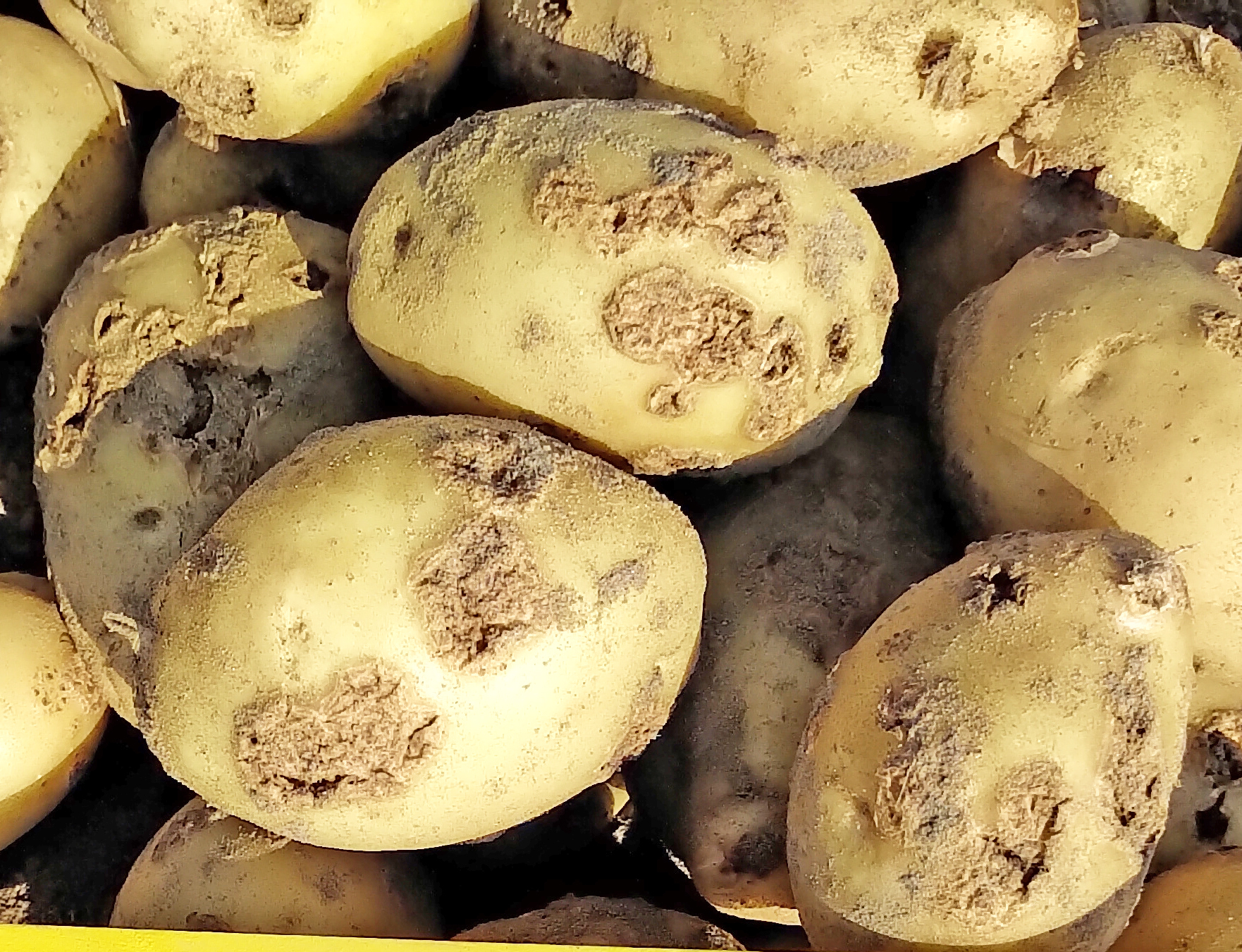
On Thurs., Nov. 10, the National Potato Council and a dozen state potato associations issued a letter to USDA Undersecretary of Marketing and Regulatory Services Jenny Moffitt calling on the department to work with the Canadian Food Inspection Agency (CFIA) to develop new phytosanitary protocols to prevent the spread of potato wart from Prince Edward Island to U.S. growing areas. The letter follows a risk assessment issued by USDA’s Animal and Plant Health Inspection Service (APHIS) on Oct. 14 that concluded the disease is “almost certain to be introduced” to the United States without additional mitigation measures in place.
Recognizing that USDA was put under significant political pressure to reopen the border to table stock potatoes following a White House meeting between Prime Minister Trudeau and President Biden, the industry remains disappointed that last Spring exports “were allowed to reopen with essentially the same protocol as before the ban was implemented.”
In May, the industry wrote Secretary Vilsack urging him to implement “reasonable mitigation measures” that could be completed efficiently and without impacting trade in clean product. “Unfortunately,” the group wrote, “no such steps were taken and potato wart disease detections continue to be announced on PEI as recently as last week.”
Based on the Oct. 14 APHIS risk assessment, “it is clear that the current protocol (the 2015 Federal Order) no longer meets Secretary Vilsack’s standard and does not provide the necessary mitigation to protect the U.S. industry from disease introduction. Therefore, a new protocol must be put in place immediately in order to establish the necessary protection,” the group states in the letter.
NPC and the state organizations offered a number of questions and observations that should be addressed by APHIS and CFIA in constructing a new protocol, including:
The pest risk assessment didn’t detail the numbers of soil samples remaining to be tested from PEI. How many tests are still outstanding and when will they be completed? (It should be noted that Canada did not allow U.S. shipments of potatoes to resume in an unrelated phytosanitary issue until all tests were completed. Therefore, APHIS is allowing a lesser standard for Canadian growers than Canada demands of U.S. growers.)
Bulk shipments of fresh potatoes are allowed to enter the United States and in many instances are broken down and repacked. The U.S. industry strongly recommended against this practice, as the repacking process creates opportunity for improperly discarded product to spread disease. Will APHIS limit these bulk shipment sizes to reduce this risk?
Once the initial round of tests are finally complete, will APHIS require CFIA to maintain a meaningful level of testing in PEI for the foreseeable future to comprehensively monitor the disease progression?
In contrast to APHIS’ recent risk assessment, “it is surprising that APHIS would effectively return to the prior protocol given all the troubling information about the disease and the situation on PEI that was revealed following the export ban,” wrote the group. “Reinforced by this new risk assessment, the U.S. industry maintains its stance and urges you to address our questions in formulating the essential new protocol that this crisis demands,” they conclude.
Source - https://www.freshplaza.com