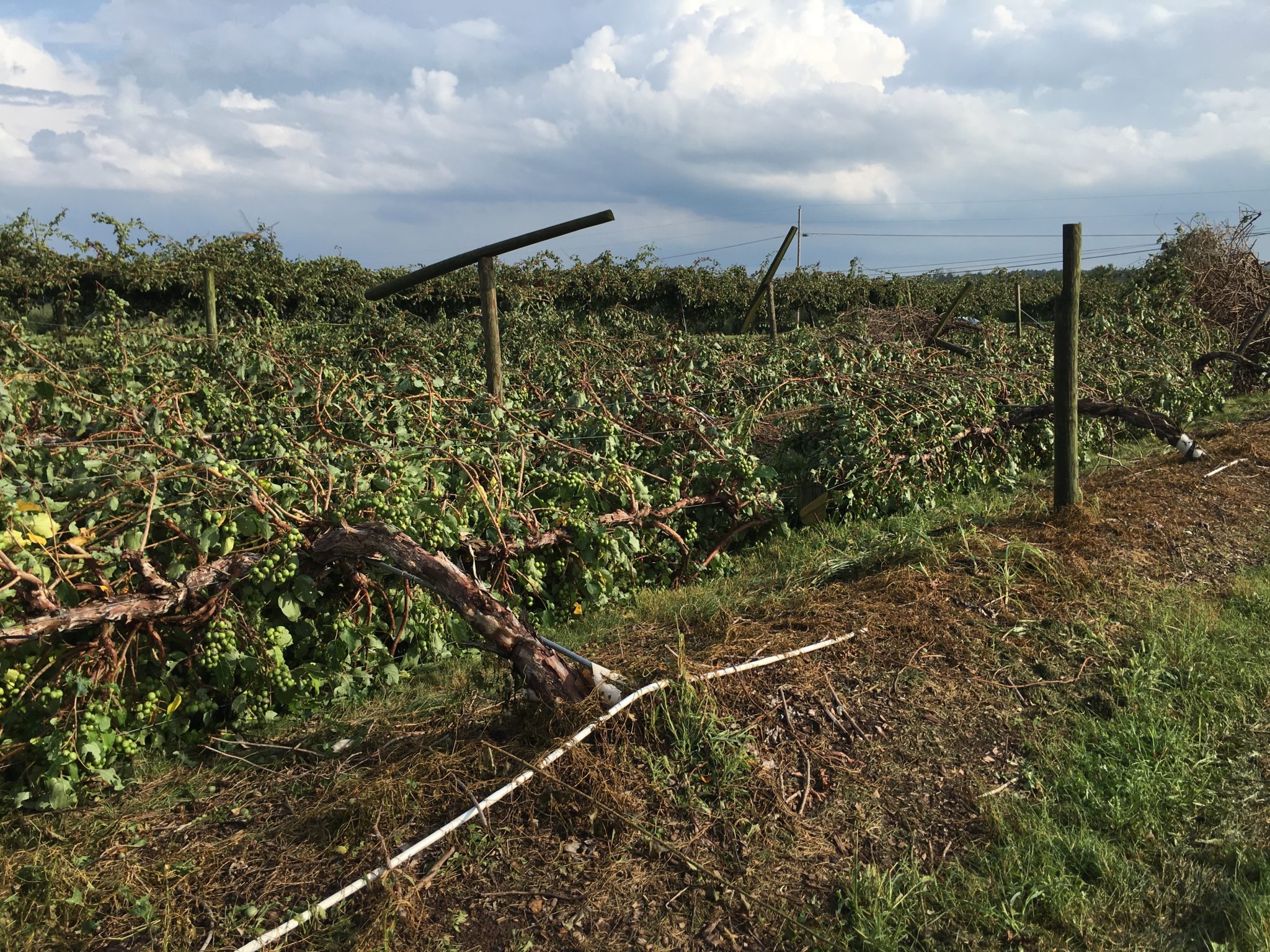
Grape crop losses from an April 25 freeze will be as bad as feared.
“Since then we have completed crop estimates and, unfortunately, there is considerable crop loss in the affected areas,” said Jennifer Phillips Russo, viticulture specialist at Cornell’s Lake Erie Research and Extension Laboratory Regional Grape Program.
“Last year, the average Concord tonnage across the belt was approximately 9.5 tons/acre. We did experience high crop levels. Historical average is more along 7-8 tons/acre. Where the frost hit in Chautauqua County, estimates are coming in 1-2 tons/acre. The areas that were not affected have a nice crop on them.”
Chautauqua County grapes are grown in the strip of relatively flat land along Lake Erie, with weather conditions too severe for them in the nearby hills. According to a report prepared by facility director Terry Bates and Russo, the April 25 morning freeze severely affected most grapes grown in the strip east of the town of Ripley. In that town, conditions were slightly warmer and the grapes escaped relatively unscathed.
However, in the affected area, it’s grim: some grape growers east of Westfield saw a complete, 100% loss of primary bud shoots. Cornell had declared “official bud break” on April 22, three days before the freeze.
“We also were hit with an isolated hailstorm on July 15th in the already affected areas near the Cornell Lake Erie Research and Extension Laboratory, causing further injury to the already frost damaged areas,” Russo said.
“At this point we are encouraging that growers continue to care for their vineyards despite the low tonnage, because we are also farming for next year’s crop potential which is developing this season,” she added.
According to a document prepared by Bates in May, projected crop loss ranges from around 15-20% at the state border in Ripley, to 50-75% in Westfield, to 80-100% near Silver Creek. By comparison, 0-5% of the grape crop near North East, Pa. may have been affected by the freeze.
During a meeting discussing the freeze in late May, County Executive PJ Wendel noted the devastation. “That’s millions and millions of dollars. This is a huge impact,” he said.
Source - https://www.post-journal.com