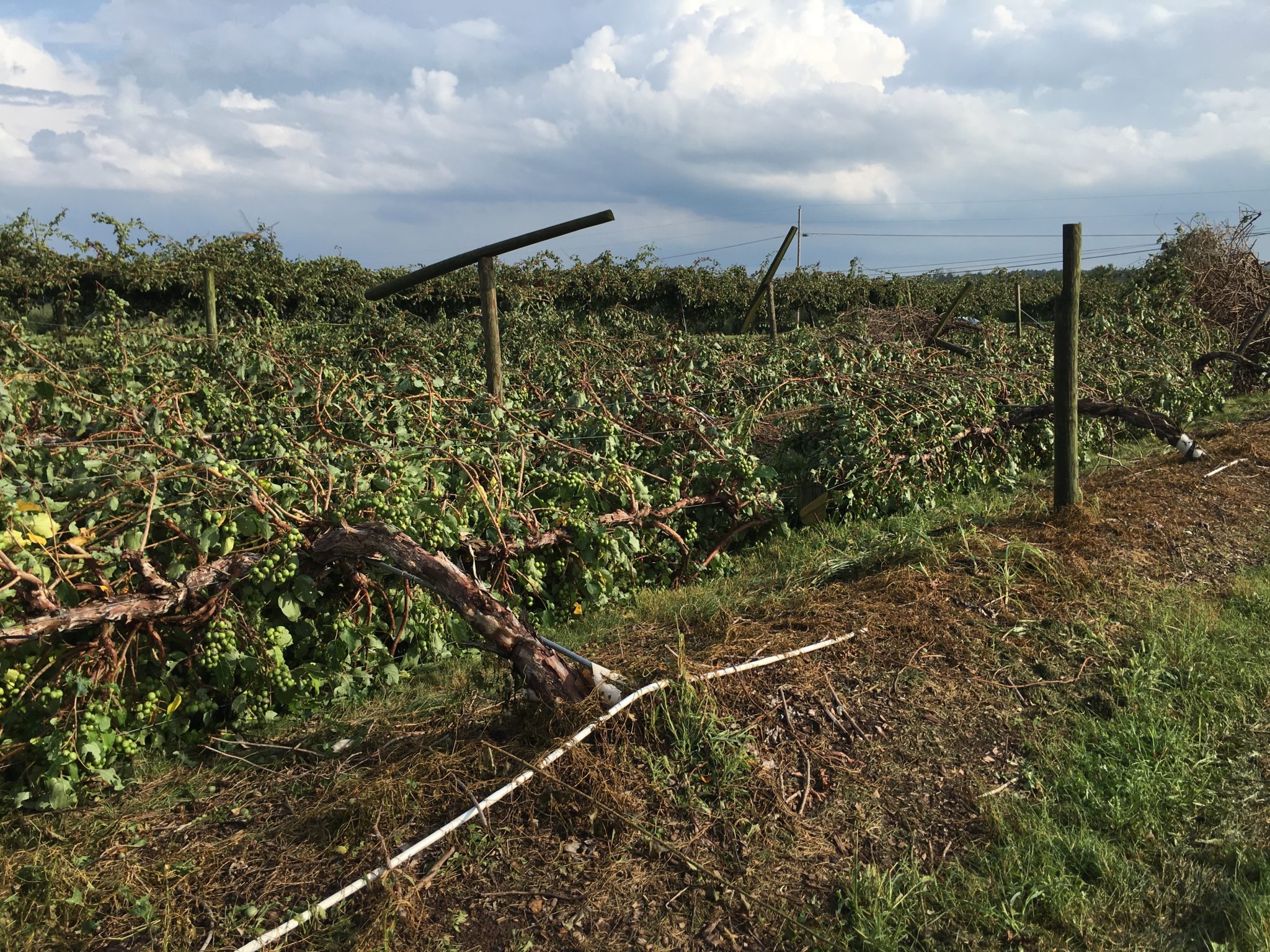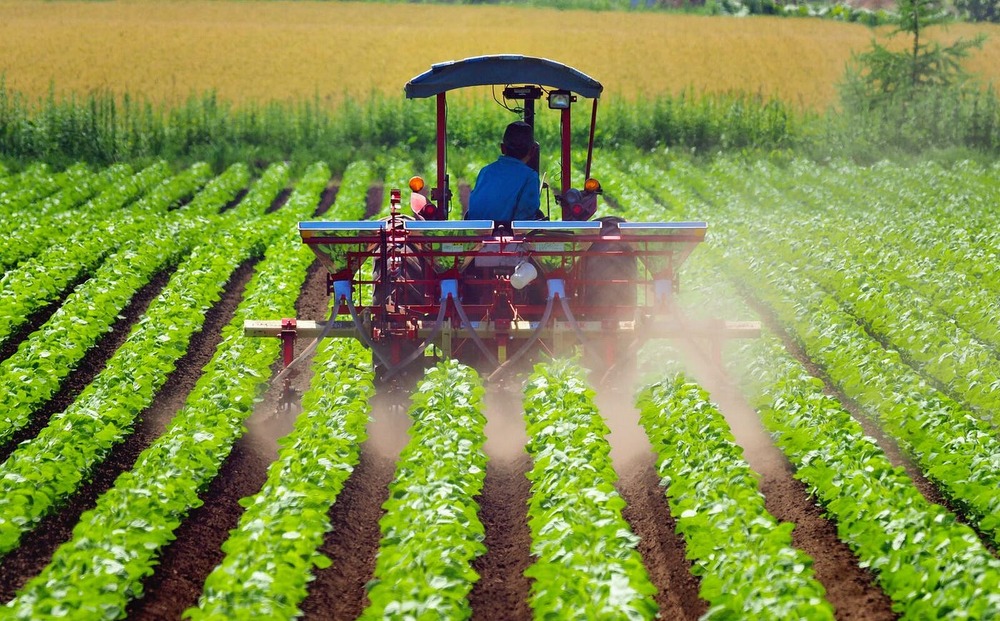
The $1.53 trillion U.S. agriculture and associated industries are facing little known threats worth billions to their bottom lines from climate change, wind power and a fungal disease decimating bats who help farmers by eating insects.
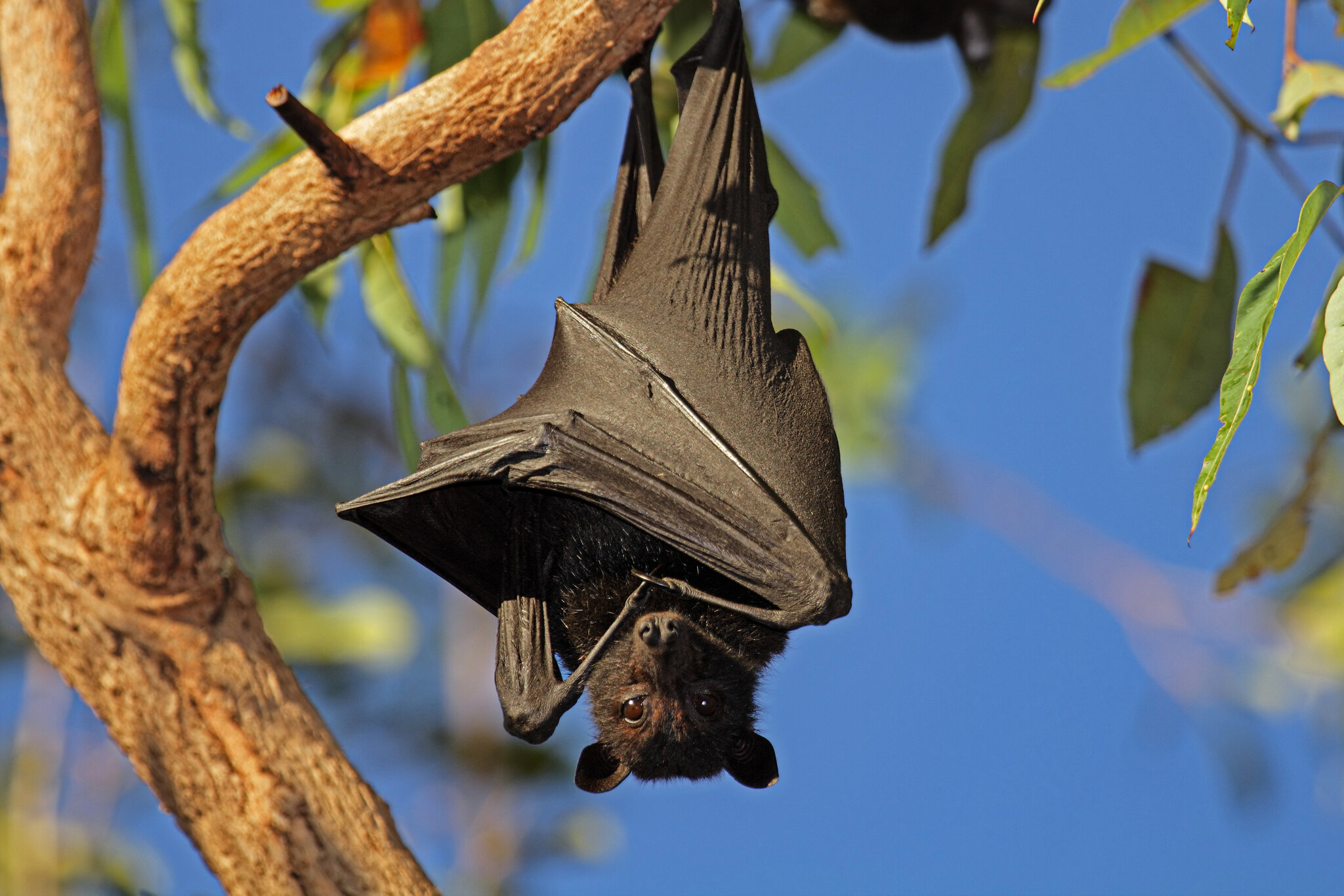
Bats deter crop loss and insecticide usage since they consume insects. The yearly value of their national “service” to the agriculture industry has been estimated to range from $3.7 billion to $53 billion, according to the U.S. Geological Survey, an arm of the U.S. Department of the Interior.
“This value does not, however, take into account the volume of insects eaten by bats in forest ecosystems and the degree to which that benefits industries like lumber. It also doesn’t take into account the critical importance of bats as plant and crop pollinators. So the actual monetary worth of bats is far greater than $3.7 billion per year,” the USGS says.

The $1.53 trillion U.S. agriculture and associated industries are facing little known threats worth billions to their bottom lines from climate change, wind power and a fungal disease decimating bats who help farmers by eating insects.
Bats deter crop loss and insecticide usage since they consume insects. The yearly value of their national “service” to the agriculture industry has been estimated to range from $3.7 billion to $53 billion, according to the U.S. Geological Survey, an arm of the U.S. Department of the Interior.
“This value does not, however, take into account the volume of insects eaten by bats in forest ecosystems and the degree to which that benefits industries like lumber. It also doesn’t take into account the critical importance of bats as plant and crop pollinators. So the actual monetary worth of bats is far greater than $3.7 billion per year,” the USGS says.
In 2023, the U.S. agriculture, food, and associated industries accounted for 5.6% of $1.53 trillion in gross domestic product, notes the U.S. Department of Agriculture’s Economic Research Service. Farms—that also have ample insects for bats to consume—contributed $203.5 billion of that total.
How Bats Benefit Society
Aside from eating insects that would otherwise pulverize food and vegetables, bats also pollinate plants yielding 300 fruit species of fruit and cocoa. Tequila aficionados owe them a debt of gratitude for pollinating agave.
“Bats and agave have a mutualistic relationship. Pregnant bats need the sweet nectar from agave plants to make their annual migratory journeys between central Mexico and the U.S. Southwest to give birth to a single pup,” notes Bat Conservation International of Austin, Texas.
These contributions that bats render to the U.S. economy are likely unknown to many, except those in communities of scientists, bat enthusiasts and environmentalists.
However, today’s dire plight of the North American bats is gaining more attention.
More information is being released to the public about the societal benefits of bats, mortality causes and conservation efforts.
Bat Mortality Rising Due To Climate Change, Fungal Disease, Wind Turbines
Despite being sheltered in caves, bats can have their lives endangered by severe weather events.
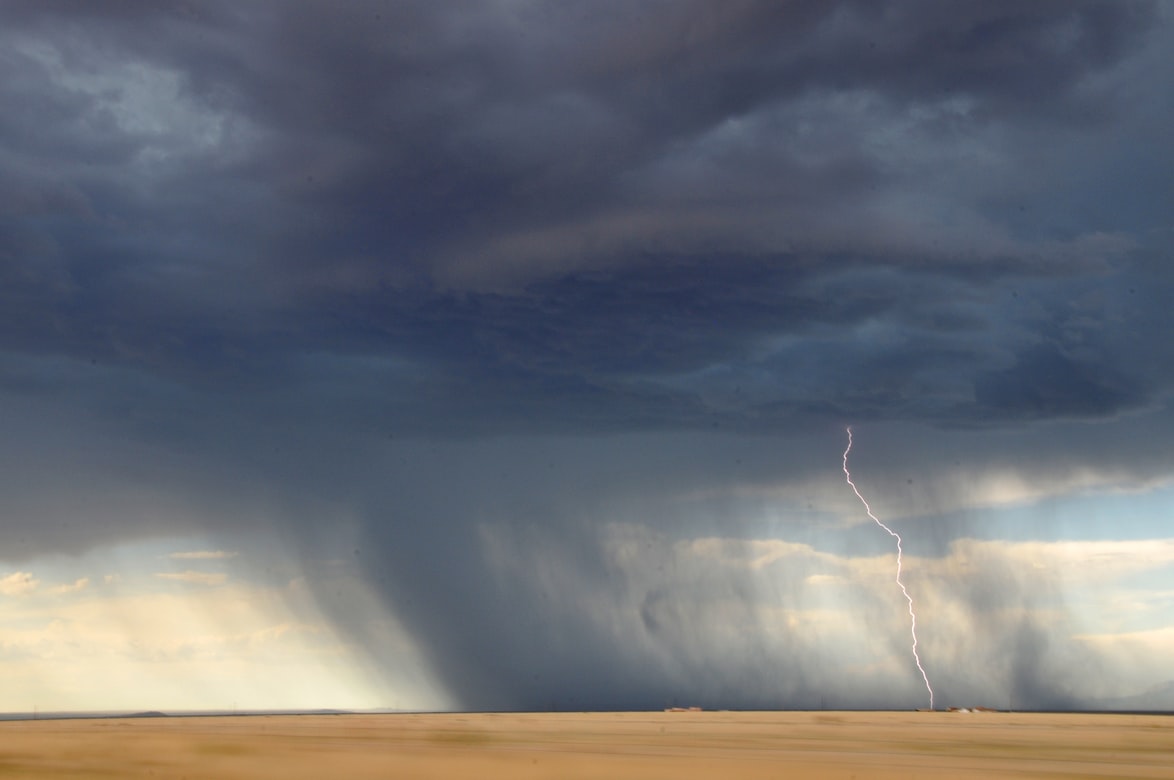
“Intense storms and heavy rainfall can flood roosts, killing entire colonies of bats trapped in caves or mines. Early season snow and prolonged freezing temperatures have also killed bats by blocking cave entrances with snow drifts and ice, or causing bats to freeze to death within their roosts during hibernation,” noted the National Park Service in an explanation linking bat mortality to climate change.
Extreme heat and wildfires associated with climate change are also killing bats when habitats are destroyed. Bats can also have trouble surviving droughts and high temperatures. Warmer temperatures can result in unfavorable changes to traditional habitats where bats have migrated.
They face other dangers from wind turbines thought to kill thousands of mostly migratory tree bats each year in North America. It is theorized that the bats may mistake the turbine blades for trees when they are migrating and reproducing since more dead bats are found underneath turbines in the summer and fall. A 2018 report by the American Wind Wildlife Institute called “Bats and Wind Energy: Impacts, Mitigation, and Tradeoffs” discussed a study more than a decade old linking wind turbines to between 90,000 and nearly 400,000 bat fatalities in the U.S. and Canada in 2012. (Some 70% of those dead animals were migratory tree bats.)
Today’s bat mortality rates from wind turbines are undoubtedly much higher given the federal government’s recent push and funding for green energy.
Another threat is a rapidly spreading fungal disease that only bats can catch called white-nose syndrome—which can discolor a bat’s snout, ears and wings. The lethal disease has been wiping out entire hibernating U.S. bat colonies since it appeared about 17 years ago.
Since then, millions of bats in 40 states have died from the disease, thought have been brought on people’s clothing and gear into caves and mines where is thrives while likely spreading from bat to bat.
White-nose syndrome can kill every bat in a colony hibernating in a cave where it is introduced. Consequently, government officials are trying to prevent the disease from spreading to other areas and warning cave visitors to keep away from both affected states and those nearby.
This bat disease is spreading rapidly now in California after being detected in Humboldt County in 2023.
Multiple efforts are taking place to analyze threats to bats and determine how to offset declining populations through conservation. One notable example is the first “State of Bats Report” published in 2023 by North American Bat Conservation Alliance. The report forecast that 52% of North American bat populations are likely to experience significant reductions in the coming 15 years.
People Using Sophisticated Technology To Help Bats
The USGS has unveiled 10 tools its bat biologists are experimenting with using advanced technology to create scientific solutions for bat conservation efforts. These include:
- Acoustic bat detectors—converting the animals’ high-frequency calls through computers so people can hear the sounds to learn more about habits and populations.
- Mist nets—placing thin nets over water where bats drink and eat bugs to capture and release the animals for evaluation.
- Bat houses and condos—installing bat roosts in wooden boxes where researchers may spray the fungal vaccinations in experiments to tackle disease.
- Nanotags—using tracking transmitters weighing “as little as a raindrop” in California and Washington to track white-nose syndrome and plan for offshore wind energy.
- Gene editing biosensors—shifting a technology from use for people to wildlife to detect the white-nose syndrome’s pathogen by swabbing a bat’s skin.
- 3D printing—lowering costs to create and use audio and video recording devices for bats.
- Thermal cameras—enabling scientists to “see” bat activities in their dark caves through heat-sensing imagery.
- Interactive wind turbine database—overlapping bat data with wind turbine locations that could mitigate bat lethality in ways such as slowing turbine speeds during bat migratory seasons.
Another interesting USGS use of science to help bats is its involvement in the North American Bat Monitoring Program’s visual database. The repository contains over 100 million audible records and over 50 million other types of information such as roost surveys. The public and NABat stakeholders can explore the web portal and its interactive map to view locations and learn about species and other information about bats.
Despite the threats facing bats, their survival rates can increase when more information is known not only about their contributions to society, but also about how people and government are using science and technology to save them.
Source - https://www.forbes.com