Specialty crop growers can't seem to catch a break this spring, as producers faced crop losses from freezing temperatures in early spring and some plant damage from severe storms at the end of March.
Damage to crops from cold temperatures will reduce yields for the 2023 season, Amanda McWhirt, University of Arkansas System Division of Agriculture horticulture crop specialist, said Monday.
"Freeze injury from weather events in March hurt peaches, strawberries, some blueberries and possibly blackberry crops," McWhirt said.
"These crops were blooming or breaking bud and these tissues are very sensitive to temperatures below freezing to the low 20s [degrees Fahrenheit]. I have also heard of some damage to spring planted vegetables from the hail in the Fort Smith area last weekend."
There are 38 varieties of peaches, as well as plums and blackberries, growing on 15.5 acres at Jamison Orchards near Nashville in Howard County. The orchard lost almost their entire peach crop from a freeze in mid-March; Jamison has approximately 3,500 peach trees ranging from five to 25 years old.
"Last year was the drought, but I did manage to have a good crop last year -- it was my first crop since my husband passed away in 2019 and before that, I lost a crop due to failure to pollinate, it rained 25 days of March in 2020, then the next year, we had the 'snow-pocalypse' [as] everybody calls it," orchard owner Lou Jamison said.
"This year we had two nights of 24 degrees for six plus hours, and it just turned them into little popsicles. ... I didn't stand a chance. I have one variety of peach [and some apples] that bloomed late, but that's it, I'm wiped out again."
Peaches at the orchard are typically ripe enough to harvest between June and August.
National Weather Service Little Rock Senior Forecaster John Lewis said counties across northwest Arkansas experienced below freezing temperatures in early spring, and a second round of cold weather was more widespread across the state.
Sub-freezing temperatures struck the Ozark Mountains and parts of the northeast region on March 13.
"Temperatures [were] in the upper teens and lower 20s across portions of northern Arkansas in the [March] 13th through 15th time frame and then about a week later ... now it becomes a little bit more widespread where much of the state was affected by well below freezing temperatures," Lewis said.
Temperatures on the morning of March 19 in Howard County were in the mid-upper 20s, and in the east of Johnson County temperatures were in the upper teens and lower 20s, Lewis said.
"That was probably one of the colder mornings during the time frame of [March] 13 through the 20th," Lewis said.
"I would say temperatures were sub-freezing across the entire state on the morning of the 19th."
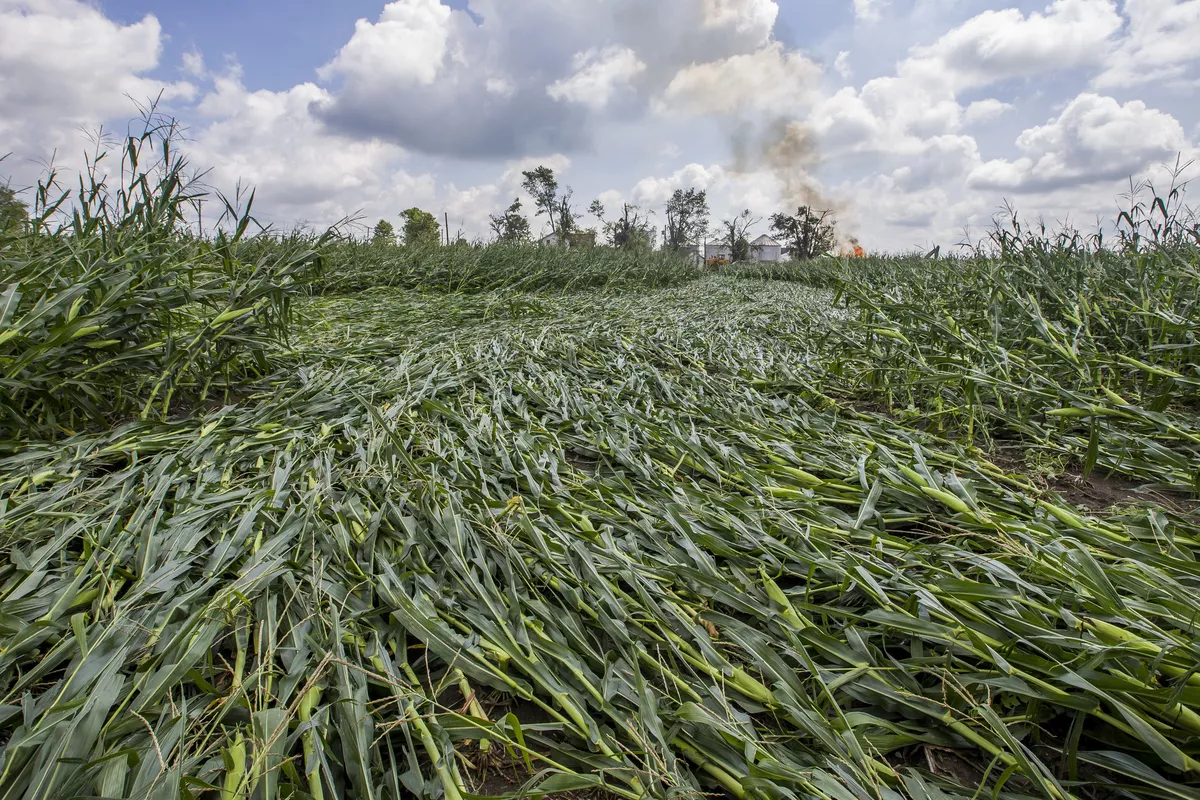
Van Buren County, which is home to a few specialty crop farms, experienced tennis ball sized hail during the severe storms that swept across Arkansas and spawned tornadoes touching down in Little Rock, North Little Rock and Wynne on March 31.
Tomatoes, watermelons and sweet potatoes make up a larger percentage of specialty crops grown in Arkansas, McWhirt said.
But there are about 1,100 fruit production operations in Arkansas generating $180 million for the state, according to the Arkansas Farm Bureau's website on crop commodities.
Peach production has been one of the major fruit crops in Arkansas for many years, to include fresh market and processing types of peaches, according to the University of Arkansas Division of Agriculture Cooperative Extension Service.
There are around 200 to 300 acres of peaches grown across the state, and similar amounts of blueberries, blackberries and strawberries; most peaches in Arkansas are grown in small orchards, McWhirt said.
There are a few limitations when it comes to peach production for both commercial and home producers and one such risk is crop reduction from spring frosts, which have been common in the state over the last 15 to 20 years, the Extension Service said.
"It is difficult to estimate losses for the whole state," McWhirt said.
"[Northwest Arkansas] had more injury to strawberry fruit and blooms in March, but those plants continue to produce flowers for several weeks and now growers are harvesting. Peaches in many parts of the state were blooming or close to full bloom during the march freeze, and the crop was greatly reduced or eliminated in many parts of the state. Some later blooming peach varieties may be OK and still set some fruit."
White County Extension Agent Sherri Sanders said early season peach varieties were affect by freezing temperatures.
"Some of our earlier varieties -- you know you have some [peaches] that are early season, mid-season and late season varieties -- and many of our early season varieties, the blooms were frozen, so there won't be much at all of that crop," Sanders said.
"But we expect good quality mid-season and late season peaches," she said.
Source - https://www.arkansasonline.com