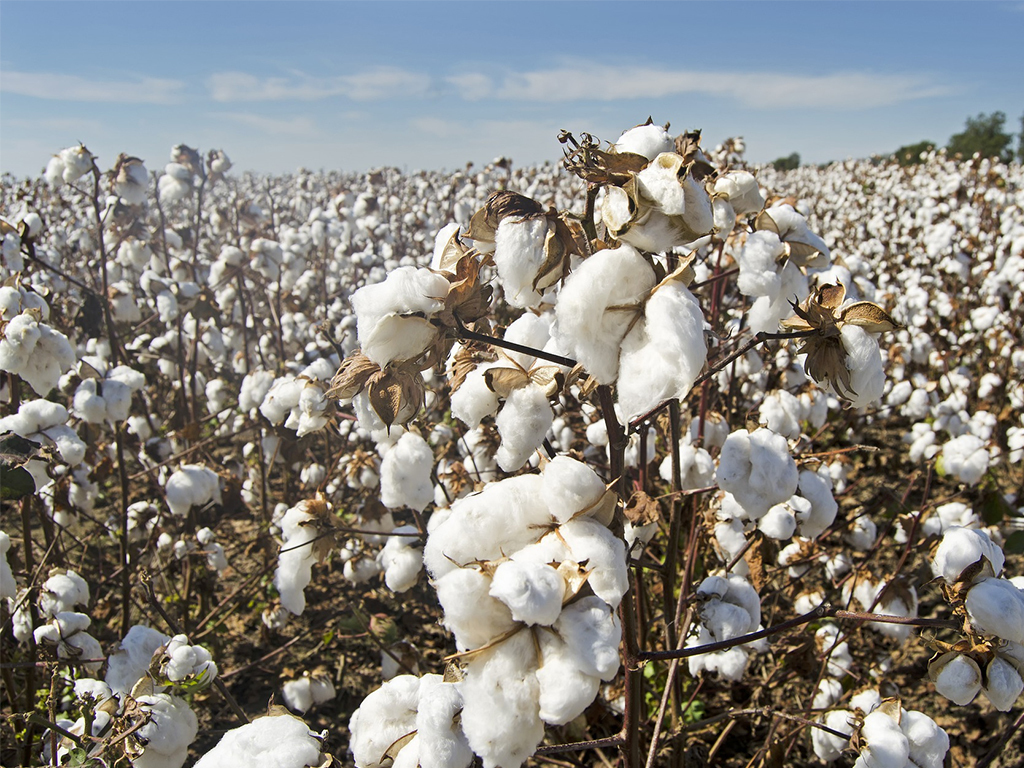
All along the High Plains and West Texas, cotton farmers are facing the same scenario: Thirsty, scorched crops that are dwindling by the day.
Across the region, no community will come out unscathed from the detriment caused by the unwavering drought conditions and extended periods of heatwaves that loomed over the area earlier this year.
"We have zero dryland cotton in Lubbock County right now," Brant Baugh, a county extension agent for agriculture and natural resources with Texas A&M Agrilife Extension, told Lubbock County Commissioners during the Sept. 26 meeting. "We're looking at a pretty catastrophic loss in dollars from the agriculture community."
In mid-August, local experts cited numbers between 65 to 70% abandonment at the time. Now less than two months later, Baugh estimates the level of loss and abandonment at around 70 to 75%, he told the county commissioners.
"(The cotton's) gone. It's going to be catastrophic," Baugh reiterated.
A struggling region
The struggle doesn't end at the border of Lubbock County, and the same dreadful year reflects on farmers in neighboring communities.
"This year was about as bad as 2011, possibly worse," said Bryan Baker, a farmer in Sudan. "We tried to save our crop in (2011). It was tough, but it was also a learning experience. This year, we were less hesitant to give it up."
Baker, who is a fourth-generation farmer, said this was the worst farming year he's seen since he began in 1996, shortly after graduating from Texas Tech. Between his irrigated land and dryland, he planted about 3,000 acres this year but expects to harvest only about one-tenth of that.
Now, as we become more likely to face extreme droughts and more long-lasting heatwaves, Baker said most farmers are having to reassess — especially those who use irrigation, as the Ogallala Aquifer and local wells are taxed amid the relentless temperatures.
"We're getting closer to a time where I think we'll have to get rid of irrigation and switch to all dryland just so we can have some water to drink," Baker said.
In addition to his concerns for the future of farming, Baker concerns just as much for the impact on adjacent agriculture industries.
Serving as board president for his local gin, Baker stressed the amount of loss they'll face without receiving the same "safety net" that crop insurance can provide to farmers. On average, Texas Producers Coop harvests about 100,000 bales each year but will be lucky to reach 20,000 bales this year, he said.
Just northeast of Lubbock, Mike Lass of Floydada has farmed dryland cotton for nearly 30 years, and it isn't unusual to see such a tough year for dryland cotton, he said. In his personal experience, only about one in seven years result in a good crop, while the other six are of poor quality or break even.
While he remained optimistic for quite some time, he realized by July 10 that it was no longer worth salvaging. This year, he planted about 500 acres and expects to receive only about 120 acres total.
Although he's only going to harvest about one-fourth of his crop, he knows he'll make by with the help of insurance.
"Your farmers are going to be OK, because we've got this safety net to fall back on," Lass said. "The big losers in this deal are your cotton gins, your agronomy-type sales places that sell chemicals and fertilizers, because they don't have that safety net."
And, Lass pointed out that insurance may, unfortunately, no longer offer that same survival help to farmers in coming years. As crops get smaller, the paycheck that insurance sends their way does, too, he said.
Darren Hudson — Combest Endowed Chair of Agricultural Competitiveness at the Texas Tech Department of Agricultural and Applied Economics — expects more and more farmers to echo the same dreadful stories.
The High Plains and West Texas could, in the best-case scenario, produce about 2 million acres of cotton this year, although several local experts have lower expectations as the number continues to sink.
With the West Texas region producing between 4 and 6% of the global cotton crop, Hudson previously told the Lubbock Avalanche-Journalthat this loss would represent a 3% dip in total global production.
With a regional production loss of about 65%, Hudson said the region could face a $2.1 billion loss in total economic activity and more than 17,100 job cuts across the region. Even with crop insurance, that loss would only slightly decrease to a still-detrimental $1.2 billion and about 9,200 job cuts.
"This has an impact on employment -- all kinds of things. So, it's pretty, pretty significant," Hudson said.
Source - https://eu.lubbockonline.com