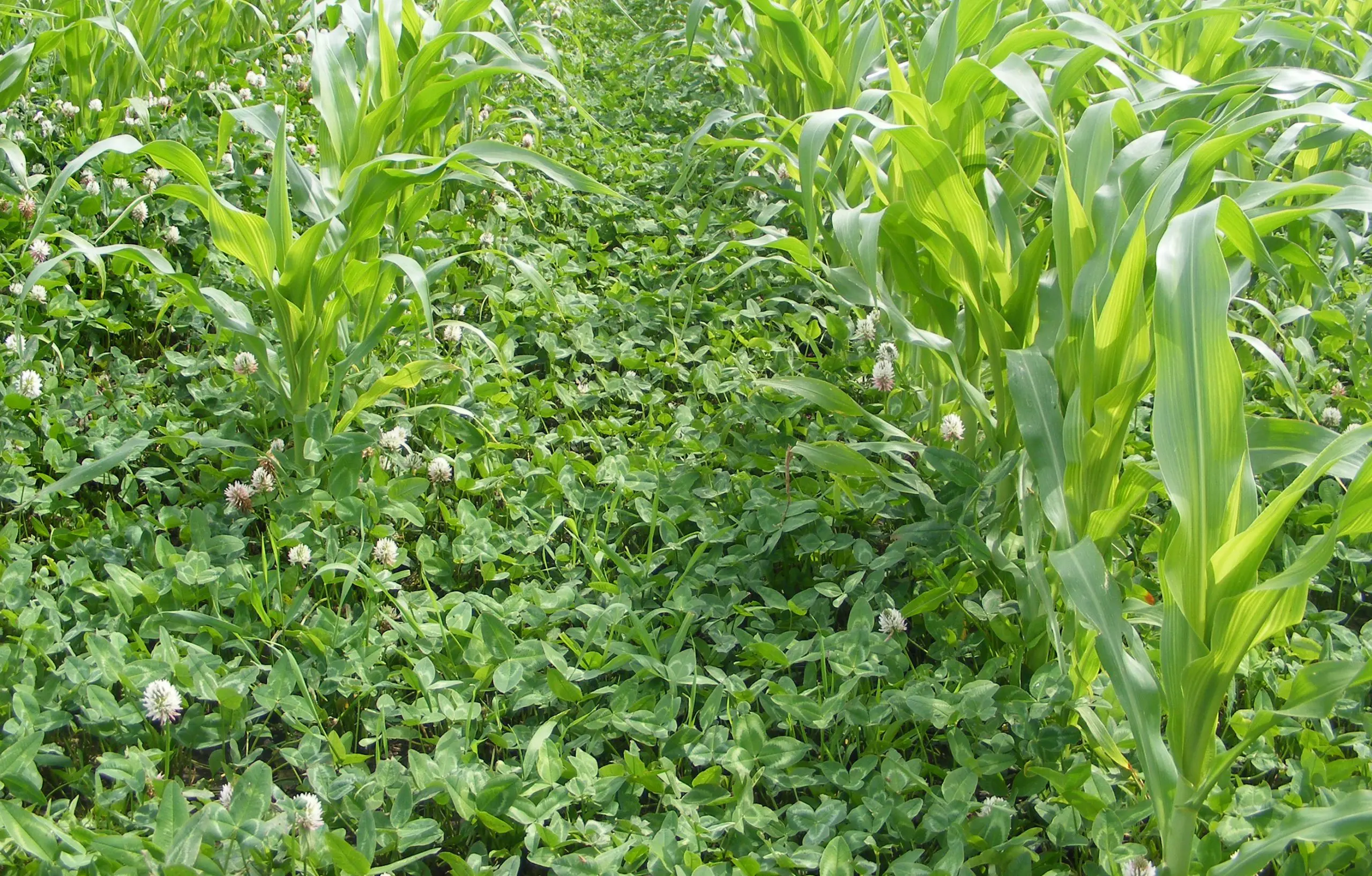
Promoting early season plant cover, primarily through the use of cover crops, can be more effective at reducing pest density and crop damage than insecticide applications, according to a Penn State-led team of researchers.
In a newly published study, the researchers suggest that the best pest management outcomes may occur when growers encourage biological control — in the form of pests' natural enemies — by planting cover crops and avoiding broad-spectrum insecticides as much as possible.
The use of cover crops and other conservation-agriculture practices can help reduce erosion and nutrient loss, enhance soil health, and improve pest management, noted study co-author John Tooker, professor of entomology in Penn State's College of Agricultural Sciences.
"Plant cover, such as cover crops, can provide habitat for populations of natural enemies of pests," Tooker said. "Winter cover crops, for example, can harbor predator populations outside the growing season of the cash crop. Once the cover crop is killed to allow the growth of the cash crop, cover crop residues remain on the soil during the growing season and enhance habitat for predators.
The goal of this study was to investigate how conservation-agriculture practices — cover crops, no-till planting and crop rotations — interact with two pest-management strategies that employ insecticides. These strategies are preventive pest management, in which growers plant seeds treated with systemic insecticide for the control of early-season pests; and integrated pest management, or IPM, an approach that involves scouting for pests and using insecticides only when pest numbers exceed economic thresholds, and then only when non-chemical tactics are ineffective.
"We hypothesized that the increased early-season vegetative cover provided by winter- or spring-sown cover crops would benefit predator populations and increase their biological control potential," said study lead author Elizabeth Rowen, a former doctoral candidate in Tooker's lab who now is an assistant professor of entomology at West Virginia University.
"In contrast, we expected that preventive seed coatings, despite reducing the severity of early-season insect pests, would also reduce predator abundance and release non-insect pests such as slugs from biological control," she said. "In addition, we thought that IPM would be equally effective as preventive seed coatings for managing pests, but with less disruption to the predator community and biological control."
The researchers, who recently reported their results in Ecological Applications, found that using any insecticide provided some small reduction to plant damage in soybean, but no yield benefit. The findings suggested that, in corn, vegetative cover early in the season was key for reducing pest density and damage.
An unexpected result was that the IPM strategy, which required just one insecticide application, was more disruptive to the predator community than preventive pest management, likely because the applied pyrethroid was more toxic to a wider range of arthropods than neonicotinoid seed coatings.
Source - https://www.freshplaza.com