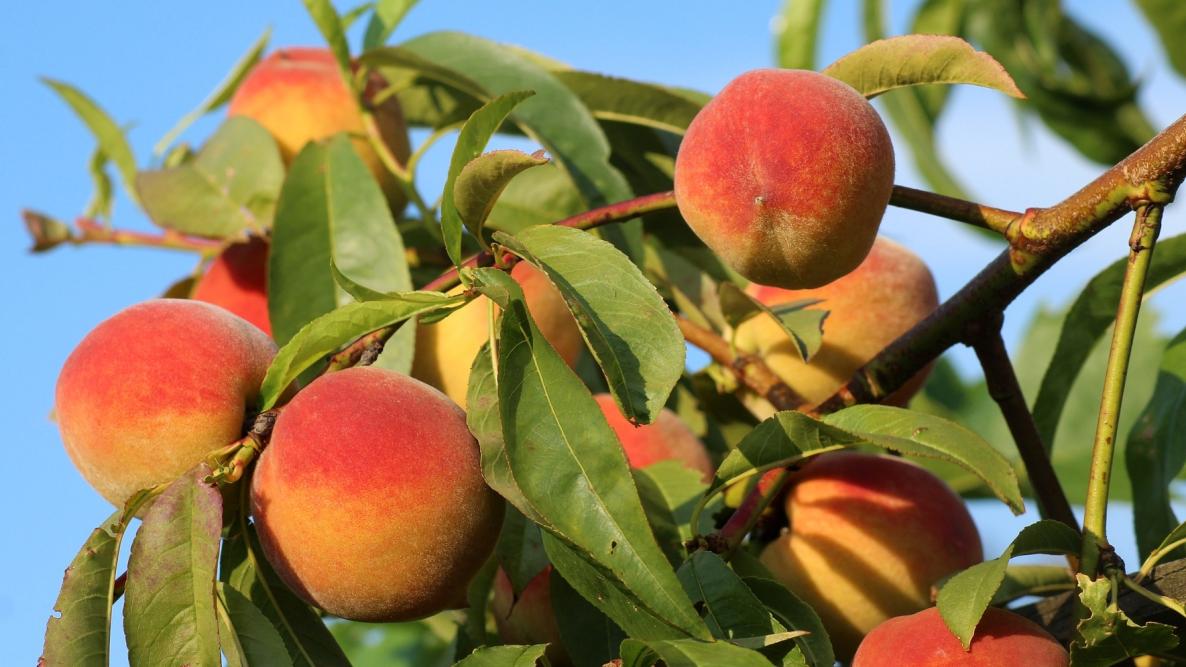
Despite the chatter and hustle of a dozen or so workers, the production line at Flamm Orchards in deep southern Illinois sits mostly barren this summer because a cold spell in late December knocked out a vast majority of the 300 acre farm’s peach crop.
“To have a loss as bad as we’ve had this year, it’s very rare,” said Austin Flamm, the farm manager of the family orchard. “This is the worst loss we’ve had in about 16 seasons.”
With the help of seasonal workers, Flamm’s automated operation would wash, sort and package hundreds of thousands of peaches that are produced on the Union County orchard in a typical year.
But 2023 isn’t a typical year. There are so few peaches that Flamm Orchards is processing their fruit by hand and selling very little wholesale to grocery stores.
“It’s a very bad crop this year,” Flamm said.
For many people, summer is synonymous with peaches, but they will be harder to come by. Consumers will still see the fuzzy fruits on grocery store shelves this summer, but there may not be as many local varieties, and they may be pricier.
In the Metro East, Chris Eckert, president of Eckert’s Inc., said it’s hard to guesstimate just exactly how much his 300 acre orchard lost during the same storm. While he won’t know exact figures until the season’s over, and he’s done all his math, it’s pretty easy to tell that it’s not a good year.
“We're going to be pretty excited about a half a crop — if we can get that,” he said.
Southern Illinois peach producers are not alone, as warm weather in Georgia knocked out 90% of the Peach State’s production earlier this spring.
The national picture
While Georgia is known as the “Peach State,” California tops production — and it’s not close. South Carolina, generally, produces a little more than Georgia too.
Kay Rentzel, the executive director of the National Peach Council, said South Carolina also had a rough year. She estimates South Carolina’s production will stand between 30-40% of normal figures.
“With such a significant number and volume of fresh peaches coming out of Georgia and South Carolina in any typical year, it does make a big difference to the marketplace and the availability of fresh peaches,” Rentzel said.
Lucky for peach connoisseurs, California’s crop should be better. The Mid Atlantic region also had a solid year, she said.
Exactly how much Illinois plays into the national picture is hard to determine. With only three commercial orchards — Flamm’s, Eckert’s and another Union County — the U.S. Department of Agriculture doesn’t keep detailed records of the state’s production.
However, because there’s a drop in the local supply and on the national scale, the price of peaches will trickle upward this season, Rentzel said.
Formerly the president of the National Peach Council, Eckert said he expects peach prices will be up 25-50% nationally. At this Belleville store, he estimates his prices are closer to 20% higher this year. Flamm guesses his are up 30%.
Weather can be tricky for farmers
Every decade or so, peach farmers expect a bad year. For Eckert, his last was 2014. But this year’s shortage brought something he’d never seen before.
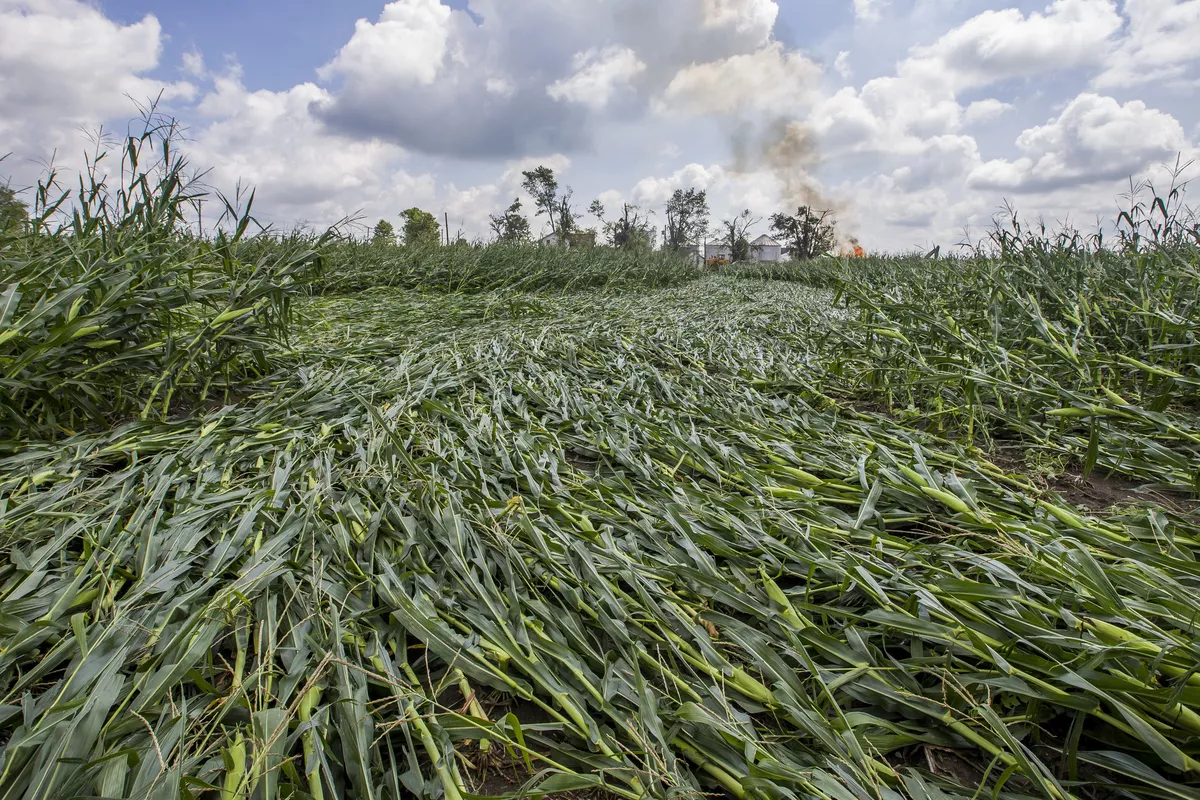
The frigid December temperature knocked out nearly all of the trees that grow the GaLa variety of peaches. But just a few rows over, the Red Haven variety remained unscathed. On one side of the hills that cut through his orchard, some varieties did well. And on the other side, there’s none.
It's a strange outcome that he, his peers and other experts from the industry haven’t been able to diagnose. But then again, farmers expert nature to produce curious outcomes, he said.
“These types of one-off situations are not that unusual,” he said. “In our world, it’s like, ‘Well, that’s never happened before.’”
Why Belleville’s peaches fared better than Cobden’s peaches two hours south also feels random — almost a mystery — to the producers.
Eckert said he didn’t realize how bad it was until Austin Flamm’s uncle, Mike, called him in the spring. Until then, he didn’t expect this bad of losses.
“Goes to show: You never can be too arrogant in this business because Mother Nature is always going to treat you to some humble pie,” Eckert said.
For the peach producers, losing some crops is anticipated. It’s what farmers call “partial loss.” But a “total loss” might have been more convenient for Flamm. If they’d lost all their peaches, they wouldn’t have to pay for labor, chemicals and other costs this season.
“We'd have been better off without any, but it is what it is,” Flamm said. “You got to play with the hand you're dealt.”
This year’s crop shows the danger of agriculture and just how much the weather’s volatile nature can be the industry’s biggest detriment, said Raghela Scavuzzo, the executive director of the Illinois Specialty Growers Association.
“Look at an agritourism business that might be open eight weeks to 10 weeks out of the year,” she said. “If it rains every weekend, nobody's gonna be there on the farm.”
What does the shortage mean for the farms?
For both orchards, peaches are the biggest money makers. In Belleville, it’s a multimillion dollar crop, and that means a multimillion dollar impact on their revenue, Eckert said.
Despite the meager peach year, it’s not all gloom and doom. Both Eckerts and Flamm said USDA-backed insurance can help them get through bad years like this. Also, they produce other fruits and veggies.
“The nice thing about most of our specialty crop production is that they are diversified, which means that peaches are not their own business revenue,” Scavuzzo said.
Both Eckert and Flamm say they’re expecting solid apple, blackberry and strawberry crops.
“It helps offset from the lack thereof on the peaches,” Flamm said.
There’s another silver lining too. Because Illinois producers aren’t selling as many peaches wholesale to grocery stores, this may be a good year for an excuse for customers to go directly to their local orchard, Scavuzzo said.
“We know Georgia gets credit for their peaches, but our peach producers are phenomenal,” she said.
For Eckert, the seventh generation in his family to run the orchard, local peaches are just better. As soon as they’re picked from the tree, the peach is a time bomb. The longer it takes for the fruit to find its way to a consumer, the worse it gets, he said.
That’s different from an apple, which stays ripe a little longer while it’s being shipped or sitting on a shelf.
Regardless, Eckert said it resonates with customers when they don’t have a fresh, juicy peach.
Lucky for the Illinois producers, the higher prices this season aren’t keeping away customers like Dan Elkins away. The self-prescribed “Flamm Fan” — and former 15-year-old peach picker — drove the hour from Cape Girardeau for the fresh fruit in mid July.
He said he’d normally buy two bushels. On this Thursday afternoon, he said he’d settle for one.
“This is a great operation,” Elkins said. “They’ve got great people here. Love the peaches, so I’ll be back for more.”
Source - https://news.stlpublicradio.org