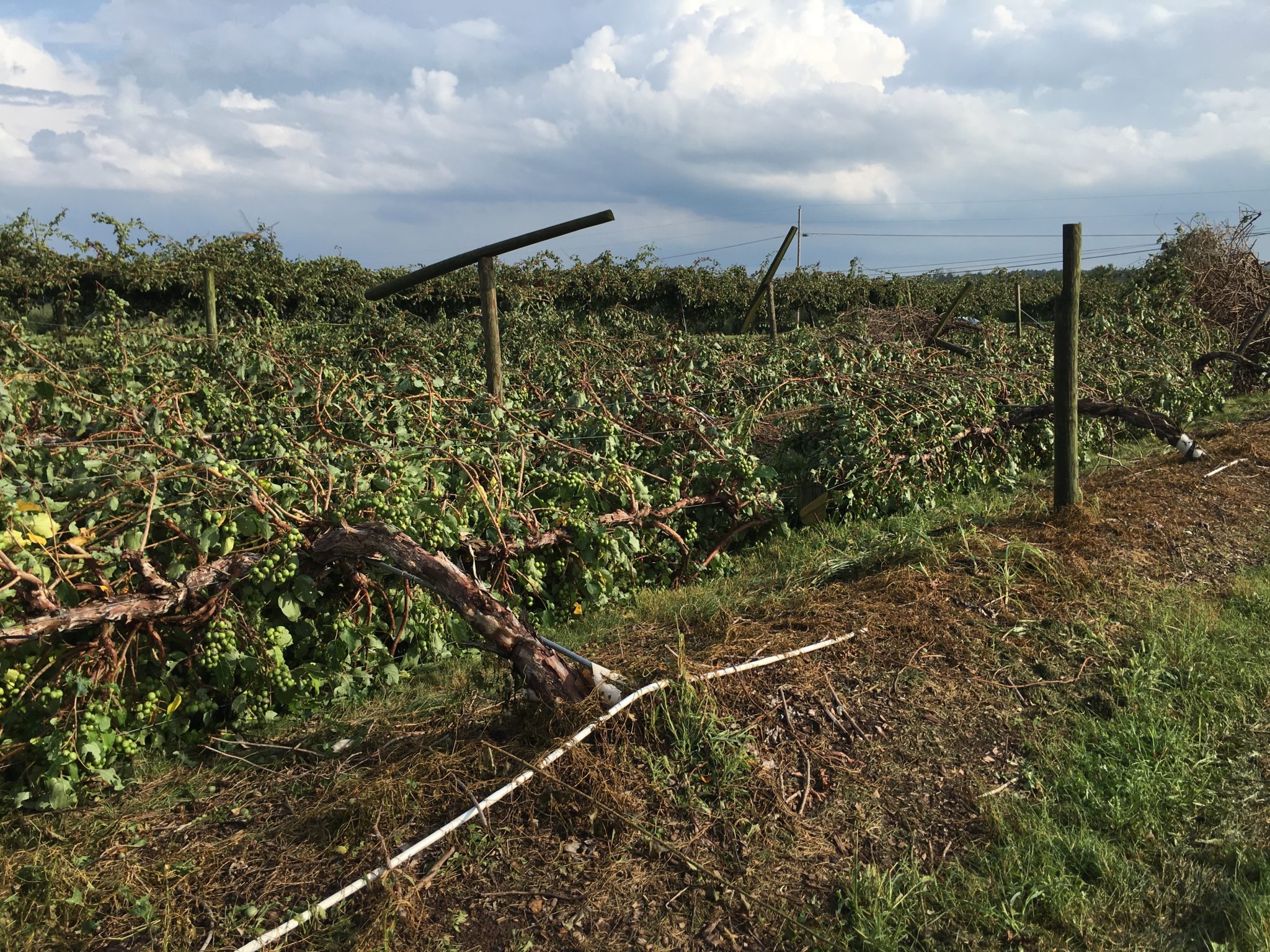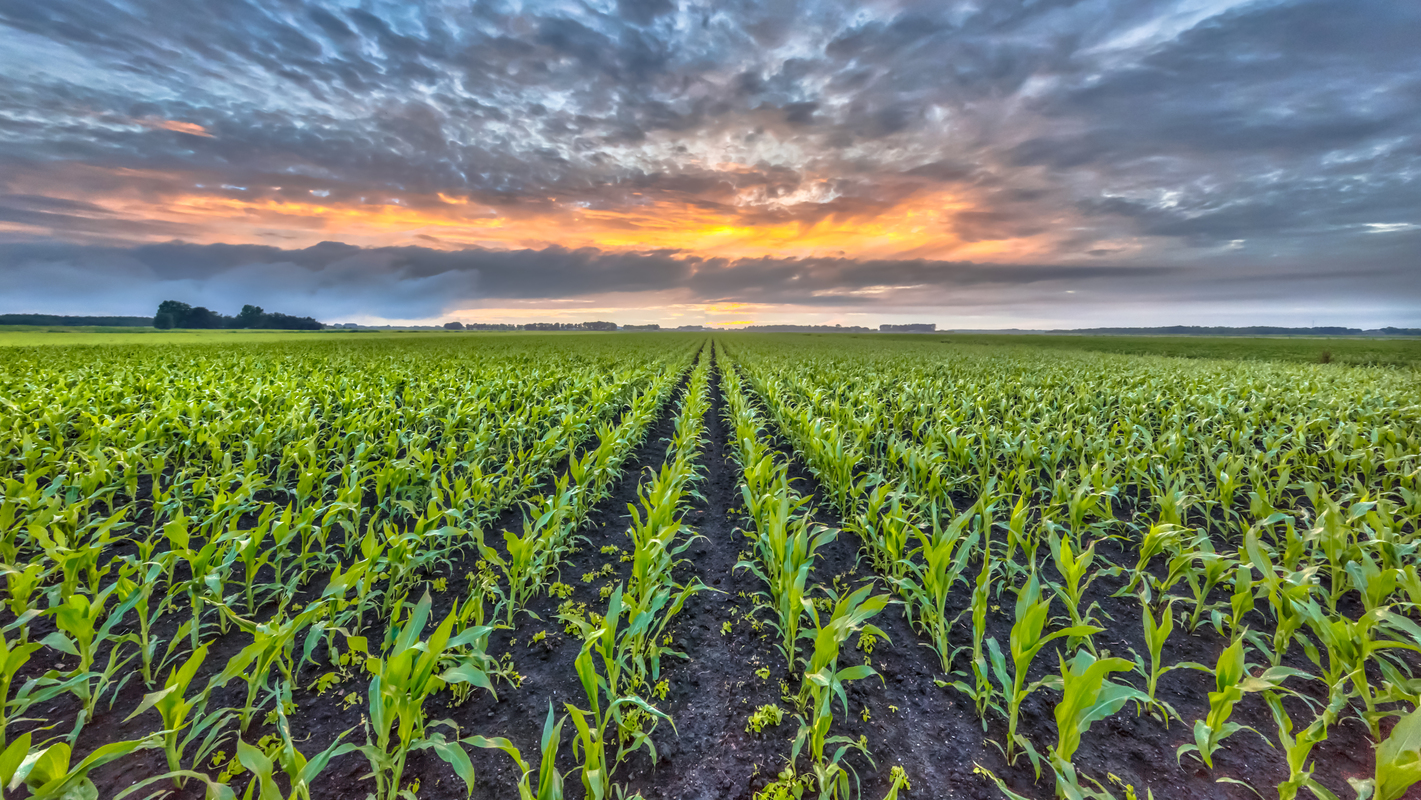
Researchers at the U.S. Department of Agriculture's Agricultural Research Service (ARS) are responding to the increasingly uncertain climate. The warmer and more unpredictable weather has been a source of instability on U.S. farms. ARS agroecologists turned to history for a solution to this challenge, which inspired them to better understand the benefits of crop rotations.
Growing a sequence of different crops in rotation has been practiced for millennia. Crop rotations can rebuild soil health, fight pests and diseases, and spread-out the risks of various pests and crop diseases.
Crop rotation also increases the sustainability of agricultural systems and reduces risk from increasingly adverse weather. However, widespread adoption of diverse crop rotations is limited by economic uncertainty, lack of incentives, and inadequate information about long-term outcomes.
ARS researchers have compiled data from 20 long-term experiments spanning up to six decades to compare outcomes from different crop rotations across North America. Their aim was to assess changes in outcomes under different growing conditions for individual crops, such as corn or soybean, in the crop rotations. They also looked at the outcomes of the complete rotation as a whole—not just the components.
By examining both, they could quantify the benefits and trade-offs of crop rotations. Outcomes tended to be better for individual crops when grown in more diverse crop rotations across all growing conditions. Outcomes of complete rotation depended on which crops were grown in the crop rotation.
This shows that the composition of crop rotations was a bigger factor than individual crop performance. Diverse rotations improved outcomes of complete rotations under poor growing conditions. This illustrates how diverse rotations can reduce the risk of crop loss in a changing climate.
"Our results add to the growing body of evidence that is essential to removing the barriers that prevent adoption of sustainable farming practices," said ARS ecologist Katherine Muller. "To our knowledge, no long-term, multi-site studies have attempted to understand the effect of changing the rotation on the performance of both the complete rotation and its component crops simultaneously."
Many farmers face steep hurdles to diversify their crop rotations. More diverse rotations may make management more complex and may require new equipment. Farmers may also need to learn how to grow new crops and develop an understanding of how the crops fit in their operation.
Farmers can benefit since more diverse rotations can reduce the amount of fertilizer or pesticides needed to maintain productivity. This is welcome news for farmers facing another source of instability: price swings for nitrogen fertilizer.
Though effective, more diverse rotations may take years to show results, which is why long-term agricultural field experiments are a valuable source of evidence. The DRIVES Network (Diverse Rotations Improve Valuable Ecosystem Services) has combined data from 20 long-term experiments to investigate the impacts of crop diversity across multiple regions and production systems.
The DRIVES Network is expanding the number of experiments in their database, which will help farmers by providing estimates of the benefits and costs of managing more diverse rotations. In addition to economic performance, the DRIVES Network will also provide evidence of how diverse rotations can reduce the vulnerability of cropping systems to adverse weather. By pairing long-term yield data with weather variables, like vapor pressure deficit or heat stress, researchers will be able to show how and when vulnerability is being reduced.
"Long-term field experiments are national treasures for capturing dynamics in slow-moving variables like soil characteristics, or responses under erratic conditions, like droughts. Both of these variables are critical to understanding how agricultural systems can adapt to climate change," said NC State's Ann Bybee-Finley, assistant professor of crop and soil sciences who began this research while completing her post-doctoral studies at ARS.
"The DRIVES Network aims to connect data from long-term experiments with crop rotations across North America and make it available to the public."
Source - https://phys.org