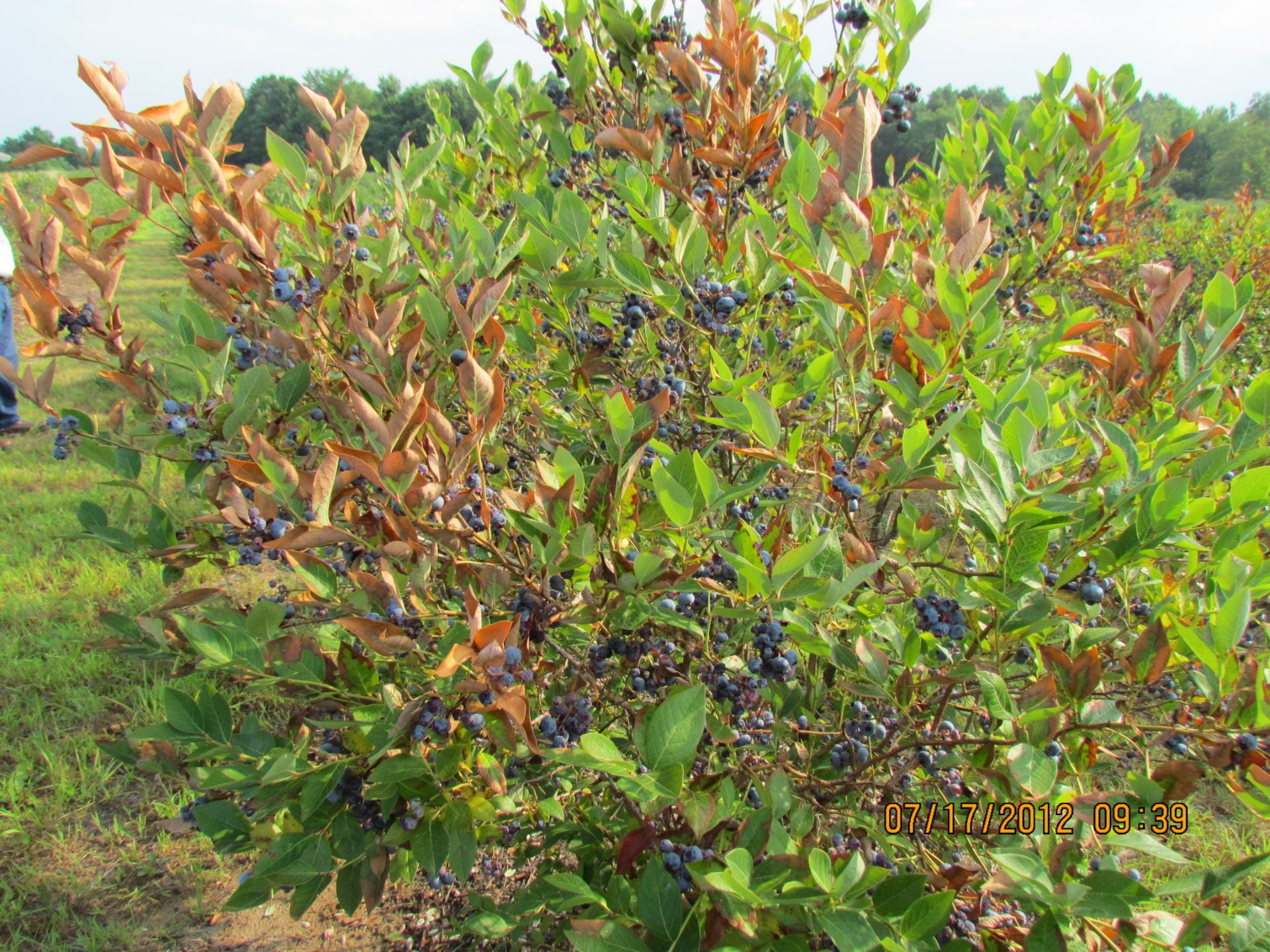
This summer was a dry one with hot sunny days and little to no rain until recently, and the state’s blueberry growers are taking a hit because of it. This season will see a decrease in yields due to the dry weather, according to researchers and farmers.
“It’s going to be less than last year,” said wild blueberry specialist David Yarborough, a University of Maine professor emeritus. “We’ll be lucky if we get 80 million pounds this year.”
Last season was a good one, but this summer’s crop will pale in comparison due to the lack of water. Warmer temperatures also resulted in an early start to the season.
“They started very early with those warm temperatures,” Yarborough said. “Harvest started a week or so early.”
Region played a key factor in the effect that drought had on berries, with some areas of the state being much drier than others, leading to a larger loss of crops.
“Depends where you are,” Yarborough said. “In the Blue Hill area, it was a 40 percent loss or more.”
“We really got the brunt of it down in the Blue Hill Peninsula,” said Simeon Allen of Allen’s Wild Blueberries. He can attest to the struggles in the Blue Hill region, which only got 1.4 inches of rain through July and early August.
“We had a good crop coming,” Allen said. “With the extreme lack of rain, we lost a large majority of our crop.”
As the summer got drier, so did the blueberries, and even berries that had started out well began to dry up.
“We’ve had some fields that we didn’t even harvest because they dried up so much,” Allen said. “Seventy percent loss of what we predicted or expected if we had rain.”
Allen’s normal range of production in a year with adequate rain is usually three times what it is at the moment, which is devastating. While the normal rate of production is roughly 2,500 pounds per acre, this year the farm is only pulling in 800 pounds per acre.
Not all farms are as heavily affected by the drought as others. Bruce Hall, agronomist for Wyman’s of Maine, suggests that the timing of the harvest made a big difference for growers this season.
“[Growers who] started on time this year had a very good season,” Hall said. “Growers who started late were very exposed to the drought.”
Hall said that while growers who began harvesting early only incurred slight losses from the drought, growers who began the season late and are harvesting later suffered more from this summer’s drought with heavy losses.
Wyman’s farms still did quite well this summer, with only a slight decrease in berries compared to last year.
“This year we’re at 7 percent less than last year,” Hall said.
Yarborough anticipates prices for the berries will be comparable or better than growers fetched last year.
“The prices should be as good or better than last year, somewhere around 70 cents per pound to the grower,” Yarborough said.
The demand still is high for the berries, and with fewer to go around the prices could rise compared to years past. The surviving crop is made up of good quality berries, which helps as well.
“The reason we had problems with low prices before is we had several large crops in a row and built up the inventory,” Yarborough said. “Well, now there’s no inventory to meet demand. Berry quality is very good this year.”
Lily Calderwood, another UMaine wild blueberry specialist, agreed that despite the low yield, the surviving crop has good quality berries.
“We went into this season with a really good bud set,” Calderwood said. “Even though the yield is lower there are good quality berries out there.”
Calderwood also spoke about the resiliency of blueberry farmers to adverse conditions.
“Farmers are adapting by harvesting earlier, mulching their fields and putting in irrigation,” Calderwood said. “We’re also seeing that the harvest season is shorter than it used to be.”
Researchers at UMaine, such as Calderwood, are working to come up with solutions to the changing season and are studying more efficient equipment that would make the most of a shortened harvest.
“We’re looking into ways to develop more efficient harvesters and harvesting equipment,” Calderwood said. “We’re hoping to get some grants to start working on that topic.”
Source - https://www.ellsworthamerican.com