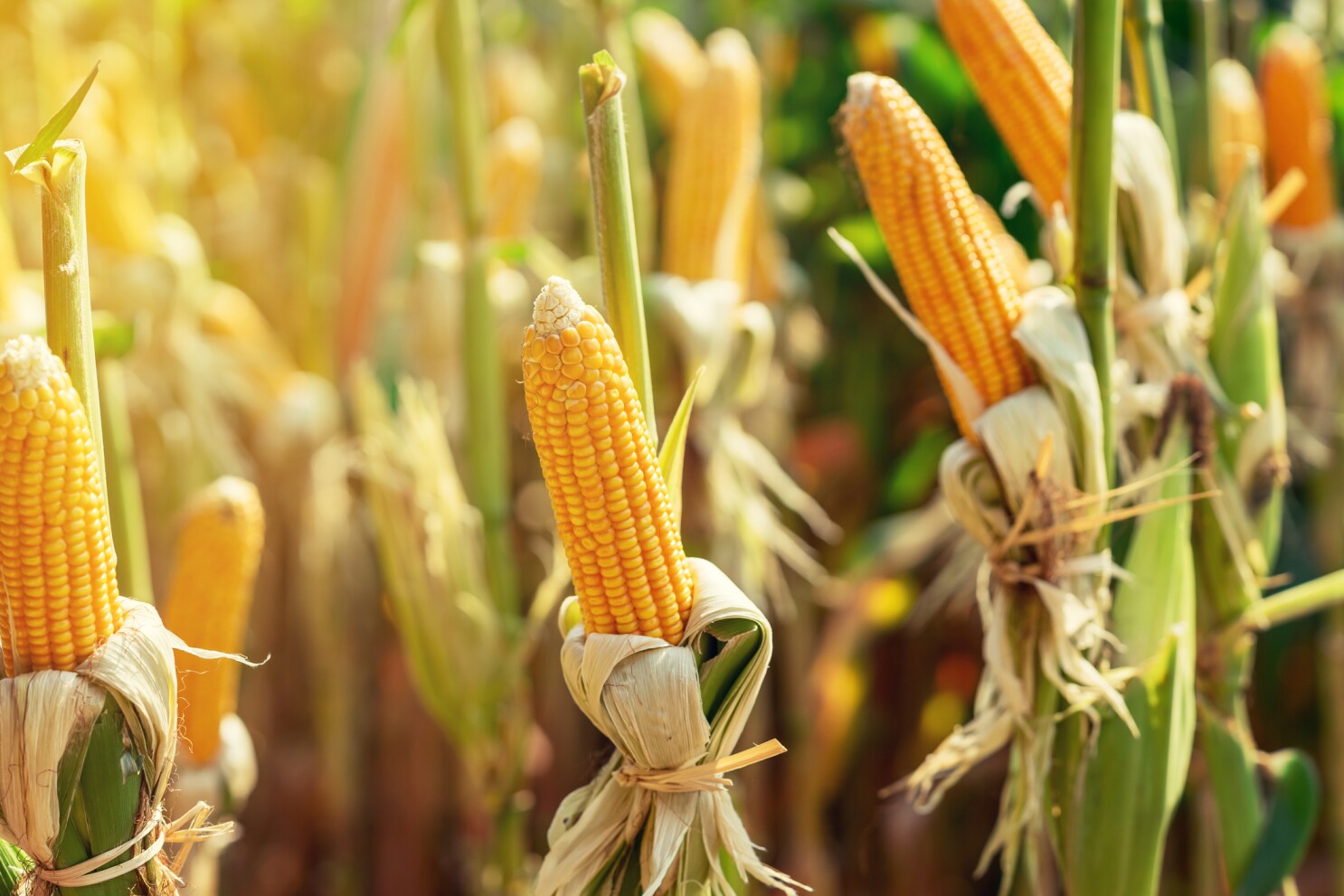
While New England is well known for commodities such as maple syrup, wild blueberries and cranberries, its reputation for sweets extends to another crop: sweet corn.
The 2023-24 crop production report from the U.S. Department of Agriculture showed the region produced just under 3 million tons of corn, of which Vermont contributed approximately half and Maine 500,000 tons.
Corn growers in New England could face a new challenge in the coming years. A study from the University of Maine projected that a corn crop pest that is already present in the region may begin to have a more noticeable effect on crops as temperatures warm and winters become more mild.
The corn flea beetle is a common pest in the Corn Belt — the north-central Midwest region expanding through Ohio, Nebraska and Kansas — that damages plant foliage and carries a bacteria that causes Stewart’s Wilt, a disease that impacts crop health and productivity.
Rachel Schattman, assistant professor of sustainable agriculture at UMaine, led the study. Schattman and Scott Merrill, a systems ecologist at the University of Vermont, conducted their research by combining temperature forecasts with two existing agricultural models to show how changing climate could impact corn flea beetle infestations.
Farmers and agriculture-adjacent professionals use models to predict the seasonal threat of Stewart’s Wilt, but current ones don’t take into account how climate is changing. Schattman and Merrill used data from PRISM, a forecast system based at Oregon State University, to integrate temperature projections into the existing models. Their research focused on three time periods: 1980-2011, 2049-2059 and 2089-2099.
Schattman and Merrill analyzed temperature data through each model individually and then by taking averages of the two models combined. One of the agricultural models summates the mean temperatures of winter months, and the other calculates crop damage based on the temperatures of winter months. All three models showed that the corn flea beetle and threat of Stewart’s Wilt is likely to expand in the Northeast, increasing the probability of severe crop damage.
“In the future, we anticipate crop production to continue to get more challenging for a multitude of reasons, including disease and crop interaction,” Schattman said. “We need all of the management tools that we can have available.”
Pesticides are the most popular way to treat corn flea beetle infestations, but the future is uncertain on whether regulations will make them inaccessible. Schattman said two general types of pesticides exist, ones that target specific pests and ones that expand to a range of pests. The latter, called broad spectrum pesticides, allow farmers to spray less and more effectively, but states are beginning to regulate or ban a class of them known as neonicotinoids, or neonics, because of concerns related to their effects on native insects and other animals.
“There’s been a lot of movement to try and make some pesticides, like neonics, unavailable to farmers in some states, which from an environmental perspective, is not that bad, but from a farming perspective, can be challenging,” Schattman said. “However, if pesticides are more tightly regulated, then farmers may be left with underdeveloped seed genetics and fewer spray options that work. That may make them more vulnerable to something like corn flea beetle.”
An alternative to using pesticides to protect crops from the corn flea beetle is to develop varieties of corn that are resistant to Stewart’s Wilt. Many experiments taking this approach ceased when pesticides, the more affordable and accessible option, became the common management approach.
Schattman said developing resistant varieties takes time and money, and farmers have to advocate for the research to be done on their behalf. Having owned a farm for about a decade, Schattman understands firsthand the challenges that come with the occupation.
“Farming is very vulnerable to everything that happens in the weather — early frost, big storms, big rainfall, everything that can potentially tank your crop.” Schattman said. “In any given year, farmers have to make decisions about economics and ecology, and the social and cultural aspects of their farm.”
Bill Tracy, an agroecologist from the University of Wisconsin-Madison, provided guidance on the study, specifically in relation to the corn crop.
Source - https://umaine.edu