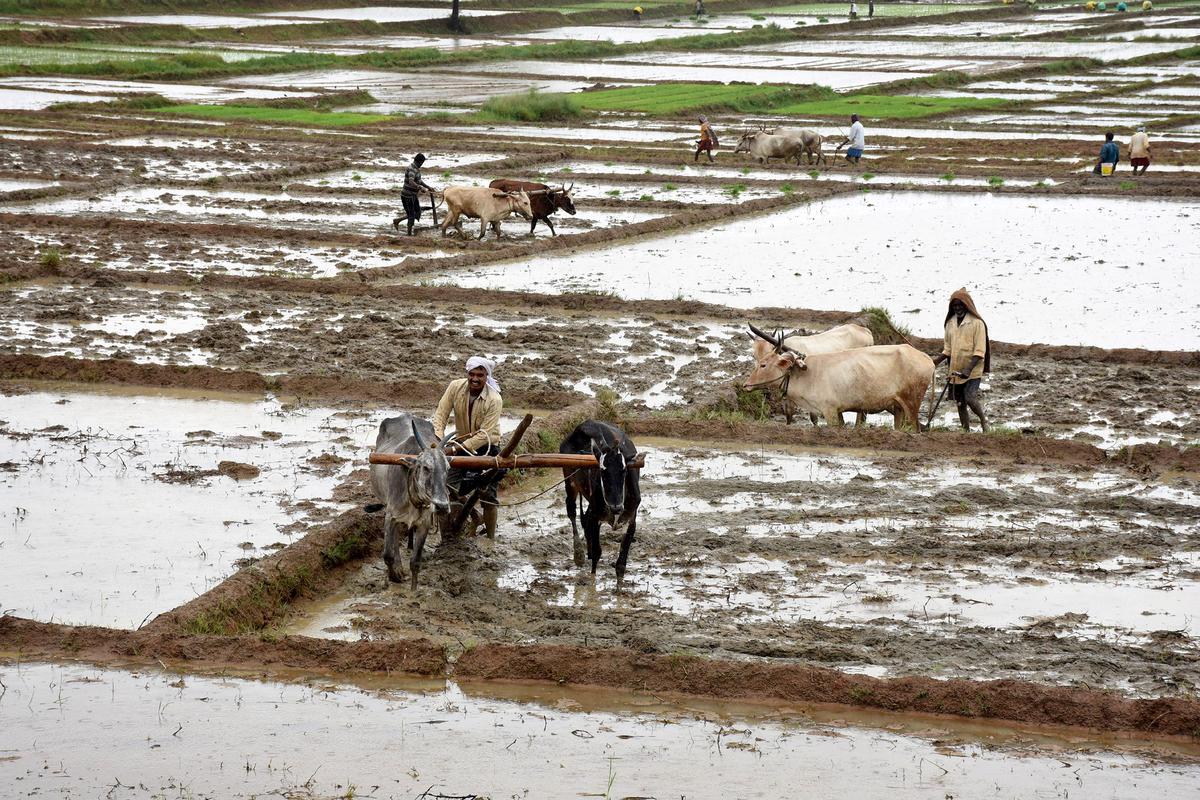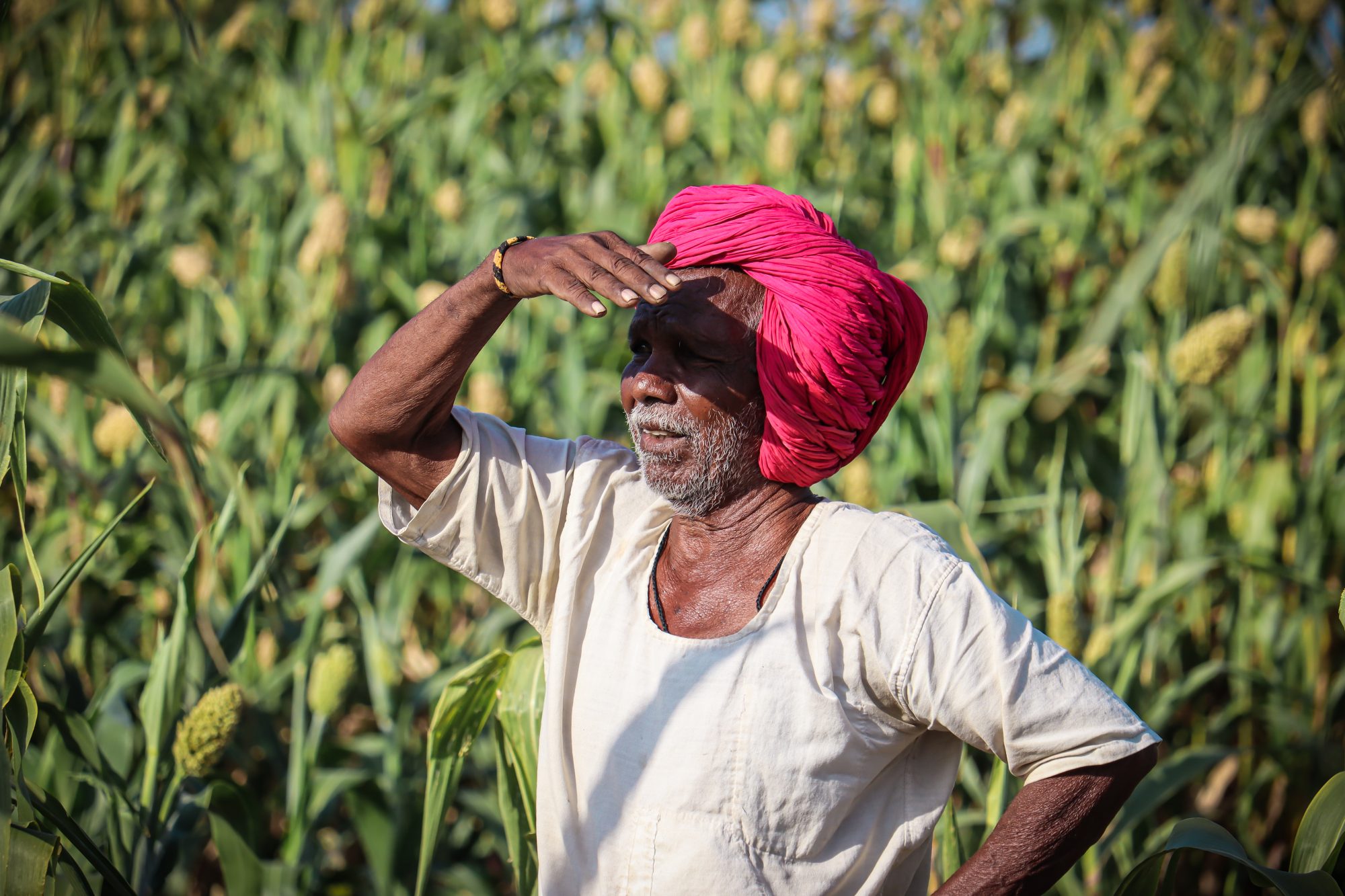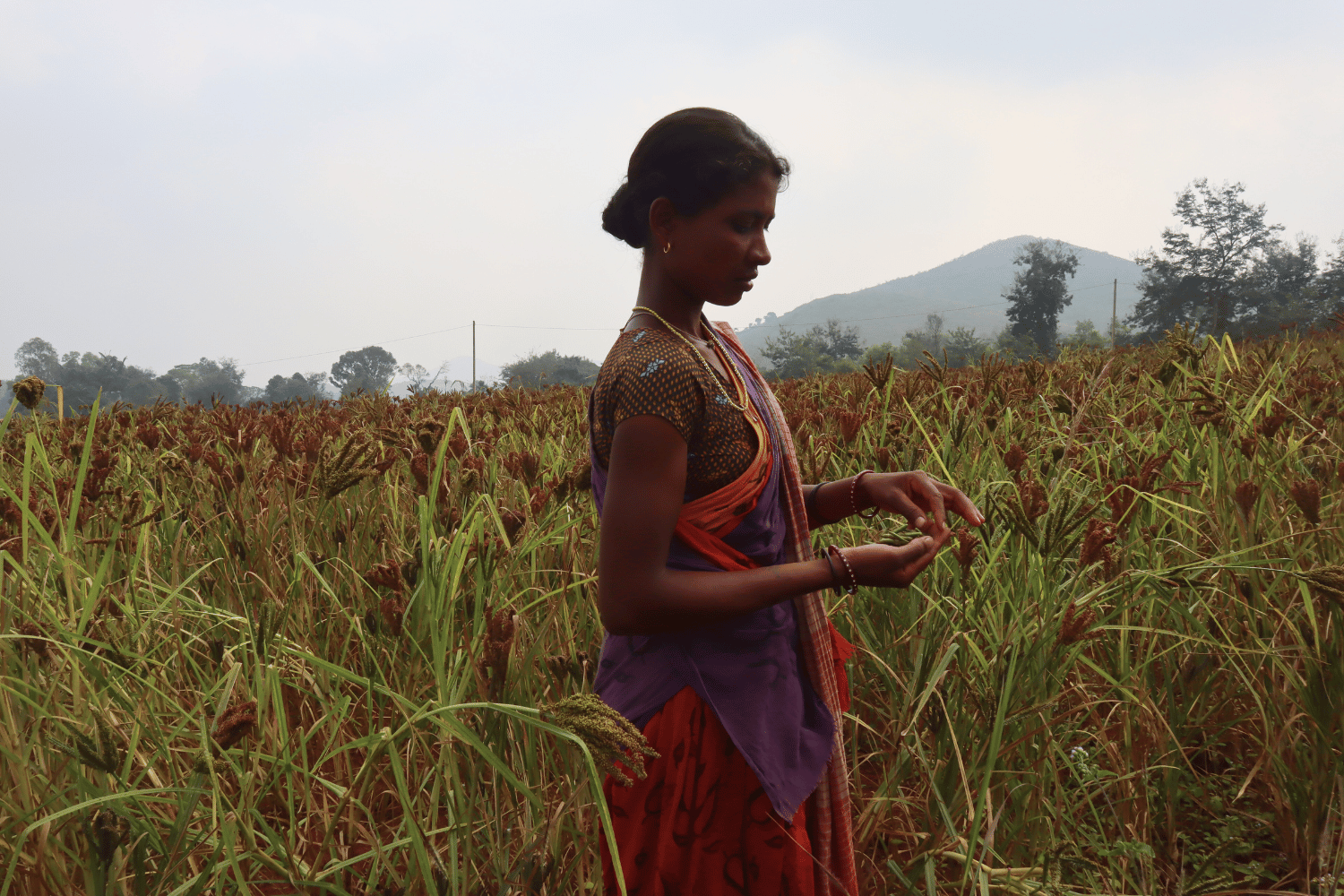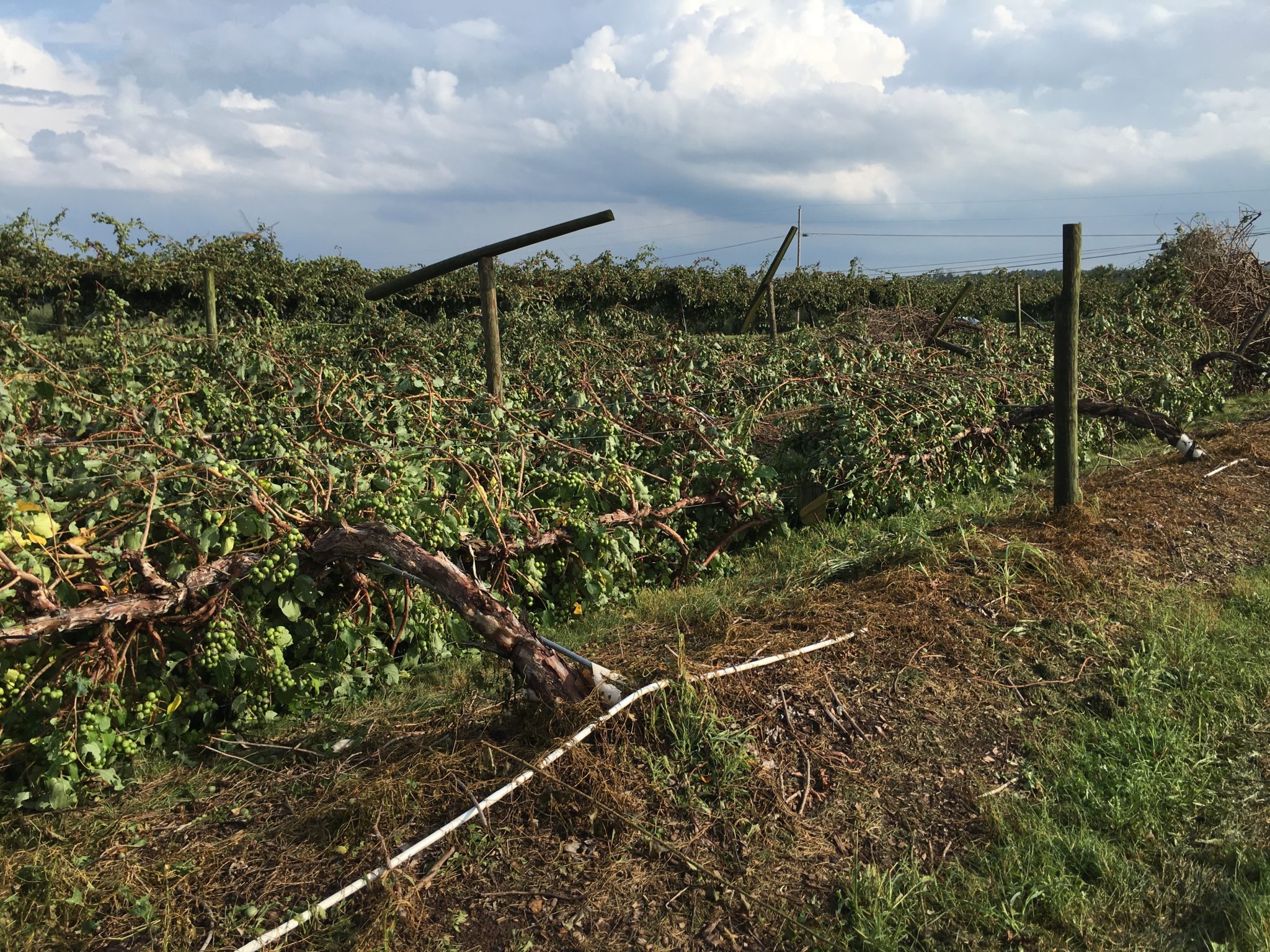
A week after the catastrophic flooding in Steuben County, farmers are now seeing the extent of crop loss as water drains from fields.
“It’s like a nightmare I can’t wake up from,” said Mark Squires, a third-generation potato farmer in Prattsburgh.
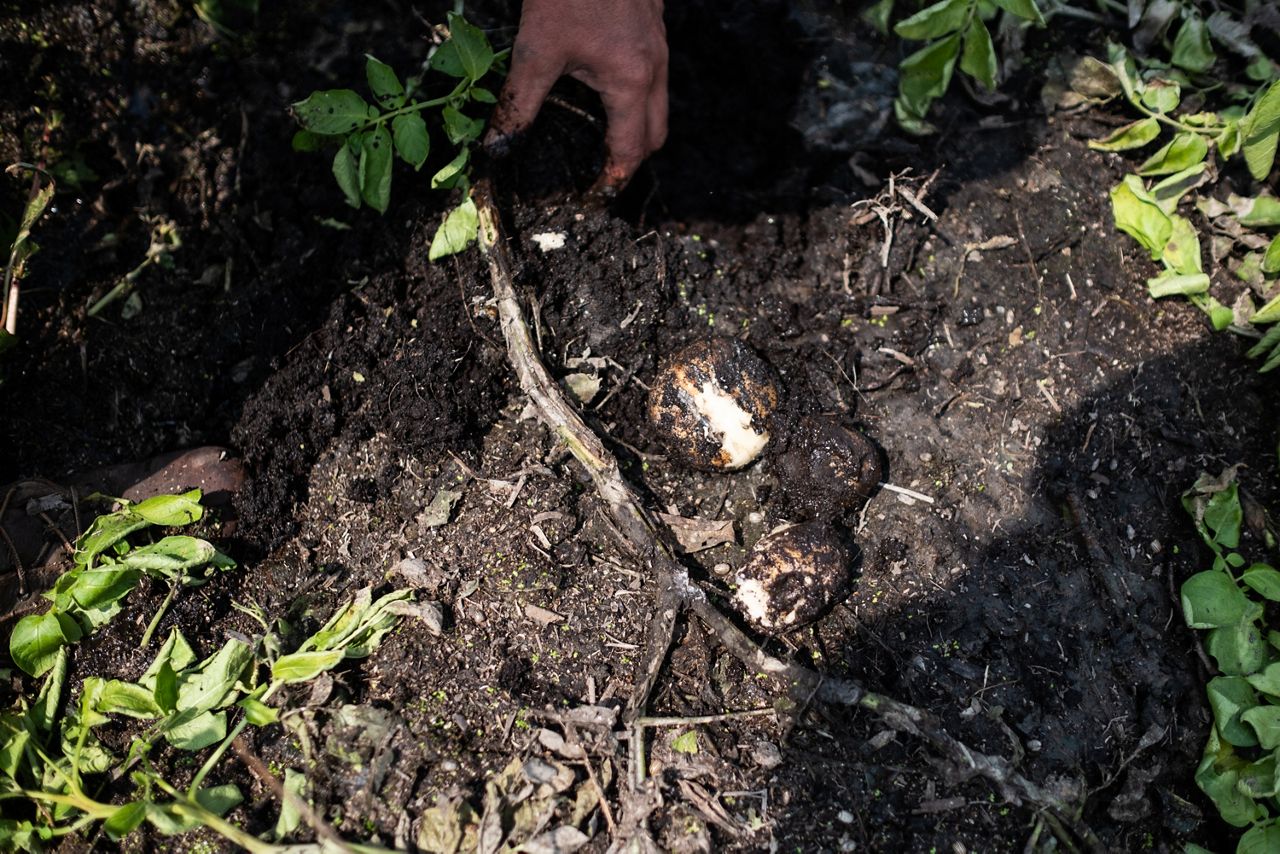
Standing at the end of the rows in Squires’ field, the pungent smell of rotting vegetables fills the air — a result of the 5 1/2 inches of rain that drowned the potatoes.
“We’ve had 3.5-inch rainfall before, which were pretty bad, but this was devastating. We lost our potato crop,” Squires said.
The loss was particularly hard to grapple with because he believed the yield would have broken records. On average, he would harvest about 350 to 425 hundredweight (100 pounds) per acre, but this year he was on track to harvest about 500 hundredweight per acre.
“I’ve seen floods before and I’ve seen floods similar to that, but not when I have a crop like that, not when we had it, we were going to make a nice amount of money and it’s just not anymore,” Squires said through tears.
Like most fruits and vegetables, potatoes are a high-value crop. Squires grows 300 acres of corn, but that won’t make nearly the same profit.
“Corn prices are ridiculously bad this year. We don’t have a drying system, so we take it to a feed mill to process and there’s a lot of deductions for that,” he said.
Corn is just a good way to replenish the soil for the next year of potatoes as Squires rotates each year, but it doesn’t make much money.
“It does a really good job getting the soil in good shape for next year’s potato crop, and it adds a lot of organic matter,” he said.
Farmers typically buy crop insurance each year, and Squires did, but it will only give them about half of the return they would have had. It is calculated by the value of the loss based on the number of acres they planted, historic yields they’ve had and whatever price level they have signed up for.
“I know we’ll be OK; crop insurance will sustain us. We won’t progress, but we won’t go backwards, and that’s the idea that crop insurance is supposed to do. It’s not supposed to make you money,” he said.
Crop insurance will deduct the potatoes he can harvest, even though it won’t amount to much.
“When you total your car, they don’t say, ‘Well, you can get a few bucks for your tires and a few bucks for your engine,’ and crop insurance should be the same way,” he said.
James Barber, the executive director of the Farm Service Agency of New York, said they are hoping the federal Farm Bill can address some of these challenges.
“For certain types of vegetables, where you’re planting, say, a broccoli crop every two weeks and harvesting continuously every other day, the current system is not done to adequately support that cropping system,” Barber said.
Specialty crops typically fall under Noninsured Crop Disaster Assistance Program through the U.S. Department of Agriculture.
“Crop insurance does particularly well for commodity crops, row crops pastures and things like that, but we need to make improvements in the way it handles specialty crops and we’re working on it. What we can’t do internally, hopefully can be addressed in the Farm Bill,” Barber said.
He encourages farmers to go to their local FSA offices to report their losses.
“The USDA requires a 30% loss of one crop in a county to get a disaster declaration, so if there’s two pumpkin growers and one of them loses their crop, that’s 50% so that’s an easy threshold, but if there’s a lot of potato acreage, then it’s more difficult,” Barber said.
This designation would give farmers more financial assistance options for the next growing season.
"Even if a farm isn't directly impacted during a major weather event, the infrastructure that keeps New York agriculture operational is usually damaged. This includes disruptions to power, water and transportation systems which impedes the ability to get fresh, perishable food onto New York Tables," said New York Farm Bureau's Chief Executive Office Deanna Fox in a statement.
The New York Farm Bureau is actively assesing the increased occurences of these major storm events to help farmers prepare and recover from them.
“No two years are the same, so I’m just going to assume next year is going to be different,” Squires said.
Source - https://spectrumlocalnews.com