James Goldscheitter’s prayers were answered. The rain finally arrived.
Now he and other local farmers are hoping the modest amount — and a forecast with a chance of rain Tuesday, Wednesday and Thursday — is enough to boost their floundering crops.
Rain that fell Sunday evening and continued into Monday broke a streak of 21 days without measurable rain — the longest stretch at the National Weather Service’s gauge at Pittsburgh International Airport since 1997.
But damage from the drought-like conditions has taken a toll.
“I rely on Mother Nature to water my farm,” said Goldscheitter, who operates Sunrise Farm in Clinton, Butler County. “This is the second-worst dry spell I’ve seen. It’s stressful.”
The 2-acre family farm offers pick-your-own red raspberries and blueberries and is a labor of love that Goldscheitter hopes to someday grow into a post-retirement business.
Many of his 1,200 berry plants are suffering because of the lack of rain, Goldscheitter said.
“It’s a frustrating roller coaster of emotions because you put in all the hard work,” he said. “And now I’m optimistic I will have half my crop — but losing the other half is hard.”
A full-time automobile industry executive, Goldscheitter said he works hours daily tending to his fruit trees, before and after work. He was excited to see a great start to the growing season but said now he doesn’t know what to expect.
“We had a promising, wet spring with lots of rain, but then nothing,” Goldscheitter said. “A lot of the blueberries are drying up and getting small.”
Goldscheitter will open for the picking season later this month. The berries are typically all done by late July.
‘Looked like a desert’
In Gilpin, Kira Karpinski of Anarchy Acres Farmstead has been hand-watering garden crops in an effort to save them.
“My squash bed is dust,” Karpinski said late last week of the 200 tomato plants, 180 pepper plants and countless other veggies that include squash, cucumbers, melons, lettuce, beets, radishes and more that are planted in her 4,000-square-foot garden.
She has been paying more than $150 a week to have about 1,500 gallons of water delivered to meet her watering needs.
The family has two wells on the farm, but dry conditions are resulting in both running nearly dry daily.
“It takes about two hours to water the plants every day from various barrels we have. It’s tedious,” said Karpinski, 40. “Everything would be dead if we didn’t do this.”
Anarchy Acres’ fields of hay are suffering from the dry spell, and the second-cut growing season is, so far, not going like it should.
“The first cut of hay went great, but if it doesn’t rain (for an extended period), the second-cut won’t grow, and we would lose 500 to 800 bales of hay to feed our animals,” Karpinski said. “Plus, I sell hay, too.
“We need a nice soaking rain for a few days, but I won’t be picky. I haven’t seen it like this, this dry, this early (May) in the year, in my whole life.”
Karpinski said a few days of steady rain provides the best watering for the plants’ root systems.
“I had a little girl visit the farm, and she said it was pretty but looked like a desert,” Karpinski said.
Cornstalks growth stunted
Herb Gearhard of Murrysville grows corn, oats and hay and operates a corn maze on his farm along Route 286. He said his crops are suffering.
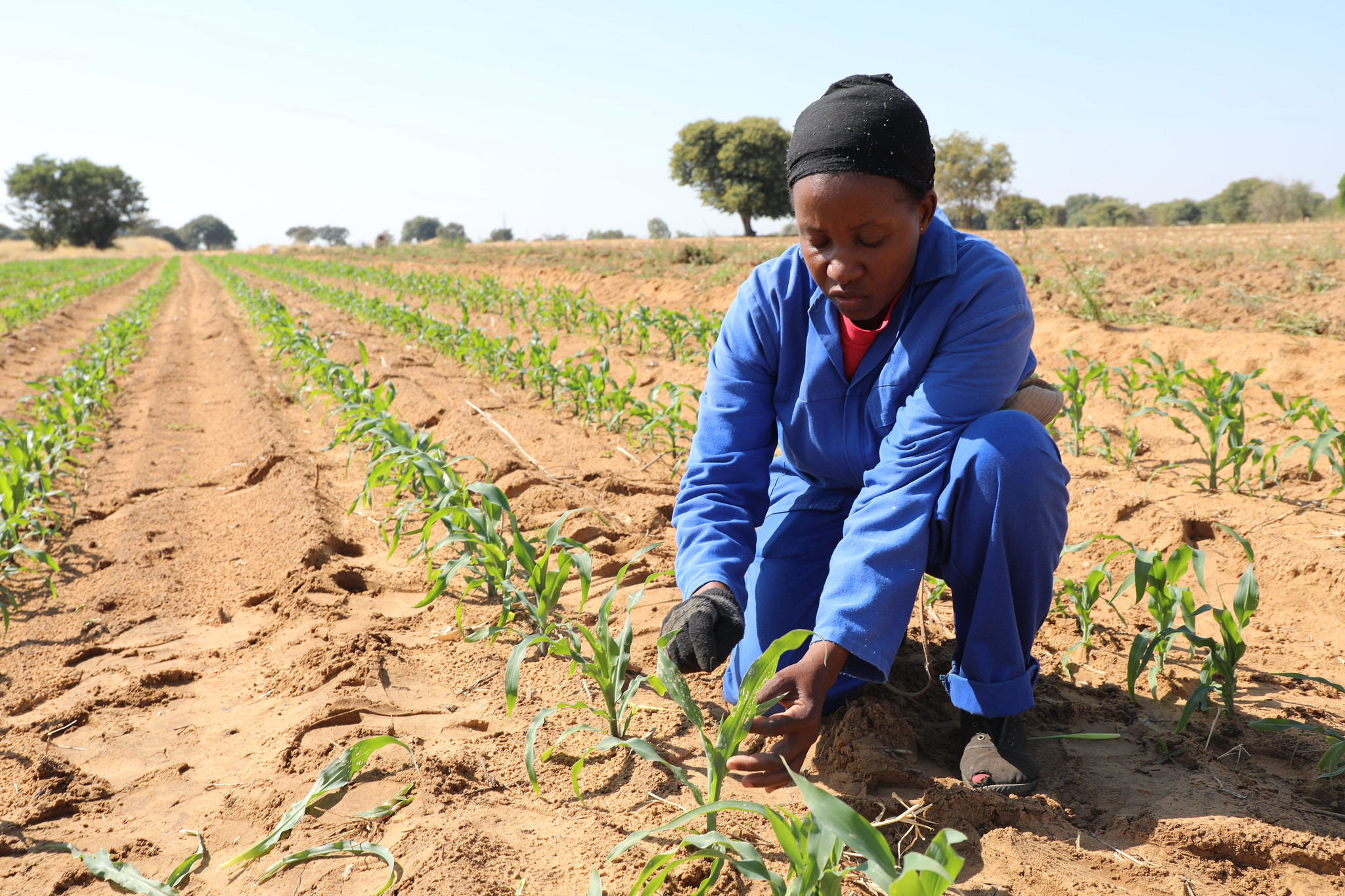
“There was moisture in the ground when we planted the corn, and it did germinate, but we really haven’t had any rain since,” he said.
The growth of the cornstalks is being stunted, Gearhard said.
“People know the old farmer’s saying, ‘knee high by the Fourth of July,’ ” he said. “But the stalks have only grown a couple of inches tall.”
Gearhard said the farm doesn’t have a pond or irrigation system, and he doesn’t see a feasible way to use an outside water source for so much corn.
The oat crop that he planted in March also germinated, he said, but it isn’t prospering.
“If things keep going like this, we won’t have any corn, hay or oats this year,” he said.
‘Whatever it takes’
To ensure they always have enough water for their 20-acre Sacred Gate Farm in Kiski Township, Martin and Lorraine Krezolek are planning to add a 100,000-gallon pond.
After nearly a month without any significant rainfall, the couple wish they already had the pond.
“God willing, we’ll have the pond done for next year,” said Martin, 46. “But without any rain for so long, we have to pay for city water to keep things going.”
He estimates it would take at least four days of steady rain to saturate the ground enough to skip the need to water the plants.
Because established plants are hardier, much of the water being used is to ensure that newer, more vulnerable plants don’t die.
The self-pick farm on Old State Road in Kiski Township has 4,000 blueberry bushes grown in 14 varieties, along with blackberries, strawberries, raspberries and elderberries. A growing segment of their business is the sale of potted berry plants.
The farm expects to open for berry picking later this month.
During a typical growing season, the farm is billed about $1,000 every three months for water deliveries.
“We didn’t get a water bill yet for the first three months of the season, so we don’t know how much it will be,” said Lorraine, 43. “But it’s been so dry that we’ve had to use a lot more water. I’m expecting the bill for it will be pretty high.”
The farm asks customers for a donation and to pay what they can when they come to pick berries.
Martin said the creek on their property illustrates the scant rain that has fallen recently.
Fed by stormwater, the creek is nearly 3 feet at its deepest point as it passes under a footbridge near the family’s home.
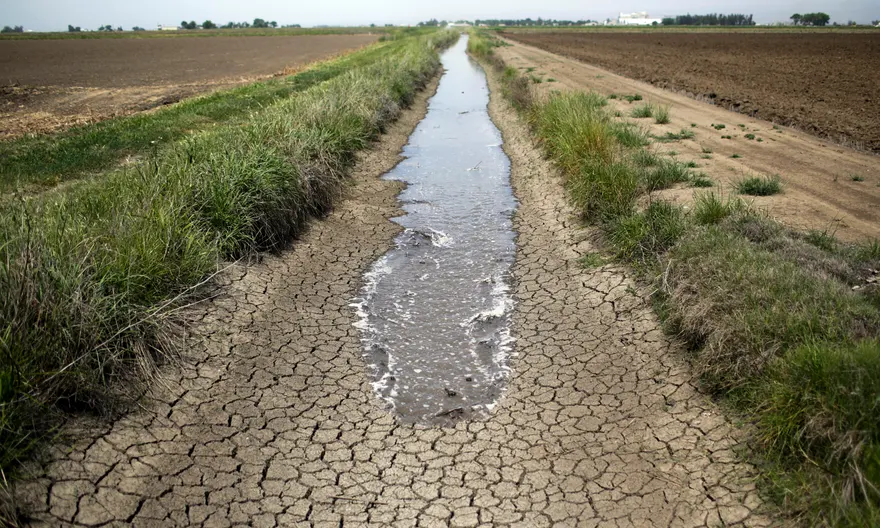
During a typical spring, the stream can fill to the top after a moderate rainfall and remain just below that level as it flows into the Kiski River, Martin said. Now there’s only a puddle of still water under the bridge, and much of the creek has dried out.
“We’ve worked very hard to build this farm,” he said, “so whatever it takes to get through this, we’ll do it.”
How’s the corn?
The growth of corn on Wayne Frye’s farm in Salem is a mixed bag — some is healthy and normal sized for this time of year, and others are less so. The corn planted in soil permeated with clay has not done well in these dry weeks, as the ground became too hard to promote growth.
It’s been so dry over the past several weeks that Frye, owner of Hopeway Dairy, said he has been able to plant crops on land that is usually swampy.
Between the land he owns and the fields he rents, Frye said he farms about 1,000 acres. His crops are used to feed his herd of about 800 cows, including 430 that provide milk.
The kind of slow, steady rain that was falling Monday morning was good for the crops, Frye said.
“We need a one-half inch of slow rain” to refurbish the fields, streams and ponds, he said. “I’ve never seen it this dry … this time of the year.”
Even though the growth of the corn that Alquin “Al” Heinnickel planted on his farm in Hempfield has been stunted, there is a silver lining.
“If there is ever a good time to have a drought, then this is it,” he said. “A 20-day dry spell in July would have been devastating.”
The corn he planted May 18 on some of the 1,000 acres he farms “has started to grow,” Heinnickel said. The corn is used for feed for his 900 head of cattle and is stored in a 50,000-bushel silo.
The biggest problem over the past three weeks has been the impact on the springs and wells on the farm that provide 20,000 gallons of water a day for his herd of cattle, said Heinnickel, 75, whose family has been farming the land since the 1850s.
At Salem Farms, a late-April planting of corn on the 150 acres there turned out to be a blessing.
“My corn is doing very well. It is knee-high already and will be above the waist by the end of the month,” said Bob Zundel, who also serves as a Salem supervisor.
Zundel, whose family has been farming the land since 1956, said most of his corn goes to feed his 42 heads of cattle, and some is sold to a grain dealer in Indiana County.
The corn at Myers Pickle Farm in Gilpin is more like ankle-high right now, said sixth-generation farmer Seth Hepler.
Hepler on Sunday stood among acres of cornstalks that are growing way behind schedule.
“I’ve never seen it this dry in all my life,” said Hepler, 24.
The family farm encompasses more than 300 acres and was founded in 1866.
The farm’s patriarch, Ralph Myers, 85, spends most of his days on a tractor.
Myers said the dry conditions make for easy planting of crops and harvesting hay but wreak havoc on the 150 acres of corn he planted.
“Sometimes it’s ‘shoulder high by 4th of July.’ Not this year. … It’s too early to tell yet about the corn crop,” Myers said.
The farm does not have irrigation systems.
“The weather man don’t know,” Myers said. “If this dry spell continues, it won’t do the corn any good.”
More than 10,000 tomato plants at Myers Pickle Farm are in jeopardy of failing without much-needed rain.
In an effort to save the crops, Hepler got creative and implemented a makeshift watering system. Twice a week, he hauls water from a pond on the farm to water tomatoes.
“I just tried it this year out of necessity,” Hepler said. “We can usually ride (a lack of rain) out, but not this year.”
Source - https://triblive.com