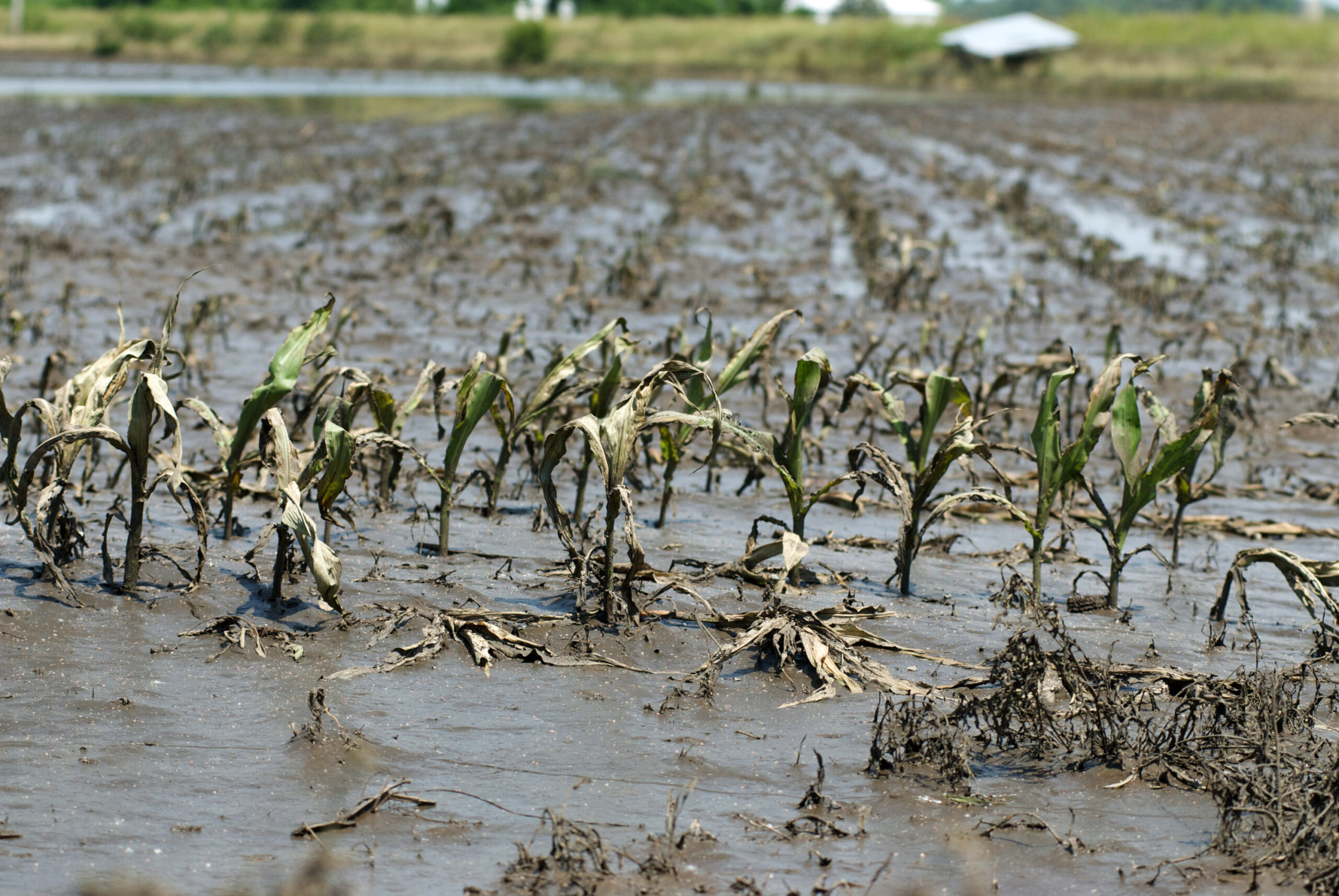
Salinas Valley was initially spared the worst of the damage as storms battered California last month. But then the Salinas River overflowed its banks Jan. 10, breaching berms and levees. Over the ensuing hours and days, thousands of acres of some of the country’s most productive farmland were flooded, resulting in massive crop damage.
In an application for federal disaster relief, the Monterey County Farm Bureau estimated that Salinas Valley farmers suffered $40 million to $50 million in damages. With floodwaters yet to recede, getting a precise assessment was not possible.
“It has been chaos here,” said Norm Groot, executive director of the Monterey County Farm Bureau.
The value and scale of the region’s crops are such that losses to the county’s agricultural sector equal the total cost of the storm’s impact reported by some major cities, such as San Francisco. According to the Farm Bureau, Monterey County supplies more than half the nation’s lettuce and celery, about half its broccoli and nearly a third of its strawberries.
Drone footage captured by CalFire showed widespread flooding of agricultural areas up and down the Salinas Valley.
“The damages we’re talking about are significant,” Monterey County Supervisor Chris Lopez said on Jan. 20. “We lost fields from San Ardo all the way north to Spreckels. Even today, with sunny skies, it’s flooding and we’re taking on more damage.”
In total, stormwaters flooded an estimated 20,000 acres of farmland in the Salinas Valley.
While much of the acreage was dormant, thousands of acres contained newly planted vegetables and strawberries. Farmers in the region expect those commodities to be impacted well into the spring, with the potential for production shortages in April and May harvests.
The challenges for vegetable farmers go beyond immediate crop damage. After floods, in order to protect food safety, “there are protocols about when and under what conditions you can plant,” said Michael Cahn, a University of California Cooperative Extension farm advisor in Monterey County.
The California Leafy Greens Marketing Agreement’s Food Safety Program requires farmers to destroy crops of which edible portions are exposed to floodwaters because they often contain debris and various contaminants. Then, before the flooded fields — including dormant ones — can be replanted, the water and soil must be tested for pathogens, a process that typically takes 30 to 60 days.
“We are expecting some planting schedules will be impacted,” Groot said.
The delay comes after plantings scheduled for January were disrupted for weeks by the storms. “This will impact a bunch of commodities, not just any single one,” Lopez said.
The flooding hit strawberry fields especially hard. “While the majority of family farmers are currently cleaning up minor storm damage, some farms have experienced catastrophic conditions,” the California Strawberry Commission said in a press release.
According to the commission, nearly 2,000 acres of strawberry fields across the state are “at risk for catastrophic losses,” including 467 acres in the Salinas Valley, with erosion having washed away hundreds of acres.
As most of California’s strawberry plants do not grow fruit or flowers this early in the season, flooded strawberry fields aren’t subject to the same fate as the leafy greens that were exposed to flooding. However, the crops are still in jeopardy due to erosion.
“Right now, the biggest concern is whether the plants survived,” said Jeff Cardinale, communications director for the California Strawberry Commission.
As of late last month, growers were waiting for floodwaters to recede so they could inspect their fields. The commission estimated the total economic impact from the storms on the state’s strawberry industry at around $200 million, including crop, property and equipment damage in multiple counties.
Farmers remain in ‘crisis mode’
Throughout the past week, farmers in the Salinas Valley remained in “crisis mode,” Groot said, assessing flood damage to both crops and infrastructure. “We have well heads underwater that will need repair, along with irrigation systems and other infrastructure.”
The floodwaters washed tree branches, fuel tanks and other debris into fields.
In Gonzales, “there was a field I thought had been planted with celery,” Lopez said. “I met with the farmer and he laughed and said he didn’t plant anything. The celery washed in from somebody else’s field.”
The damage to farmland around Salinas has reverberated throughout the community and impacted much of the local economy.
In San Ardo, “a few folks approached me in a pickup,” Lopez said. “They make their living on that ground, just like the farmer.” The father was an irrigator, the mother a farmworker, and their children worked in packinghouses in Salinas.
“The dad was worried because he’s not going to be irrigating anything for a while,” Lopez said. “The mom was worried because her work was delayed for a few weeks with the amount of ground flooded. And the kids were asking, ‘What happens when the product doesn’t reach the packinghouse?’”
The storm’s impact on Salinas’ value-added industry has already been severe. The region is home to some of the country’s biggest vegetable packing companies, such as Taylor Farms and Braga Fresh, which rely on municipal facilities to dump their wastewater.
When the city of Salinas’ wastewater ponds flooded, the companies were forced to halt their operations for several days.
“The (city) could no longer accept wash water from all those packinghouses,” Lopez said.
While the Salinas Valley does not specialize in winter vegetables, much of the packing industry is based there year-round, with fresh vegetables trucked in from Yuma, Ariz., the Central Valley and Southern California. Right now, the companies are making veggie trays to be shipped across the country for Super Bowl watch parties.
“When those places shut down,” Lopez said, “you’re talking about millions of dollars (in losses) a day.”
On Jan. 17, the Federal Emergency Management Agency, or FEMA, added Monterey County to President Joe Biden’s major disaster declaration, which also includes San Luis Obispo, Santa Barbara, Sacramento, Santa Cruz and Merced counties. The declaration opens up federal assistance, in the form of grants and low-cost loans, to people and businesses that suffered storm-related damage.
“People are going to be impacted for longer than most folks might anticipate — when we’re no longer the top story in the news,” Lopez said.
Source - https://kingcityrustler.com