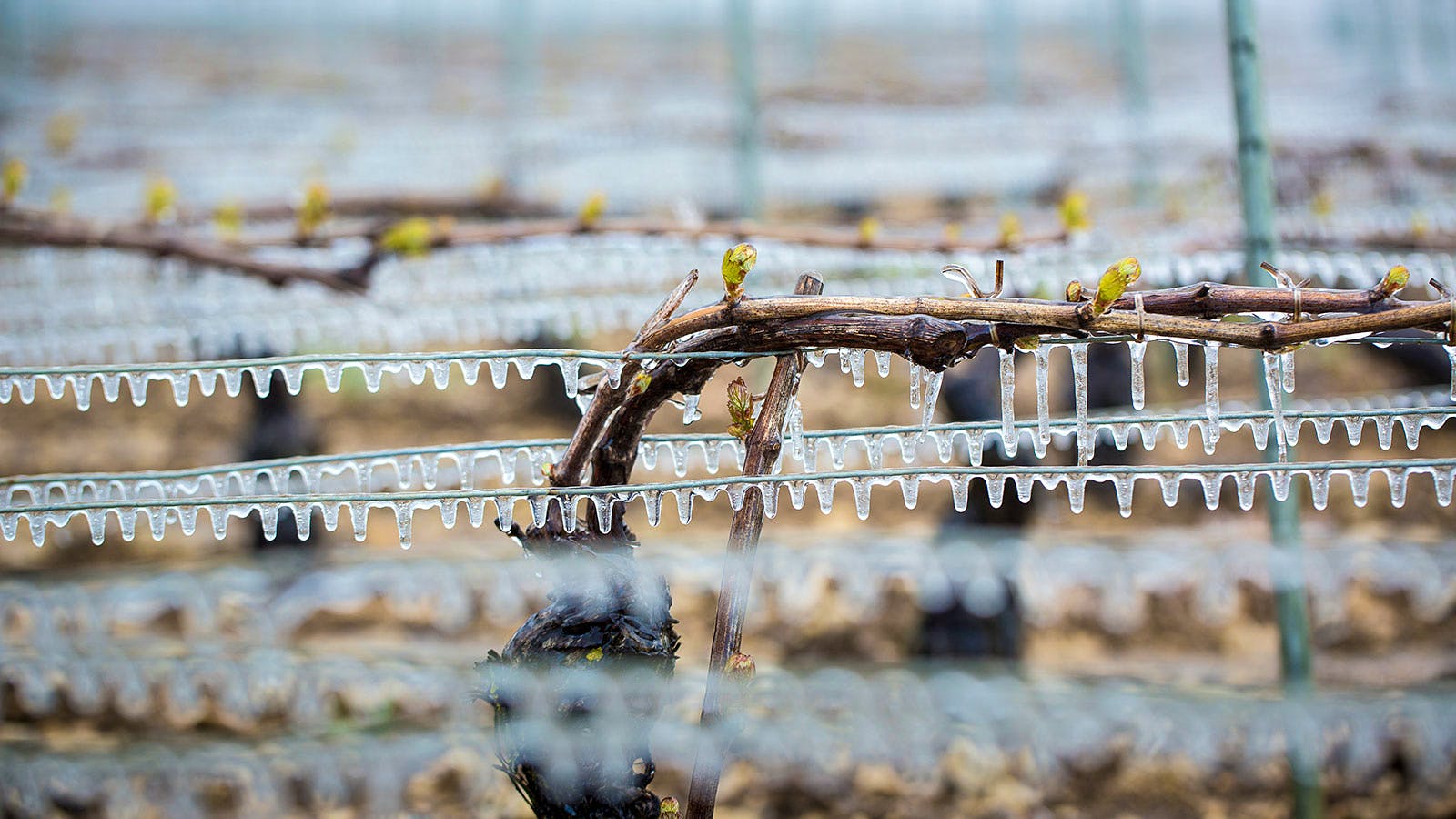
Vineyards and apple orchards across the Northeast are still gauging damage from a late-season frost in May that wiped out a third to most of the crop for some growers who say it’s the worst frost damage they’ve experienced.
Some states are seeking federal disaster declarations, which would make low-interest loans and other programs available to affected growers, while agriculture officials across the region are contemplating together asking the U.S. Department of Agriculture for direct aid to farmers.
Some Connecticut farmers suffered devastating damage while others were spared.
At Averill Farm in Washington Depot, Tyson Averill said 15% to 20% of 5,000 bushels of fruit crop was lost on the lower portion of the trees where the temperatures are colder without a breeze.
“There was a distinctive line at 3-and-a-half feet from the ground,” Averill said.
It was 23 degrees at one point overnight, but the low at 10 feet above ground was closer to 27 degrees. Typically, the breezes at elevation save the crop.
The farm will apply for federal reimbursement for the loss.
The peaches already had been lost in a frost in early March when the buds emerged early.
It could have been worse, Averill said. A smaller orchard down the road lost everything. Averill Farm, a 260-acre historic family farm, will have pick-your-own fruit starting Aug. 15.
“Some of those lower-growing apples would have been lost anyway,” Averill said. “It’s the perfect child-picking height we didn’t want to lose.”
Gov. Ned Lamont on May 26 requested federal agriculture disaster declaration for all eight counties in Connecticut. Lamont termed the damage “significant.”
“We received reports from a significant number of farms across the state that the freezing weather caused an increcible amount of damage to many crops,” he added.
In southern Vermont, Scott Farm Orchard lost up to 90% of its apple crop when the temperature dipped to 25 degrees for five hours May 18. At the northern end of the state, Shelburne Vineyards in Shelburne lost about 50% of its grape crop, which is potentially a half-million dollar revenue loss, according to head wine grower and vineyard manager Ethan Joseph.
To make up for lost production, Shelburne Vineyards plans to buy additional grapes at a time when its overall costs this year will be higher due to the frost, Joseph said. The vineyard has wine in stock to sell and it’s not off the table that it could raise prices, he said.
“We’ve never seen this kind of freeze event, certainly in the history of the vineyard,” Joseph said. “I’ve been here for 16 years. We’ve never seen anything like it.”
The widespread frost hit the large wine-producing region of the Finger Lakes in upstate New York where it’s estimated about half of the grape crop was lost regionwide, according to Kyle Anne Pallischeck, executive director of the Finger Lakes Wine Alliance. Depending on their location, some vineyards were hit hard and others had little to no damage. Vineyard owners say it’s still too early to tell what the final financial impact will be.
“I’ve been in this almost 40 years, doing it full-time and this is by far and away the worst,” said David Stamp, vineyard manager of Lakewood Vineyards, in Watkins Glen, N.Y., of the frost damage. He estimated their total crop loss at about 30% to 40% though it’s tough to tell since the damage is scattered throughout the vineyards.
“I mean, if you put all the years together that we’ve had any damage it’s not even a quarter of what this is,” he said.
The losses will mean shorter supplies of certain wines next year and higher prices for apples this year. Some vineyards and orchards are having to reduce staff.
Keuka Lake Vineyards, in Hammondsport, N.Y., estimates it lost between 50% and 65% of its crop, said Mel Goldman, owner and vineyard manager.
“We lost a lot,” Goldman said, adding it will take a few weeks before a final verdict as the vines produce secondary buds and shoots that could bear fruit.
Some vineyards are now starting to see growth from secondary buds, Pallischeck said. “This is where hope lies in salvaging a 2023 vintage for many,” she told the AP by email. In Vermont, Joseph said the new growth at Shelburne Vineyards is too late to produce fruit that would ripen this season.
U.S. Sens. Charles Schumer and Kirsten Gillibrand, both of New York, have asked the USDA for disaster relief for orchards and vineyards but did not specify how much was needed as damage is still being assessed. New York is the country’s second top apple-producing state after Washington.
Source - https://www.rep-am.com