

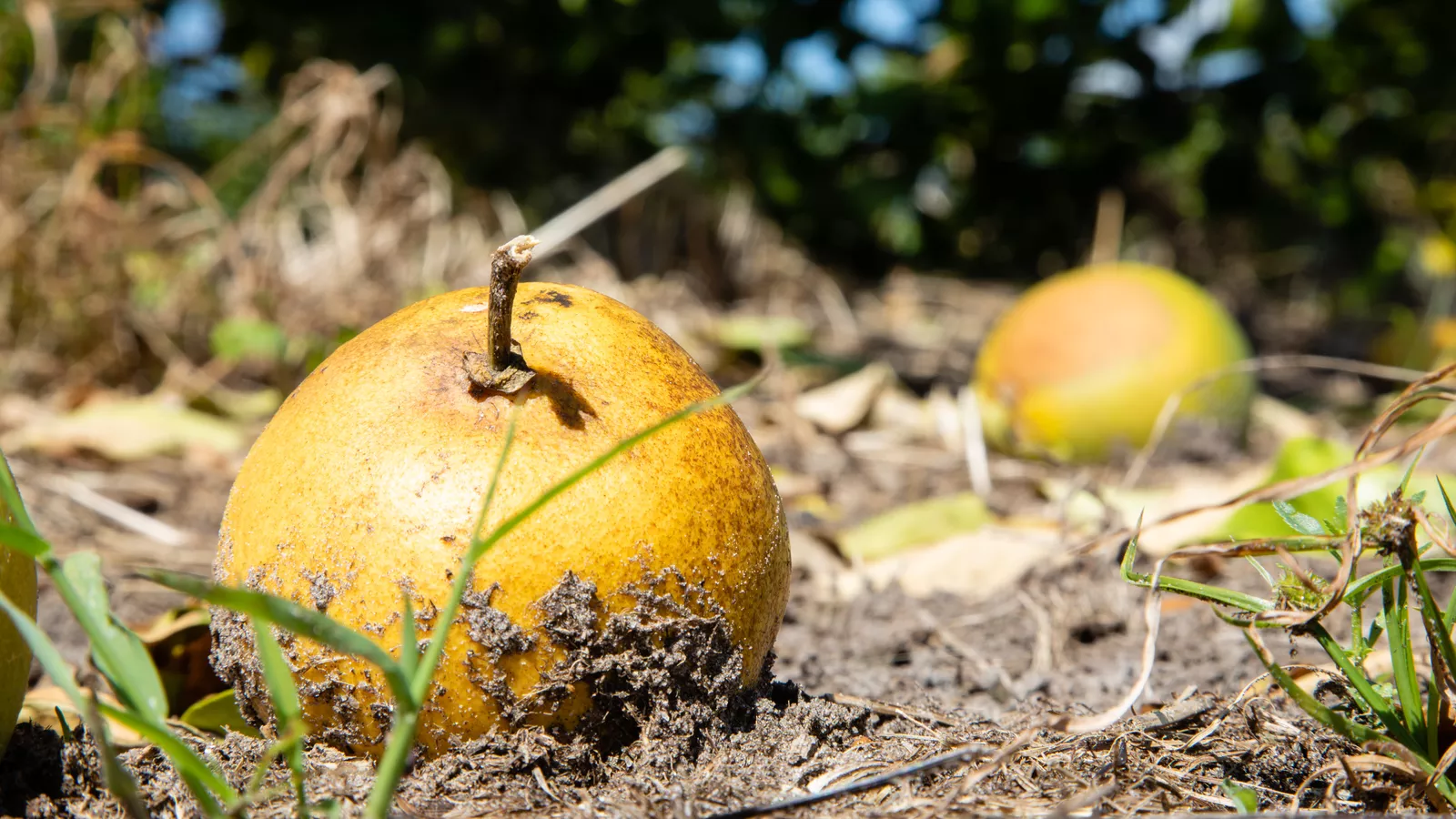
Florida’s orange crop this year will be nearly a third smaller than last year, and one of the smallest in decades after Hurricane Ian devastated citrus groves last month, the U.S. Department of Agriculture said Wednesday.
Why it matters: A smaller citrus crop could lead to higher prices, and orange prices have already increased 14.4% over the past year with inflation as of August, according to the Consumer Price Index.
- Juices and nonalcoholic beverages rose 13.1% year-over-year, the CPI showed.
Driving the news: California is projected to surpass Florida as the top orange producer in the country for the 2022-2023 harvest, according to Wednesday's report.
By the numbers: Florida’s orange crop is expected to be the smallest since the early 1940s, according to historical data. Wednesday's USDA report showed:
- The forecast for all Florida oranges for 2022-2023 is 28 million boxes, compared to 41 million in 2021-2022, down from 67.4 million boxes in 2019-2020.
- California is projected to produce nearly 62% of the nation's oranges with 47.1 million 80-pound boxes, up from 40.4 million last year but down from 54.1 in 2019-2020.
- The U.S. total for all oranges for 2022-2023 is forecasted at 76.3 million down from 81.7 million last year and 122.8 million in 2019-2020.
Meanwhile, orange juice futures rose as much as 0.8% to $1.92 a pound, a 50% increase in the last 12 months.
Flashback: Florida's crop decline is not just damage from Hurricane Ian. In January, the crop was expected to be the smallest in over 75 years with a projected 44.5 million 90-pound boxes, the Associated Press reported.
- Citrus greening, a bacteria that can cause fruit drops and kill citrus trees, is part of the reason for the quarter-century slide.
What they’re saying: Florida Agriculture Commissioner Nikki Fried said Hurricane Ian ravaged 375,000 acres of commercial citrus and the forecast will be “an invaluable baseline” in predicting additional crop loss.
- “It is heartbreaking to see such an iconic Florida industry hurting right now,” Fried said in a statement, pledging her support to citrus growers.
What’s next: Expect more imports from other countries. A USDA report from July said "favorable weather in Brazil and Turkey leads to larger crops that more than offset" lower production in Egypt, the European Union and the U.S.
Source - https://www.axios.com










