Oregon’s grape growers recently endured wildfires, COVID-19 shutdowns and a heat dome. Nobody warned them that winter was coming in April.
Frost descended upon Oregon vineyards last week as temperatures in many locations dipped into the mid-20s. The timing was disastrous for sites where vulnerable grape buds were emerging from winter dormancy.
While preliminary reports from southern Oregon’s wine regions aren’t as dire, vineyard management consultant Stirling Fox thinks the Willamette Valley could lose 50% of its annual grape crop.
“This is worse than 2020. Despite the wildfires, we had juice to work with, and some people made nice wines. If you don’t even have fruit to do anything, this is sort of a non-vintage in some ways,” Fox said
Fox, who owns Stirling Grapes, Inc. and Mad Violets Wine Co. in Newberg, said he’s never seen frost damage like this during his 25-year career.
“Based on what I’ve seen and what my peers are reporting, between 50% and 100% of the primary buds in many Willamette Valley vineyards were burned by the frost. At many of these sites, 50% of the secondary buds are burned. Realistically, we’re looking at the Willamette Valley losing half its crop this year,” Fox said.
A grape bud comprises three smaller sections known as the primary, secondary and tertiary buds. The primary bud contains a tightly furled shoot with flower clusters that produce grapes during the growing season. The smaller secondary bud will typically develop if there is damage to the primary bud.
The secondary bud’s biggest drawback is it has fewer flowers per cluster and produces 30-50% less fruit than the primary bud. Relying on the secondary bud can also delay harvest for approximately two weeks.
If the secondary bud is damaged as well, the tertiary bud, which produces little to no fruit, will bloom.
“Then you have to farm the vines without getting grapes in return. That’s really rough,” Dai Crisp, a veteran vineyard manager and owner of Lumos Wine Co. in Philomath, said.
Chardonnay and pinot noir bud earlier than other varieties, making them particularly vulnerable to early frosts.
“I’m definitely seeing some vineyards hit hard, especially chardonnay, some with full loss. Ribbon Ridge and parts of Yamhill-Carlton were hit hard,” Bree Stock, co-owner of Constant Crush Wine and director of education for the Oregon Wine Board, said.
Fox warns that the Willamette Valley isn’t out of the woods just yet: “We’re not even into the normal 100-day growing cycle, so we could have more frost, or things could happen near flowering, and we could have a poor fruit set.”
The early reports coming from southern Oregon’s winegrowing areas indicate some frost damage, but nothing as severe as what the Willamette Valley is experiencing.
Typical is the report from Herb Quady, the partner/winemaker at Quady North in Jacksonville and the owner of Applegate Valley Vineyard Management.
“As of today, it looks like those who had frost protection did OK. At our site, temperatures dropped to 30 degrees but held. We seem to have very little damage at our site, but wind machines probably made the difference,” Quady said.
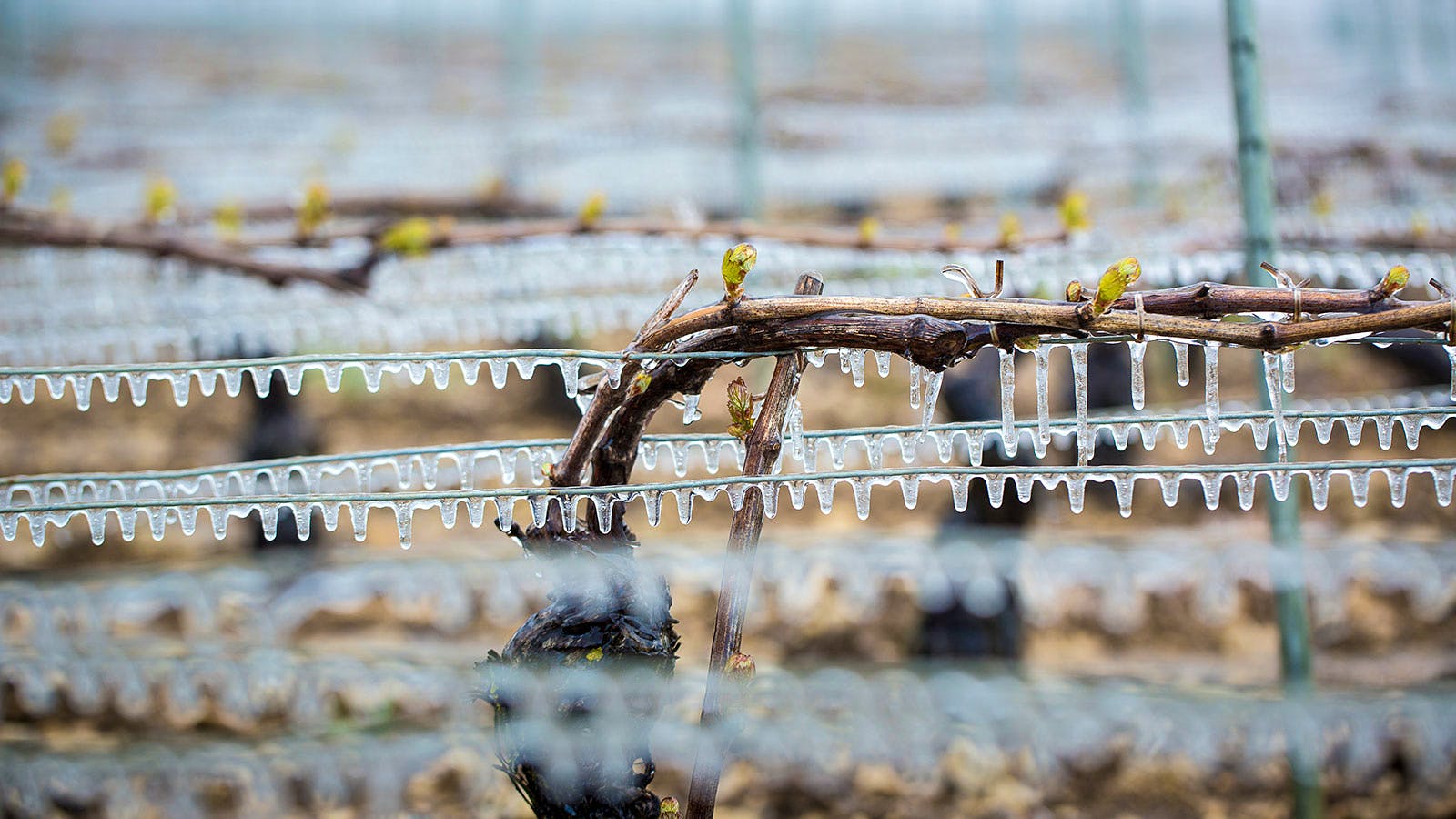
Frost fans that circulate warmer air are commonplace in southern Oregon’s vineyards and orchards. Overhead sprinklers that encase grape buds in a protective coating of ice are another popular method of frost protection. It may sound counterintuitive, but encasing a grape bud in ice keeps the water contained in its tissues at temperatures near or slightly above freezing.
Overnight temperatures dipped to 26 degrees Fahrenheit in the early morning hours on April 15 in Troon Vineyard in Grants Pass. Craig Camp, Troon’s general manager, said they activated frost fans and pulse sprinklers to stave off damage.
Camp also said the issue of frost damage was varietally specific: “We grow many Rhone varieties that bud later than things like pinot noir, so our bud break here in the Applegate Valley is not as advanced as other people.”
Representatives from both the Oregon Winegrowers Association (OWA) and the OWB declined to comment on the extent of the frost damage, citing a need to collect more information.
When asked about applying for emergency governmental assistance for grape farmers, Jana McKamey, the OWA’s executive director, replied in an email that “A first step is an understanding of the impacts which might not be known for some time (several weeks at least). But yes, discussions are ongoing within OWA about what might be available or requested should relief be needed. At this time, there isn’t a clear picture.”
Source - https://www.oregonlive.com