Clemson University researchers are conducting research to improve sustainability of the Southeast’s peach production, focusing on bacterial canker and bacterial spot diseases.
Much like people, peaches also enjoy the mild climate of the southeastern United States. Sadly, so do pests and diseases, namely bacterial diseases.
A Clemson University team, with the help of a grant from the Sustainable Agriculture Research and Education (SARE) program, is conducting research to fight back by developing holistic strategies to improve disease management and peach tree health.
The goal of the project is to improve sustainability of the Southeast’s peach production, focusing on bacterial canker and bacterial spot diseases.
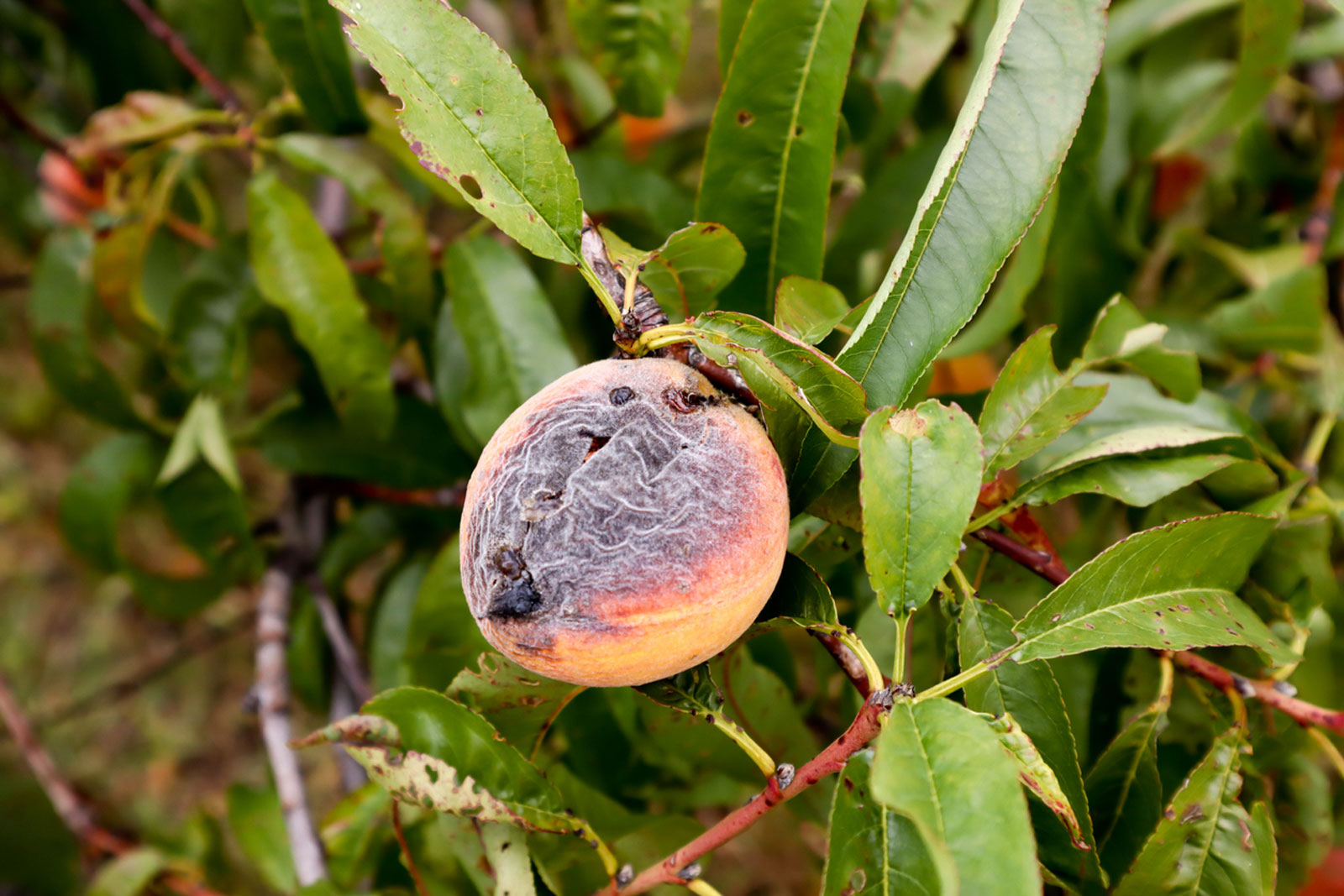
Bacterial spot and bacterial canker cause an estimated $22 million in annual losses in South Carolina and Georgia. Bacterial spot can lead to severe defoliation of leaves and spots on fruit significantly reduce marketable yields. Bacterial canker on woody tissues leads to shoot death and tree death. Managing these diseases is very challenging.
The research team consists of Clemson experts on the university’s main campus and research stations across the state: Hehe Wang, a plant bacteriologist and pathologist housed at the Edisto Research and Education Center (REC) near Blackville, South Carollina; Rongzhong Ye, a soil scientist housed at the Pee Dee REC near Florence, South Carolina; and on the main campus in Clemson, South Carolina, plant pathologist Guido Schnabel and pomologist Juan Carlos Melgar in the Plant and Environmental Sciences Department and Michael Vassalos, an associate professor of agribusiness in the Agricultural Sciences Department.
“Currently, no chemical control options are available for management of bacterial canker and bacterial spot management mainly relies on weekly sprays of copper and antibiotics during the growing season,” Wang said. “These chemicals could negatively impact the environment and have led to emergence of copper-tolerant and antibiotic-resistant pathogens, indicating an even greater need for new management options.”
Source - https://www.freshplaza.com