Crop insurance is hard to attain in Hawaiʻi, and federal programs are tailored to mainland agriculture.
Plagued by three storms in fewer than 30 days, Hawaiʻi farmers now find themselves figuring out how reviving their crops will pencil out, without insurance.
Just 3% have federal crop insurance. Many don’t have any insurance at all. And already they have reported more than $10.5 million in damage across the North Shore of Oʻahu, Maui, Molokaʻi and the Big Island, with some losing everything from crops and livestock to barns and homes in the destructive winds and severe flooding.
Lawmakers have come to realize more support is needed for the diverse and small farms that make up the state’s agricultural industry, particularly as climate change-driven disasters become more frequent and the federal government pulls back on emergency agricultural relief. But whether that help will come in time to save the farmers now weighing their options remains a question.
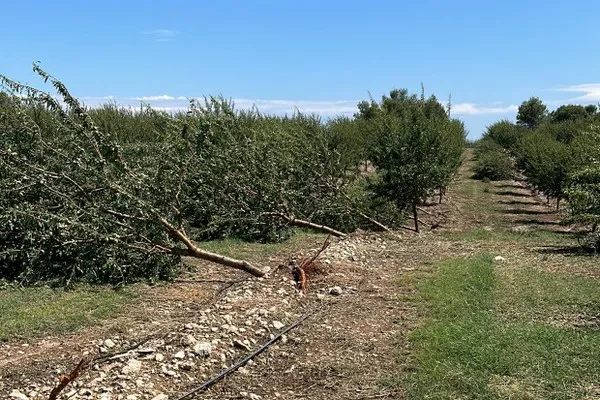
In Kaʻū on the Big Island, winds toppled farmer Matt Drayer’s trellises which held thousands of now-unsellable green bean plants. Water flooded his cattle pasture and the rain waterlogged his harvest-ready crop of cabbages.
“Like a ton of cabbages split,” Drayer said. “Like thousands of cabbages. So we can’t sell them… So that sucks.”
Drayer doesn’t yet know exactly how much of the crop he lost, partly because an uncrossable gulch has carved itself into the middle of his land. For producers on the U.S. mainland, the lost crop could likely be recovered with insurance from the U.S. Department of Agriculture. But the Hawaiʻi farmers say that is almost impossible to attain here because farms are too small for it to make financial sense.
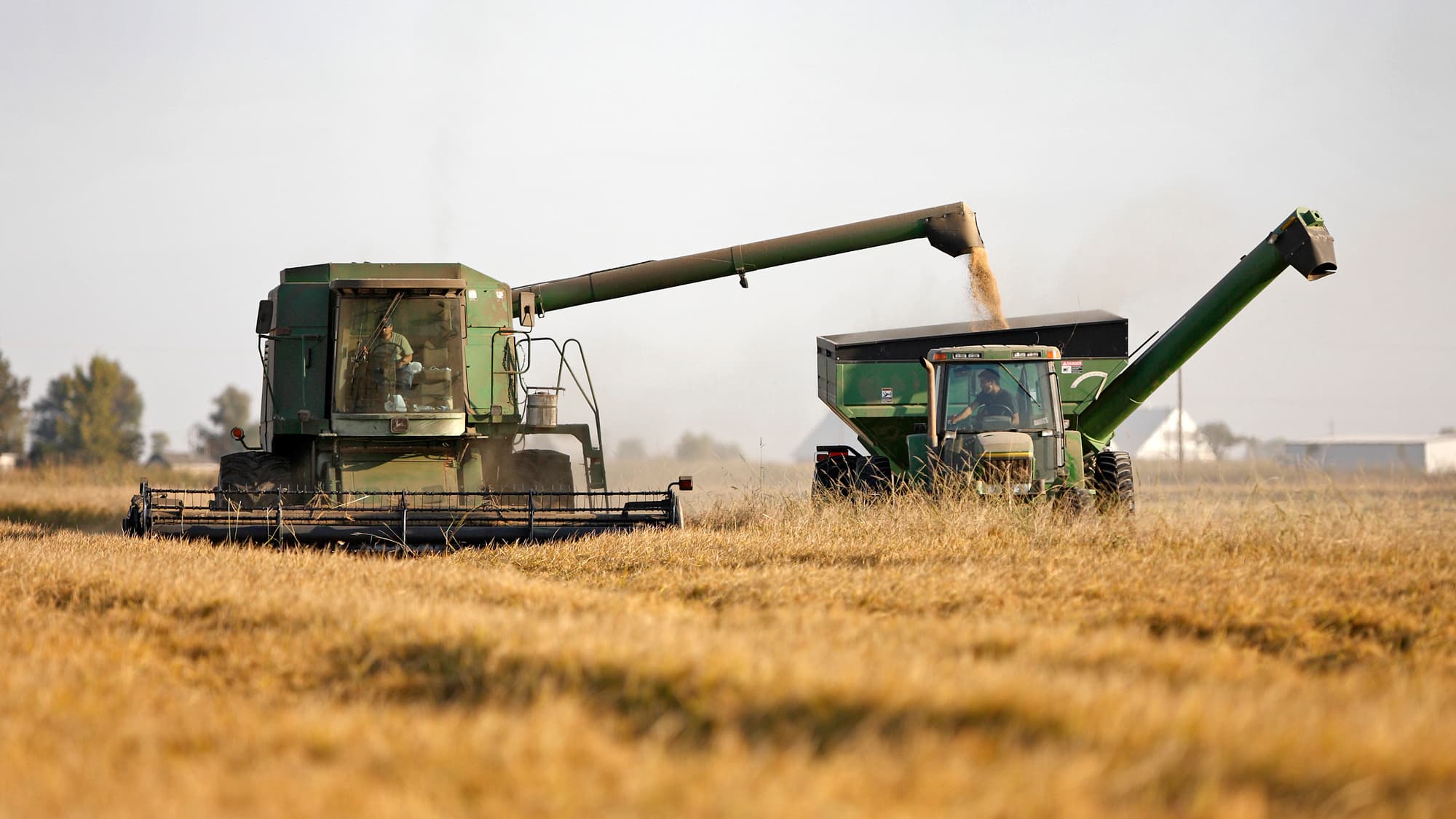
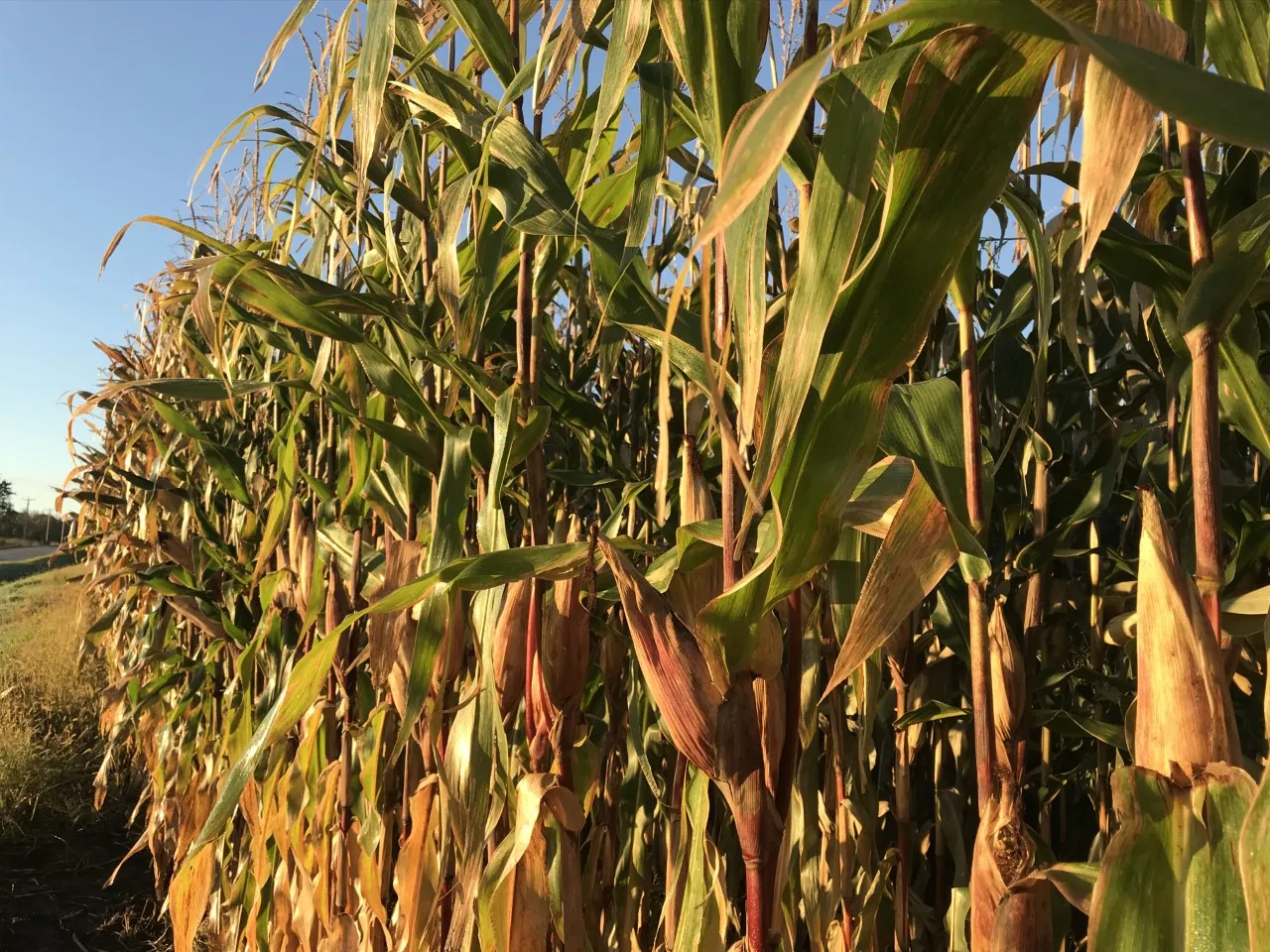
“From our understanding, crop insurance really helps people who just grow wheat or corn or sunflowers,” Drayer said. “We do a tiny amount, compared to most big farms.”
The average American farm is 463 acres. More than 60% of Hawaiʻi’s 6,500 farms are 9 acres or less. And farms typically grow a greater diversity of crops in the islands than typical mainland operations.
There are also few local insurance providers who can provide affordable insurance for farmers, which Kona coffee farmer Suzanne Shriner says drives their prices up. And the USDA charges up to about $2,000 each year to insure diversified crops. So many go without.
Rapid Assessment
Farmer organizations released a survey within 48 hours of the March 14 Kona low storm, as farmers and ranchers salvaged what was left of their operations from pasture and crops submerged in what proved to be only a precursor to the March 20 version.
Floods, winds and hurricanes have so far caused at least $5.2 million in damage to farms on Oʻahu since March 14. On the Big Island, the estimate is $2.7 million and on Maui, about $2.3 million.
The data is unverified, reported by the state’s farmers and ranchers’ groups, who have been soliciting information to better meet their members’ needs during disasters. It was also intended to inform the state and counties about where to direct their relief efforts.
Agriculture Stewardship Hawaiʻi, which is hosting the survey with Hawaiʻi Farmers Union, has received almost 250 responses so far — and counting.
“It looked like three-fourths of the people who filled out the survey did not have insurance,” said Amanda Shaw, agriculture stewardship’s food systems director.
“We’re still hearing about folks who were totally cut off,” Shaw said. “We’re still coordinating and making calls. We’re not clear yet. Everyone’s still in response mode.”
Farmers unions are still accounting for their membership, days after the third storm hit the islands, as residents pile up mud-slicked trash and try to jumpstart flooded machinery. New accounts of farmers’ harrowing escapes overnight and lost crops and livestock continue to trickle in.
But the vast majority of economic impacts – about $6.8 million – have fallen on crops, not livestock. Infrastructure comes in second. And crops are often uninsurable, especially at the federal level.
In fact, pasture, nurseries, banana, coffee, macadamia and papaya are the only crops with already-established insurance policies at the USDA. Just 225 of the state’s farms have a USDA policy for them – roughly 3%.
Coffee farmer Shriner, whose farm was unscathed by the weather, insures 5 acres of coffee for $1,000 each year. That number has risen, she said, and continues to rise.
Just over $27 million in crop insurance was funneled to Hawaiʻi between 1995 and 2024, according to the advocacy organization Environmental Working Group, alongside more than $160 million in disaster relief funding. Non-insured Disaster Assistance payments amounted to almost $33 million over those years, although disbursals have waned recently.
Some farmers are concerned they are going to be further cast aside by the federal system, after the Trump administration made it harder to qualify for assistance. At the same time, private insurers faced with more severe disasters nationwide are pulling out of covering some states entirely, including California, where Allstate and State Farm have stopped accepting new applications.
There could still be some help in store for the smaller farmers, Shaw of Agriculture Stewardship said, so she is encouraging agricultural producers affected by the storms to reach out to the USDA Farm Service Agency.
If small farmers on Oʻahu’s North Shore and across the islands are lucky, they at least have liability insurance to protect themselves from potential lawsuits — but not damage losses. That will do little to help Mae Stinnett of Aura Farm in Waialua, whose farm has flooded twice since March 14.
Stinnett and her partner Ashley Davis have farmed along Farrington Highway for about four years. They have mango, dragon fruit and cassava, and rescue goats and sheep.
They lost all but the animals in the first flood, including a vintage silver Volkswagen camper — none of it covered by their liability insurance policy.
State Crop Insurance? What’s The Need?
Even before the storms, the state was looking for ways to support the small farmers who the Legislature has long hoped to depend on to feed Hawaiʻi residents.
Rep. Matthias Kusch of the Big Island this year introduced House Bill 2594, calling on the Department of Agriculture and Biosecurity to give lawmakers a comprehensive view of farmers’ and ranchers’ insurance landscape.
That includes considering how feasible it would be for the state to support an insurance program for small farmers, or at least create a purchasing pool to attract insurers. The bill also calls on the agriculture department to explore public-private partnerships.
The Kona lows and their destructive power could add a sense of urgency to the legislation.
“These two storms – one-two punches – will really provide some real world context to these things,” Kusch told Civil Beat. “We could get into the weeds on this – and I can’t answer all those questions – but hopefully, through this bill, we can see what is available.”
Disaster and bad weather, invasive species and crop diseases are perennial problems for Hawaiʻi agriculture, but there has to be a fix, he said, especially as the number of small farmers continue to grow throughout the state.
The only regular, state option for uninsured farmers is an emergency loan, which is far from enticing, Hawaiʻi Farm Bureau executive director Brian Miyamoto told senators on March 16 as they considered Kusch’s bill.
The state on Monday approved an allotment of $500,000 for the emergency loan program, with up to $100,000 on offer with 3% interest. It also ponied up grants of up to $1,500 to help address farmers’ immediate needs.
“They’re already in debt; they can’t afford another loan,” Miyamoto said. “We saw it in 2018 with the Kaua‘i floods and when it hit O‘ahu. We saw some farmers that shut down quietly. That’s the last thing we want to see.”
“Hawai‘i Grown” is funded in part by grants from the Stupski Foundation, Ulupono Fund at the Hawai‘i Community Foundation and the Frost Family Foundation. Civil Beat’s coverage of environmental issues on Hawaiʻi island is supported in part by a grant from the Dorrance Family Foundation. Civil Beat’s coverage of climate change and the environment is supported by The Healy Foundation, the Marisla Fund of the Hawai‘i Community Foundation and the Frost Family Foundation.
Source - https://www.civilbeat.org