Inflation has hit the coffee industry hard with prices increasing by 15% from a year ago. Some of the inflation is due to weather and plant pests that made its way to the country’s highest coffee-producing state.
“Hawaii is the only state producing commercial scale coffee,” said Kyler Barber, who manages the farm Waialua Coffee and Chocolate. “It’s an interesting industry, and coffee has a long history here.”
Hawaiian coffee contributes less than 1% of the world’s coffee production, but it generates on average around $50 million a year.
However, some challenges have hindered coffee production in Hawaii for the past 10 years.
“You have a responsibility to explain it to your customers because it factors into price,” said Michelle Yamaguchi with Waialua Coffee and Chocolate.
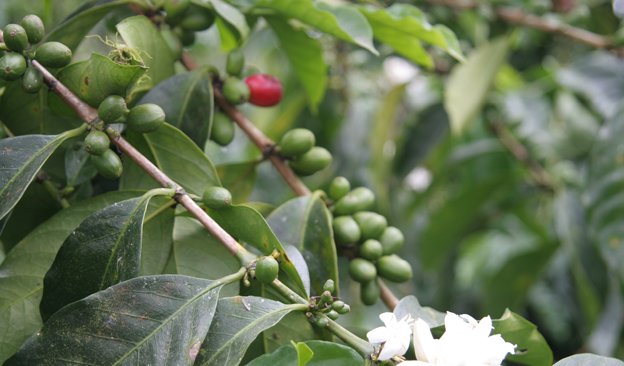
Some of the troubles Waialua Coffee has seen, according to Yamaguchi, are from a pest called the coffee berry borer that makes its way into the coffee beans and hallows out the beans.
“With those, the yields stayed the same,” Barber said. “But you bring in 100 pounds of beans, but 20 to 30 pounds of beans got the beetle, and you can’t sell it. So, you do the same amount of work, but we are losing a lot in the processing. We solved a lot of those challenges and as soon as we solved those this new disease comes. The coffee leaf rust, which is new to Hawaii but not new to the industry.”
Because of the recent introduction of coffee leaf rust, which reports of it started in 2020, growers are constantly trying to prevent the leaf rust from spreading. Due to less yields from those plants infected with the leaf rust, prices for Hawaiian coffee have gone up slightly.
“That’s what you’re going to see is prices go up a little bit because growers like us are spending more to manage the problem,” Barber said. “They’re losing yields somewhat, and they’re needing to get more for each pound of coffee they bring in.”
To combat this problem, the Hawaiian Agriculture Research Center was granted $1.37 million for research on how to prevent the spread, because, on average, coffee leaf rust can result in a crop loss of 70% or more.
“Right now, we do not have tourists at the farm, because it’s risky,” Yamaguchi said. “Coffee leaf rust is even tougher cause it’s a fungus, an insect you can see but a fungus you cannot, so it can get transferred off your clothing or whatnot.”
“It’s been hard to get federal funding for these small crops so that funding is going to help,” Barber said. “And The Hawaiian Agriculture Research Center has been growing coffee for years. They know the industry they are going to be the best solution to solve this problem.”
Source - https://www.katc.com