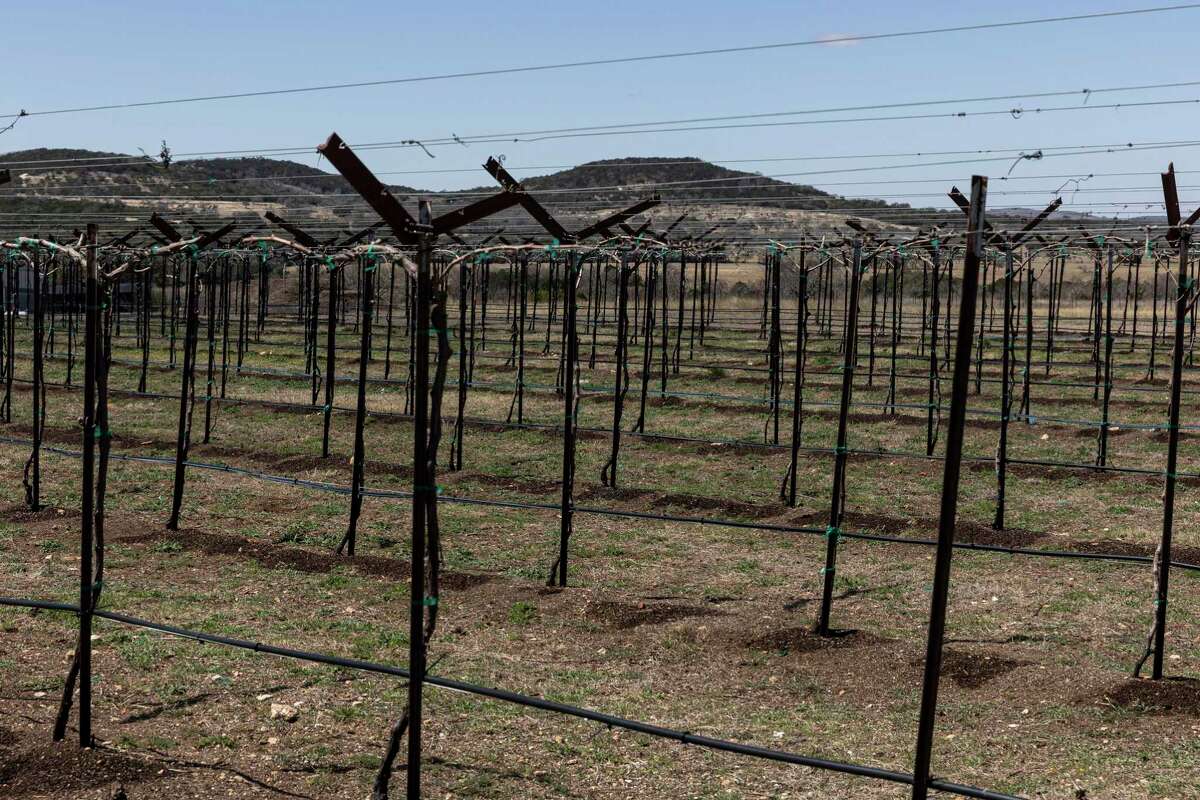
The Panhandle’s High Plains are an arid, inhospitable swath of land where temperatures often rise over 100 degrees and wind blows a good 5 miles an hour faster than the national average. But a bird soaring above the ground below would see a patchwork quilt of white and green interwoven within the broad stretches of dusty brown that define the terrain.
Those bursts of color are largely due to two crops that thrive side-by-side in the region: cotton and grape vines. Cotton has been a key part of the state’s agricultural economy for more than a century. Wine grapes are a relative newcomer, having taken root in the 1970s as farmers looked to maximize their profits from the limited water available to tap from the Ogallala Aquifer which hydrates the region.
The region supplies the majority of the grapes — 80 percent or more in some years — used by Texas winemakers, particularly those based in the scenic Hill Country, the epicenter of the state’s wine-making industry. Over the years, those grapes have gone from producing dodgy plonk to high-quality, international award-winning wines thanks to significant research and investment in determining which varietals are best suited to the rugged terrain.
But now, those neighboring crops are at odds.
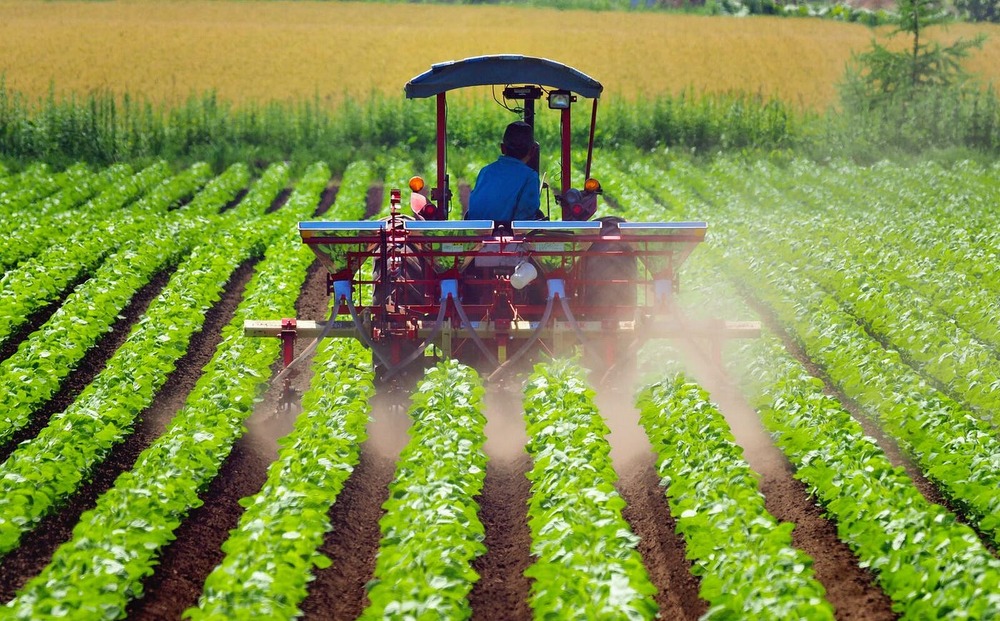
Texas’s High Plains grape supply is threatened by the potent herbicide dicamba, which is used by cotton farmers to control weeds. The chemical drifts on the wind into neighboring fields and has extensively damaged almost 75 percent, nearly 3,000 acres, of the vines in the High Plains, according to attorney Adam Dinnell of the Houston-based firm Schiffer Hicks Johnson.
Dinnell represents 57 Texas grape growers in a suit filed in June against companies Bayer and BASF, which manufacture dicamba and genetically modified, dicamba-resistant cotton seeds. Growers have been advised not to talk to the media with the pending lawsuit.
A BASF spokesperson stated in an email that company officials are aware of the suit and disagree with its claims. “It is well documented that a 2019 freeze contributed significantly to the grower’s current complaints and that other known sources of herbicides, such as applications to public rights of way, have been ignored by the growers,” the email said.
While representatives for Bayer did not return a call seeking comment, Bayer issued a statement in June to trade publication Progressive Farmer reading, “We have great sympathy for any grower who suffers a crop loss, but there are many possible reasons why crop losses might occur including extreme winter weather conditions that can have particularly devastating effects on perennial crops like vineyards.”
Grape growers aren’t the first to sue over dicamba damage. In 2020, Monsanto, now owned by Bayer, reached a $300 million settlement awarding damages to soybean farmers who could provide documented evidence of losses related to dicamba. That same year, a jury awarded a Missouri peach grower $265 million for dicamba-related damage to his orchard. Reuters reported at least 140 similar cases were headed to U.S. courts in 2020.
In December, the U.S. Environmental Protection Agency published a report detailing roughly 3,500 instances of alleged dicamba-related damage to crops including soybeans, sugarbeets, rice, sweet potatoes, peanuts and grapes.
Hill Country wineries already are experiencing a shortage of Texas grapes they say is thanks to dicamba — just as Texas’ young wine scene is claiming a place of honor on the national stage.
Over the past decade, Texas has emerged from the shadows cast by California’s Napa and Sonoma valleys, earning a growing reputation among casual consumers and connoisseurs alike for good wine with grape varietals such tannat, sagratino and picpoul not often seen in other parts of the U.S. At the prestigious 2021 San Francisco Chronicle Wine Competition, the largest such competition for American wines, 50 Texas wineries hauled in 237 awards for wines made with Texas grapes including 57 gold medalists and 14 double golds from a field of more than 5,700 wines entered.
Not coincidentally, Hill Country wineries have boomed, with the number of active winery permits in the Hill Country growing by 625 percent to 254 permits in the last decade, according to the Texas Alcoholic Beverage Commission.
Some Texas wine industry professionals say dicamba damage could mean to few Texas grapes to meet the demand, and that could threaten the state’s growing wine prestige. While Texas vintners could still make wines with grapes from other states such as California or Oregon, oenophiles partial to Texas-exclusive bottles could see a smaller supply at a higher price.
But for Hill Country wine tourists simply seeking a scenic respite and a proper day-drinking buzz instead of sniffing out the subtle differences between a sagrantino and a sangiovese, it seems unlikely the good times will stop flowing.
Cotton vs. grapes
At first blush, it’s hard to imagine anything thriving in the harsh climate of the Texas High Plains. But grapes aren’t a normal crop. Some of the world’s best and most distinctive wines come from climates and terrains that would stress most plants. But grapes like a challenge.
The Panandle’s scorching days are perfect for ripening the fruit, but the high elevation and cool nights let the grapes keep them ripening at a steady pace. The pounding sun also helps the skin of the grapes develop deep color, while the low average rainfall helps prevents disease and mold from taking hold.
Add to that an ideal, mineral-rich soil with good drainage over a rocky bed of limestone, a local population with a long history in agriculture and thousands of acres of available land, and you have the perfect recipe for a region now home to more than 4,000 acres of vineyards.
That land is vastly more affordable compared to more scenic slices of Texas such as the Hill Country, where pretty land and views come with a price. In the last quarter or 2021, land in the Austin-Waco-Hill Country region sold for an average $5,733 an acre compared to $1,312 an acre in in the Panhandle and South Plains region, according to the Texas Real Estate Research Center at Texas A&M University.
Growers could pivot and plant more vineyard acreage in the Hill Country, and there’s enough open land already in the designated Texas Hill Country American Viticultural Area distinction to support that. But it doesn’t make much economic sense when the High Plains already has the grapes, the farmers eager to to grow them and the cheaper land.
That same climate and real estate economy that’s allowed grapes to flourish in the High Plains is also kind to cotton. And in Texas, cotton long has been king.
Texas grows more than a third of the country’s supply today on more than 900,000 acres in the High Plains alone, and cotton consistently is the state’s top cash crop with a value of $2.7 billion in 2018, according to the U.S. Department of Agriculture.
By comparison, grapes are still a minor player in the state. The 2020 harvest, most of which came from the High Plains, was valued at $13.3 million, according to the USDA.
Dicamba has been used by row-crop farmers, including cotton planters, since the 1960s, but because of its tendency to drift to surrounding fields, the U.S. Environmental Protection Agency limited its use to the months before the growing season.
That changed in 2016, when the EPA allowed chemical companies Bayer and BASF to sell a new formula of the chemical designed with lower volatility so it could be sprayed during the growing season. But grape growers say it still drifts, coming into contact with High Plains vines when the plants are most vulnerable.
Julie Kuhlken, cofounder of Pedernales Cellars in Stonewall and a staunch advocate for making wines exclusively from Texas grapes, doesn’t have much hope the situation will improve.
“It’s not going to be solved by the chemical companies, because they can’t deal with the drift problem. The High Plains are very windy,” she said. “We’ve been saying for years this problem only goes away when grapes become more valuable than cotton,” she said.
Hill Country winery boom
Over the past few decades, Texas has roared into the U.S. wine scene as a major player. What started with a tiny handful of grapes planted by Spanish missionaries in the 1650s has grown into a wine industry that was the fifth largest in America in 2018, with more than 4 million gallons of wine produced that year.
The Texas wine industry overall employs more than 100,000 people and has an economic impact of $13.1 billion, according to a 2017 study by the national industry group Wine America, the most recent available. About half of the state’s wineries are located in the Hill Country.
The vino-soaked stretch of U.S. 290 between Fredericksburg and Johnson City is the second-most visited wine route in the country behind only California’s famed St. Helena Highway (Highway 29) through Napa Valley, according to trade publication Wine Industry Advisor.
But the challenge of finding enough Texas-grown grapes to meet that rising demand puts pressure on winemakers, especially smaller operators who have sworn to use 100 percent Texas fruit.
Grape shortage impact
Torr Na Lochs Vineyard & Winery in Burnet, owned by Blake DeBerry his wife, is a relatively small producer making 4,000 to 5,000 cases of wine per year. They grow about 20 percent of the grapes they use on site, with the rest coming from the High Plains. But as a boutique winery with a strict focus on exclusively Texas grapes, DeBerry already has to work extra hard to find fruit.
“The lower yields because of dicamba put everybody at risk, but it’s definitely going to be extremely challenging for smaller wineries,” DeBerry said.
The DeBerrys have already began diversifying by adding a commercial kitchen to the winery, and if the shortage of High Plains grapes continues, they might expand the acreage of the vineyard to grow enough grapes to survive.
For Kuhlken, who exclusively uses Texas-grown grapes at Pedernales Cellars to produce about 13,000 cases of wine annually, it’s still too early to tell what a grape shortage would mean for her business. Like many Hill Country winemakers, she’s had to expand the number of growers she sources grapes from, but so far has been able to find enough fruit to meet demand for her wines.
If that changes, however, she’s ready to pull the plug.
“If it were a permanent situation, I think it would be the end of the business at some point. It just wouldn’t be interesting to us,” she said. “We might finally become a wedding venue. Or we would just start making gin. If you’re making gin, nobody asks where the juniper berries come from.”
For some Texas winemakers, grape provenance already isn’t such a big deal. At Sister Creek Vineyards in Sisterdale, tasting room manager David Prejza recently poured samples of wine for a small tour group. Most of the offerings were made with Texas grapes including several cabernet sauvignon blends, but Sister Creek currently sources the grapes for its chardonnay from California.
For Prejza, using non-Texas grapes hasn’t been a hindrance to making a sale.
“We’ve never been Texas specific here,” Prejza said. “We prefer to have Texas, but if we can’t get that at the quality we want and price we need, we’ll go somewhere else. I think people want to know where the grapes are grown, but once we explain to them that we’re making the wine here and we’re just bringing in the raw product, they’re good with that. I don’t see a lot of negativity on that.”
Bob Young, owner of Bending Branch Winery in Comfort, straddles both worlds, making award-winning wines from California grapes in his California winery and from Texas fruit in his Comfort winery. And while he sel bottles of both in Comfort, it’s the wines made from High Plains-grown tannat and sagrantino grapes that have put the winery on the Texas map.
When Young opened the business in 2009, there simply weren’t enough Texas grapes available, he said, and sourcing from outside Texas was the only option. Now, he owns a vineyard in California in addition to his Hill Country property, and a steady supply of grapes is all but guaranteed — just maybe not the kinds Young would prefer as damage from last year’s freeze and from what he says is dicamba have combined to made some key varietals tough to find.
“Right now our 2017 sagrantino is on the menu, but we didn’t harvest any of that fruit in 2020. The consumer will feel that come 2022, 2023. We will not have that wine,” said Bending Branch general manager Jennifer McInnis. “Other yields are down. The 2020 tannat was less than 50 percent of what we normally make.”
McInnis said if Texas were to experience ongoing grape shortages, the winery wouldn’t start bringing in grapes from California, but it might expand production there, possibly sending additional staff from Texas to assist.
“If you don’t have grapes and you run a winery business, if you don’t have Texas fruit or enough Texas fruit, what do you do? You don’t sell wine? You cut your production in half? You lay off half of your staff? What do you do?” Young said. “You get grapes from somewhere else and make good wine. And when you have plenty of Texas fruit, you use it is what you do.”
At least one wine tour operator thinks the looming Texas grape shortage will have no impact on wine tourism the area.
“There will still be a supply of grapes to the state. The wineries will remain open. The demand is there. The tasting rooms are full even during the week,” said Brandy Garcia, co-owner of San Antonio-based Cottonwood Wine Tours. “I don’t see any rational winery owner thinking that they should close if they can’t get Texas grapes.”
Source - https://www.expressnews.com