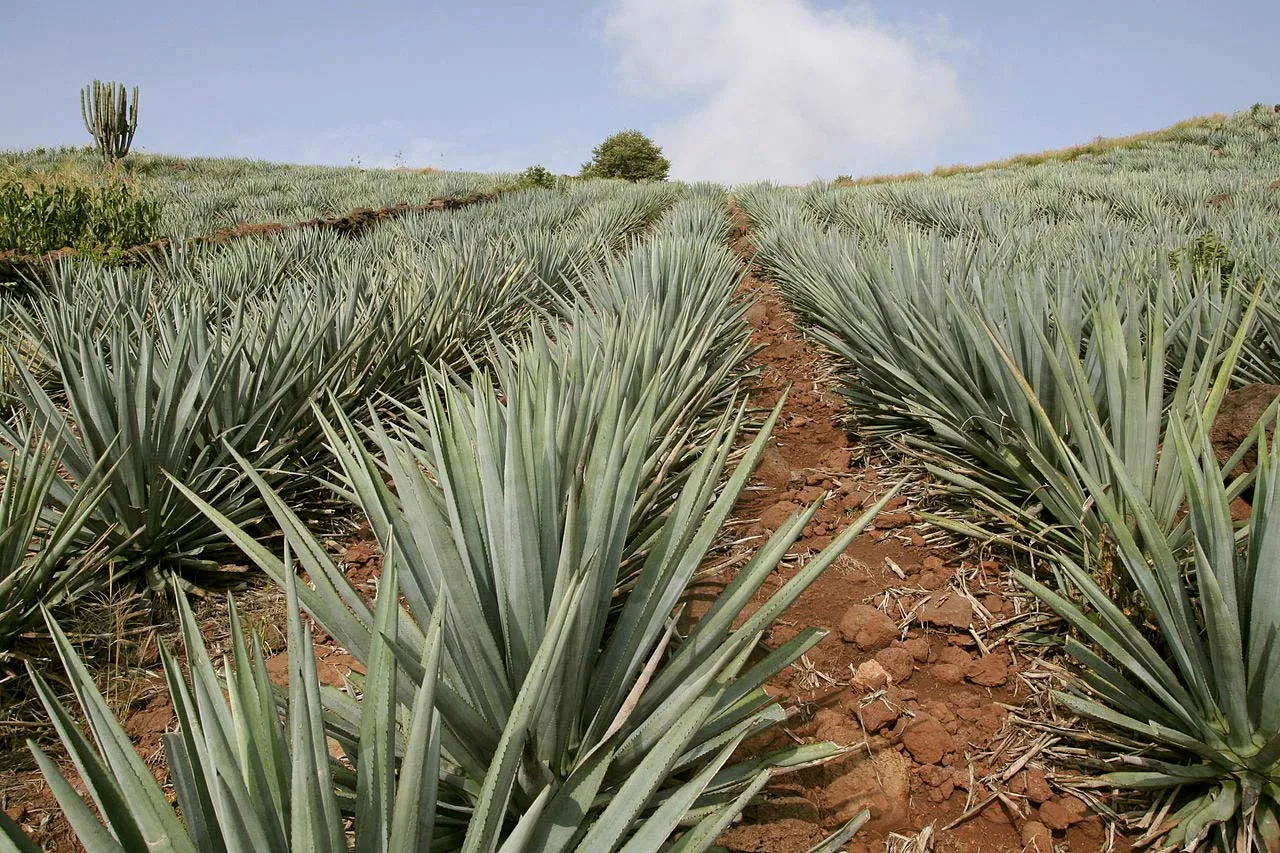
Something to consider as you search for happy hours to celebrate National Margarita Day: The delicious concoction's main ingredient is threatened by changing weather and new strain on the agave plant's vital pollinator -- the bat.
Agave-based liquor like tequila and mezcal was the fastest growing spirits category in 2022, according to the Distilled Spirits Council of the US. Analysts even say it might soon surpass vodka as the best-selling liquor in the country.
But scientists from around the world have made it clear that climate change-fueled water shortages will continue to put enormous pressure on food production. Wine and spirits, unfortunately, are not spared from that forecast. A 2019 study found that the climate crisis, coupled with overgrazing from cattle ranching and other human activities, may disrupt the distribution and cultivation of agave, the main ingredient of tequila.
While agave is a drought-tolerant plant that can thrive in hot weather with little to no water, Omanjana Goswami, a food and environment scientist with the Union of Concerned Scientists, said the life cycle of agave is too fragile to endure the major weather whiplash the climate crisis is generating -- from extreme drought to deadly storm deluges like the one California just experienced.
"Agave is a desert plant, so of course, anything that is moving towards that desert-like weather is going to help this crop thrive," Goswami told CNN. "But unfortunately, climate effects are not linear. It doesn't mean that as temperatures warm that will remain consistent."
"With extreme weather in conjunction with unpredictability, it's so hard to predict where this is going to go in the future," she added.
The animals that pollinate agave
Aside from agave plants being sensitive to weather whiplash, there's also a significant climate threat to pollinators. Bees, butterflies and bats pollinate roughly 30% of the food that ends up on our tables. Bats, like birds, are also considered a major seed disperser. But as temperatures warm, weather gets more extreme and seasons shift, those pollinators are at risk of major disruption.
Warming temperatures have become a growing concern for the Mexican long-nosed bat - a key species for tequila.
"You wouldn't have tequila if you had no bats, because that's the only thing that pollinates the agave plant that makes tequila," Ron Magill, the communications director and a wildlife expert at Zoo Miami, previously told CNN.
There are hundreds of species of agave, but only one - the Weber Azul agave plant - makes tequila. Other agave species were abandoned in Mexico and in the desert regions of the Southwest US. By law, to be considered authentic "tequila," the spirit must come from the Tequila region in Mexico. Otherwise, agave liquors produced in places like California can only be labeled as an agave spirit.
Because of the high demand for agave spirits, it's easy for farmers to fall into the practice of monoculture, where they reuse the same soil to grow a single crop, leading to a loss in genetic diversity, scientists told CNN. That includes places like California, where farmers do not rely on external pollinators like bats to grow their agave crops.
But some researchers like Ron Runnebaum, an assistant professor of viticulture and enology at the University of California, Davis, are looking to explore more of that genetic diversity to see what variants besides the blue agave can adapt and survive in a changing climate to avoid the loss in diversity.
"For us, in the United States, and especially in California, there are just a lot of questions around how we would be able to grow this economically as a crop as a way of diversifying the portfolios of farmers, as they're facing water shortages, as well as these other extreme events whether extended droughts or an abundance of water in a short period of time," Runnebaum told CNN.
Economic opportunity
Agave plants require little watering and can allow farmers to plant crops on land that would have otherwise been fallowed due to lack of water. And while it takes six to eight years for agave plants to mature, scientists say agave plants can also suck planet-warming carbon pollution out of the atmosphere.
Given these benefits -- and as the West is mired in a multi-year drought -- Craig Reynolds, an agave grower and founding director of the California Agave Council, said he sees agave spirits as an economic opportunity in a hotter and drier future.
Eight years ago, Reynolds began growing agave in Northern California as an experiment to see if it would be a viable crop in response to water scarcity.
"We've gotten a lot of attention, because the biggest issue (for farmers) is the water," he told CNN. The "severe cutbacks and groundwater allowances in state and federal water project deliveries, and the fallowing of hundreds of thousands of acres in California and projected long-term fallowing of farmland" is causing the growing interest, he said.
With the help of UC Davis, more resources are going into researching the viability of the low-water crop, especially under a rapidly changing climate. Reynolds said industries need to start adapting and thinking about ways to survive in a hotter and drier future.
"There's going to be some failures and setbacks here and there," Reynolds said. "I'm not hoping for the climate to change. I'm just realistic in that we need to do everything we can to slow climate change, but we also have to simultaneously have adaptation strategies to the climate change that is happening -- and agave is just part of the adaptation strategy."
Source - https://6abc.com