

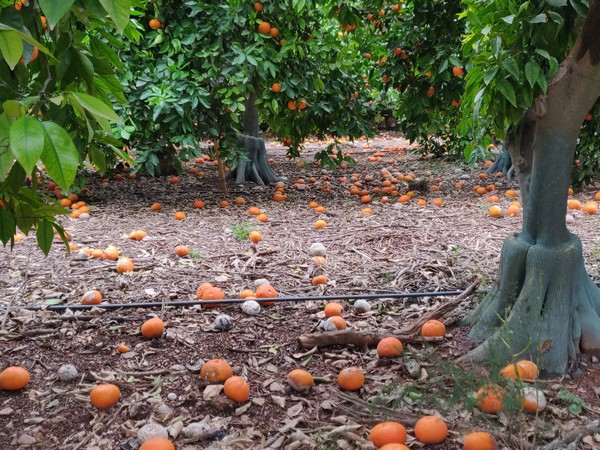
Florida citrus growers got off easy following Hurricane Nicole, which hit the Sunshine State on Nov. 10, compared to the devastation caused by Hurricane Ian in late September.
“There was some fruit on the ground as a result of the hurricane, but by and large, it sounds like we have, based on the early estimates, avoided the kind of disastrous impact that Ian had,” said Matt Joyner, executive vice president and CEO of Orlando-based Florida Citrus Mutual.
The storms left some standing water, but he said Nicole was “mild compared to Ian.”
Nicole blew into Florida on the east coast, the opposite side from where Ian made landfall, but where several grapefruit packinghouses are located, so there was some concern that the grapefruit crop could be impacted, he said.
But, except for “a few pockets of damage,” grapefruit was virtually unscathed.
“They’re packing grapefruit and they’re open for business,” Joyner said.
“Hurricane Ian left a far greater level of destruction in its path than Hurricane Nicole for the state and the citrus industry in general,” said Shannon Shepp, executive director of the Bartow-based Florida Department of Citrus.
“While these historic weather events are a setback, for sure, we know that growers have recovered from extreme storms before, and they will do it again,” she said.
Volume of Florida’s 2022-23 citrus crop was expected to be down about 32% from last year even before the hurricanes hit because of a freeze early this year and citrus greening disease.
USDA’s October Florida citrus forecast for the season projected 28 million boxes of Florida oranges (down from 41 million last season), 2 million boxes of grapefruit (down from 3.3 million) and 700,000 boxes of specialty citrus (down from 750,000).
The next forecast, which is scheduled for Dec. 9, will take into account the impact of Hurricane Ian and Hurricane Nicole.
Dan Richey, president of Riverfront Packing, Vero Beach, Fla., said he was “very pleasantly surprised” by the small amount of damage caused by Hurricane Nicole.
“We were very pleased with what we saw in our groves — very minimal fruit loss, no tree damage, no standing water,” he said.
The company lost about 10% of its crop to Ian, but the loss from Nicole “was not even measurable,” he said.
Joyner said recovery from Ian will be a long-term process for a number of Florida citrus producers.
In mid-November, several growers were still trying to get trees back up and groves cleaned out.
“Ian was a massive wind and water event,” he said.
Volume at Riverfront Packing will be down this season compared to last year, Richey said. But that’s largely because the company is removing 1,500 acres of older groves that are struggling with citrus greening disease and replacing them with new, denser groves that are not yet producing.
Riverfront will experience a “trough in supply” for a while, he said.
Also, fruit size is at least one or two sizes smaller than last year, Richey said, and that will result in a reduced number of boxes.
“We had a drought basically from early June to the end of July, which is the time when fruit starts to size,” he said.
Volume should be about the same as last year for the fresh-market Florida sour oranges shipped by Miami-based J&C Tropicals, said buyer Alejandro Castano.
He expected “great” quality with small- to medium-size oranges.
DLF International, Fort Pierce, Fla., also was pleasantly surprised by the small amount of damage caused by Hurricane Nicole, said Jordan Feek, director of marketing.
“We were pretty lucky,” she said.
Rain did shut down harvesting for a few days, but in mid-November she said, “We’re moving right along.”
The company’s volume likely will be down slightly from last year, and fruit quality will be good, while sizing could be smaller, Feek said.
DLF grows oranges, grapefruit and some other citrus items.
Dundee, Fla.-based Dundee Citrus Growers Association, whose fruit is marketed by Florida Classic Growers, likely will see a 35% drop in volume this year compared to last year, primarily because of Hurricane Ian, said CEO Steven Callaham.
“Nicole was not nearly as bad,” he said.
Some Ian-related cleanup still was going on in mid-November, and fruit drop will continue because of stressed trees, he said.
Callaham said buyers can expect good quality on the company’s oranges, grapefruit and tangerines, which are produced for fresh market and processing.
Sizing may be a bit smaller than last year, though.
Some Florida growers said they’re producing more packaged citrus since COVID-19 first appeared.
“We definitely saw an uptick in bags at retail,” Richey said.
That’s because consumers pushed away from picking up loose fruit because of concern about who else touched it, he said.
He estimated that half the company’s grapefruit is packaged and half is sold in bulk.
J&C Tropicals offers custom label packing, clamshell containers, mesh bags, custom retail-ready packaging and conventional bulk cartons from up to 50 pounds, said Salvador Fernandez, vice president of operations. About 35% is packaged; the rest is bulk.
The packaged trend at J&C Tropicals was growing 5% to 7% annually even before the pandemic, he said. The cost of packaging materials has increased up to 50% over the past two years, he added. DLF offers bagged citrus, but bags require more labor than bulk product, and the cost of materials has risen, Feek said.
Source - https://www.thepacker.com










