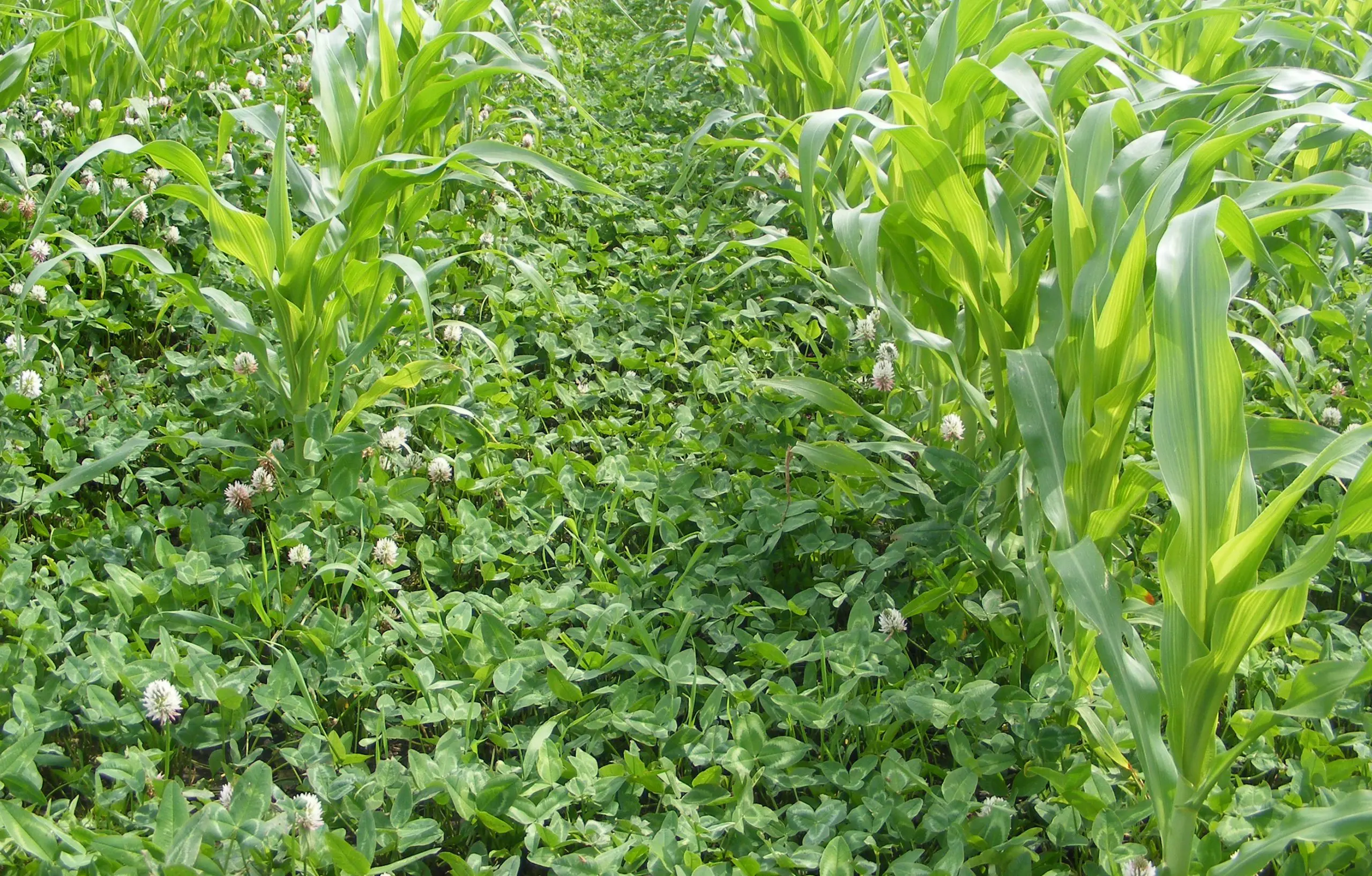
Field trials of a new cover crop, CoverCress, are in its third year at the Illinois State University Farm and multiple benefits are being realized as intended.
Led by John Sedbrook, ISU professor of genetics and his student researchers, the common weed, pennycress, has been genetically modified as part of a project, known as Integrated Pennycress Research Enabling Farm and Energy Resilience.
IPREFER is a team effort by multiple institutions across several Midwestern states and is being funded by grants from the U.S. Department of Agriculture and the Department of Energy that total $23 million.
Partner institutions, in addition to ISU, include Western Illinois University; University of Minnesota; Ohio State University; Southern Illinois University Carbondale; University of Wisconsin-Platteville; CoverCress Inc., a crop-development company in St. Louis; and Agricultural Utilization Research Institute, an ag-related nonprofit based in Minnesota.
A main objective of the project is to create and deploy “a suite of agronomic management projects across the region that will result in pennycress being incorporated into the predominant corn and soybean rotation and in a range of high-valued rotational crops.”
Sedbrook’s work has resulted in genetically modified pennycress the produces seeds that can be used for biofuel and the seed remnants can be added to meal to feed animals.
As with typical cover crops such as cereal rye, CoverCress suppresses weeds and captures nutrients, but it also is an income opportunity of about $50 per acre, based on an average grain yield of 1,500 pounds per acre.
“The rate is based off of the delivery of grain to be used for crushing for renewable biodiesel,” said Chris Aulbach, CoverCress agronomy and farmer relations lead.
“To make this work economically, the farmer harvests the CoverCress crop and delivers it to be crush. We provide the seed. You plant it and make a decision to add additional fertilizer, just a nominal amount — we think about 50 pounds of nitrogen— harvest it and deliver it for crush.”
ISU Trials
Bill Perry, ISU water ecology professor, discussed his trials during a recent cover crop field day at SIU Farm.
The modified pennycress trials include alternating 2-acre plots, one with CoverCress and an adjacent plot with no cover crops. The plots are integrated into a corn-soybean rotation.
Each plot is independently drained with tile. A sampler is in each tile to determine how much water is leaving each plot and what nutrients are leaving each plot.
“My goal is not to interfere with the way the farm is normally farmed, and can we put CoverCress inside of a soybean-corn rotation. We’re looking at soil fertility, weeds, nutrient uptake in the pennycress plot and loss of nutrients through the tile,” Perry said.
“CoverCress has a great lifecycle, if you’re interested in cover crops. We can plant it later in October. It grows through December. It has a small yellowish rosette in December. By March it forms a bigger rosette and has a lot of flowers growing by April.
“It will set seed by late May and self-terminates by about the first week of June at the latest and will be harvested. It self-terminates when it gets warm, so it doesn’t need herbicide to kill it off.”
Nutrient Uptake
Perry said soil tests this year found 50 parts per million of nitrate in the soil of plots with no cover crops and a nitrate level of 5 ppm in pennycress.
“It reduced the amount of nutrient that was being converted from ammonia to nitrate that was going to be heading to the streams. It’s taking up and holding it before it’s lost to the tile,” he said.
“In the soil with pennycress last spring we had reduced the soil nitrate by half, but it didn’t affect soil ammonia. So, it’s leaving the ammonia in the soil, but taking up nitrate before it’s lost in the system.”
It fits in well with the Illinois Nutrient Loss Strategy goal of reducing nitrate loss 45% by 2045.
“If we could get pennycress or any cover crop put on half of the acreage around here even every other year, we could meet that 45% goal and do it in a way that we’re not interfering with producer practices,” Perry noted.
Control, Yields
CoverCress is different than regular pennycress in that the seeds are golden and it tends not to form a seed bank that keeps coming up year after year.
“Also, if you don’t like it and things don’t work out for some reason, herbicide knocks it out immediately. It’s very easy to control if there are any issues,” Perry added.
Over the trials incorporating the modified pennycress in a corn-soybean rotation, there has been no impact on yields compared to the plots without the cover crop.
Source - https://www.agrinews-pubs.com