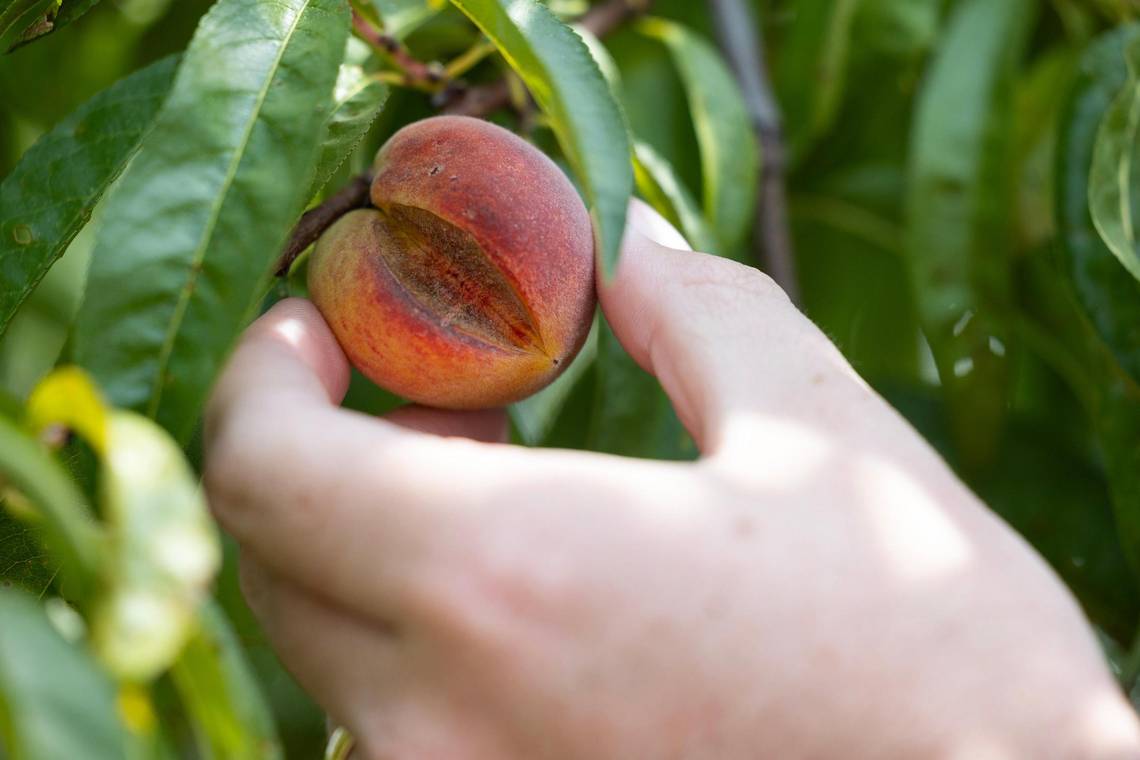
In April, Ross Williams remembers starting to thin the peach trees at Titan Farms in Ridge Spring, South Carolina. The branches are usually so full of fruit that they need trimming so that trees can grow more large peaches.
This year was different.
Workers noticed a low fruit count, significantly lower than other years. It couldn’t be right. They counted again.
“We said, “Oh, boy, this isn’t good,’” said Williams, Titan’s chief operating officer of post harvest and supply chain.“Fruit was starting to drop off the tree.”
Trees that should have been weighed down by large peaches were full of “buttons,” pieces of fruit smaller than the palm of your hand, instead.
Two late freezes in mid-March caused Titan Farms, the largest peach farm on the East Coast, to lose 70% of its crop. Many farms across the South saw similar losses. The result is a peach season with fewer peaches, at higher prices, in fruit stands and grocery stores not just here in South Carolina, but nationwide. And today’s troublesome trends could be signs of bigger trouble for the future of peach farming.
“So it’s significant, it’s really, it’s very significant,” Williams said. “When you lose 70% of a crop, it’s difficult to be able to make ends meet at the end of the year. You do have crop insurance, but it nowhere in any form or fashion comes anywhere close to helping recoup what you actually lose from a revenue standpoint.”
Titan, the country’s second-largest private farm, usually harvests and packs around 2 million boxes of peaches a year. This year the farm will only be able to pack around 450,000. Williams said this loss also doesn’t consider the number of peaches that are usually sold wholesale.
According to Ksenija Gasic, a professor of horticulture, peach genetics and breeding at Clemson University, peaches rely on having an “adequate chill” to grow. Adequate chill counts as anything between 32 and 47 degrees and is crucial in allowing the peach tree to get the rest needed to produce fruit in the following months.
Gasic said while trees this year got their needed chill, a warm late winter and early spring meant the crop was too advanced too soon.
“So what happened this winter, they got good chill, but the hot weather came too early, so in South Carolina’s case, mid-February, our bloom was done,” Gasic said. “That’s like a month earlier than normal.”
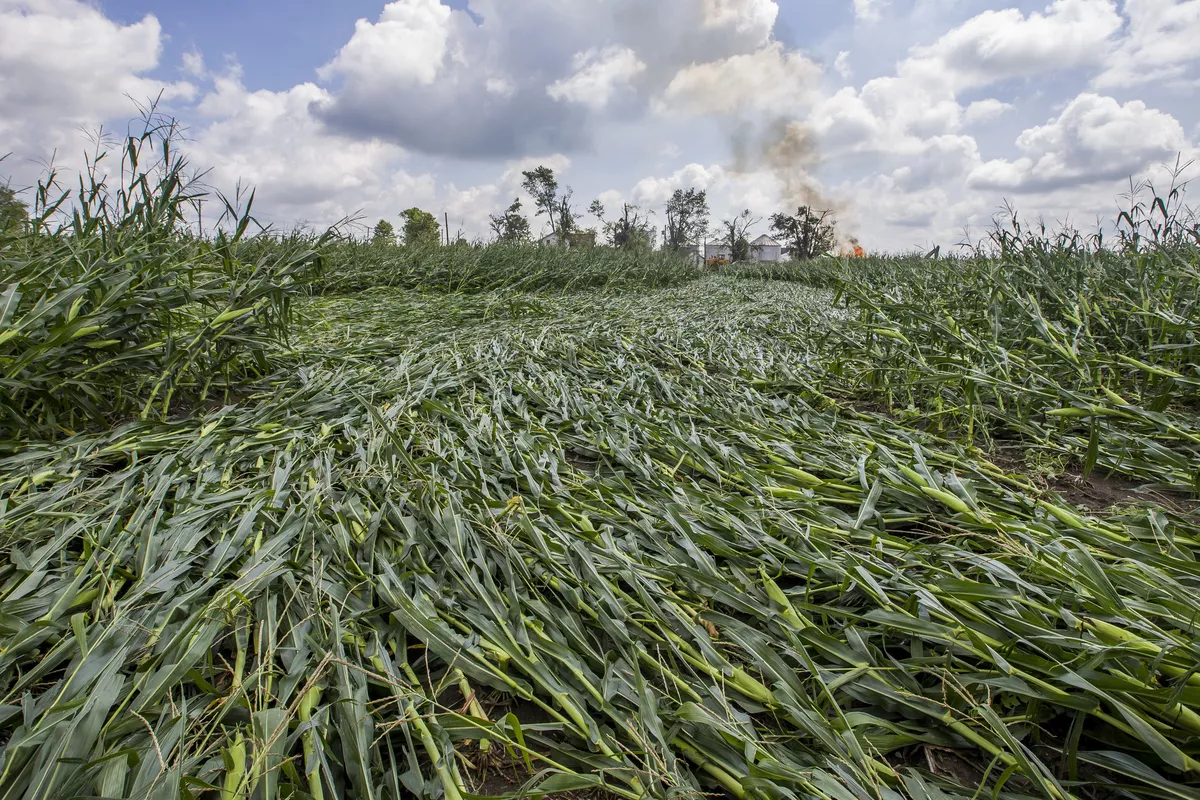
The early blooms left immature fruit susceptible to freezes in mid-March. Many farmers lost peaches throughout the state, but losses were even worse in Georgia, where it is warmer, and crops were further along.
“Peaches, unfortunately, bloom before the last frost date, and so growing peaches is a risky business,” Williams said. “It’s not like planting corn, you know, you’re gonna decide when you’re gonna go plant the corn. Well, peach is in the ground, and it’s gonna go through its cycle whether we want it to or not.”
Titan Farms usually fills multiple refrigerated rooms full of boxes of peaches that almost touch the ceiling. This year, many shelves are empty. Williams said he expects the company only to be able to provide peaches through about August.
With the decrease in supply and the high demand for peaches in the summer, Williams said prices have risen about 40% for the fruit.
Williams said with such a small supply, Titan Farms has been pushed to find solutions to continue to serve its larger customers including Costco, Aldi and Kroger.
“It’s a tough pill to swallow. But at the end of the day, it makes you a better team,” Williams said. “We’ve learned how to adapt and how to go to market. And how to, like I said, still be able to have the relationships and the communication with our much-needed retail partners. Because next year, hopefully when we do have a full crop, we don’t want to have missed out on a year with that retailer.”
Titan Farms decided to work directly with business partners, estimating how much fruit it could provide and balancing this with each partner’s needs. The company has been able to provide peaches to 12 retailers, though with a smaller amount compared to past years.
Williams said that while he is happy that Titan Farms has maintained relationships with many of its business partners, some people still call the warehouse for peaches that don’t exist.
“If we had more peaches, they would be on those grocery store shelves, for sure,” Williams said.
NEXT STEPS
According to Gasic, a limited number of actions can be taken to prevent the harm of late freezes. Large fans can keep air flowing, or farmers can burn hay to increase temperatures. However, Gasic said these tactics only make a difference of a degree, and while in some instances a degree is enough to save a crop, fans are costly, and both tactics are impossible to accomplish on a large amount of land.
In the past, Gasic said getting an adequate number of chilled hours has been a more common concern for farmers, but now these detrimental freezes are becoming a larger issue.
“It used to be about maybe once in 10 years or so, like 2007 was one big one, and then 2017 again,” Gasic said. “But now we’re six years from 2017, and we had two years, 2021 and now 2023 that were with some frost damage. And that’s all due to the global warming that’s happening.”
The freezes add to a list of troubles that Williams said has made growing peaches difficult. The fruit has been severely impacted by diseases in the soil that are killing trees early. In addition, higher inflation has increased the price of production and made it difficult to continue making a profit.
Williams said these challenges have pushed Titan Farms to find ways to be more efficient and add value to its products. The company has special packages to fit the needs of different partners and includes HarvestHold plastic sheets in its deliveries that prevent ripening and extend shelf life.
Williams said despite fewer crops, Titan Farms has focused on providing the best quantity and quality possible.
“That investment that we’re making, again, is us committing to the retailer and committing to the end consumer that, ‘Hey, this is going to be the absolute best that it can be,’” Williams said.
Williams said that Titan Farms plans to do everything possible to continue improving its process and product, including working with Gasic on breeding peaches more resistant to diseases and freezes.
Despite the hardships, Williams said he plans to continue growing peaches to help provide for his community and country.
Customers can find Titan Farms peaches in grocery stores across South Carolina.
Source - https://www.thestate.com