

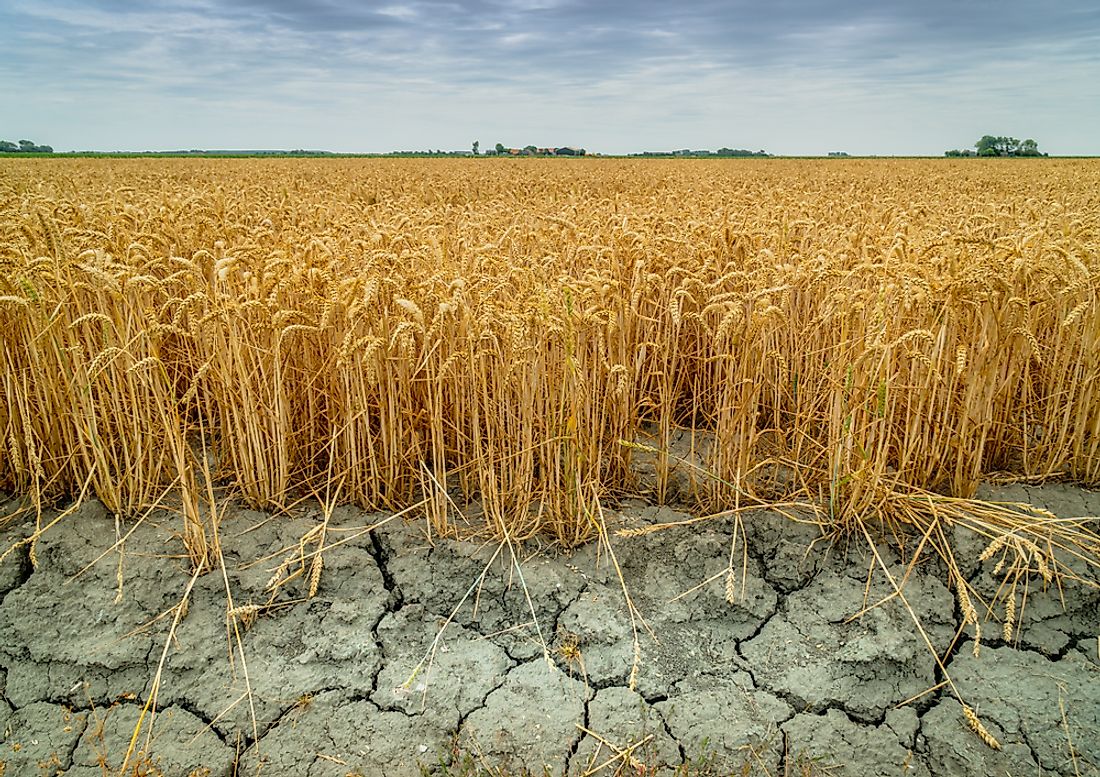
Drought conditions this year may cost Nebraska corn, soybean and wheat farmers nearly $2 billion, an agriculture economist estimated Thursday.
Nathan Dorn, who farms near Firth south of Lincoln, said he’s already cutting back on spending for new cattle and next year’s crop due to lower yields and increased costs for seed, fuel and fertilizer that he estimated at $13 an acre.
Higher prices, lower yields
“Yields are down, but prices are up,” Dorn said. “But having 60% of a crop is not the same as having 100% when you sit down with a banker.”
The Nebraska Farm Bureau held a press conference Thursday to highlight the challenges facing the state’s agriculture producers this year due to drought, rising input costs and challenges getting parts for repairs.
Parts of 20 counties in northeast and southwest Nebraska are deemed to be in “exceptional drought”— one that occurs only once in 50-100 years — according to the National Drought Mitigation Center at the University of Nebraska-Lincoln.
Drought widespread
Portions of at least half of the state’s 93 counties are in “extreme drought,” the center’s map indicated. That is a drought that occurs every 20-50 years. The rest of Nebraska is rated as in “severe” or “moderate” drought.
Norfolk, in northeast Nebraska, has received about 11.6 inches of rain this year through Wednesday, compared to normal precipitation of 24.8 inches. Madrid, in southwest Nebraska, has gotten 7.1 inches of precipitation, 13 inches short of normal.
Jay Rempe, an economist with the Nebraska Farm Bureau, gave the $2 billion estimate. But he said the impact is likely worse because his estimate does not include projected yield decreases for other crops, like sorghum, sugar beets, sunflowers and dry beans.
“Making some assumptions regarding yields and prices in a world without drought, the value of this year’s corn crop could be $1.1 billion less compared to what might have been,” Rempe said, and the loss in soybeans was an estimated $674 million.
Wheat crop down
Rempe said that the state’s wheat crop was about 31% below normal. But he said exact drops in corn and soybean crops will be clearer when the fall harvest is completed.
Rempe said that while livestock prices have risen, producers have cut back on the cattle herd due to lack of feed, poor conditions of pastures and the increased cost of hay.
The decreased beef supply will translate into higher prices for consumers in the next couple of years. Rempe said.
Among the higher input costs are those for fertilizer, where prices have nearly doubled, and diesel, where prices have more than doubled, he said.
Economic impact
According to a nonscientific poll conducted recently by the Farm Bureau, farmers’ top concerns over the next year are input prices (35% of respondents), followed by drought (32%) and supply chain disruptions (20%).
Decreased income on the farm and ranch will eventually trickle down and impact Nebraska’s economy, according to Mark McHargue, president of Nebraska Farm Bureau.
Source - https://nebraskaexaminer.com










