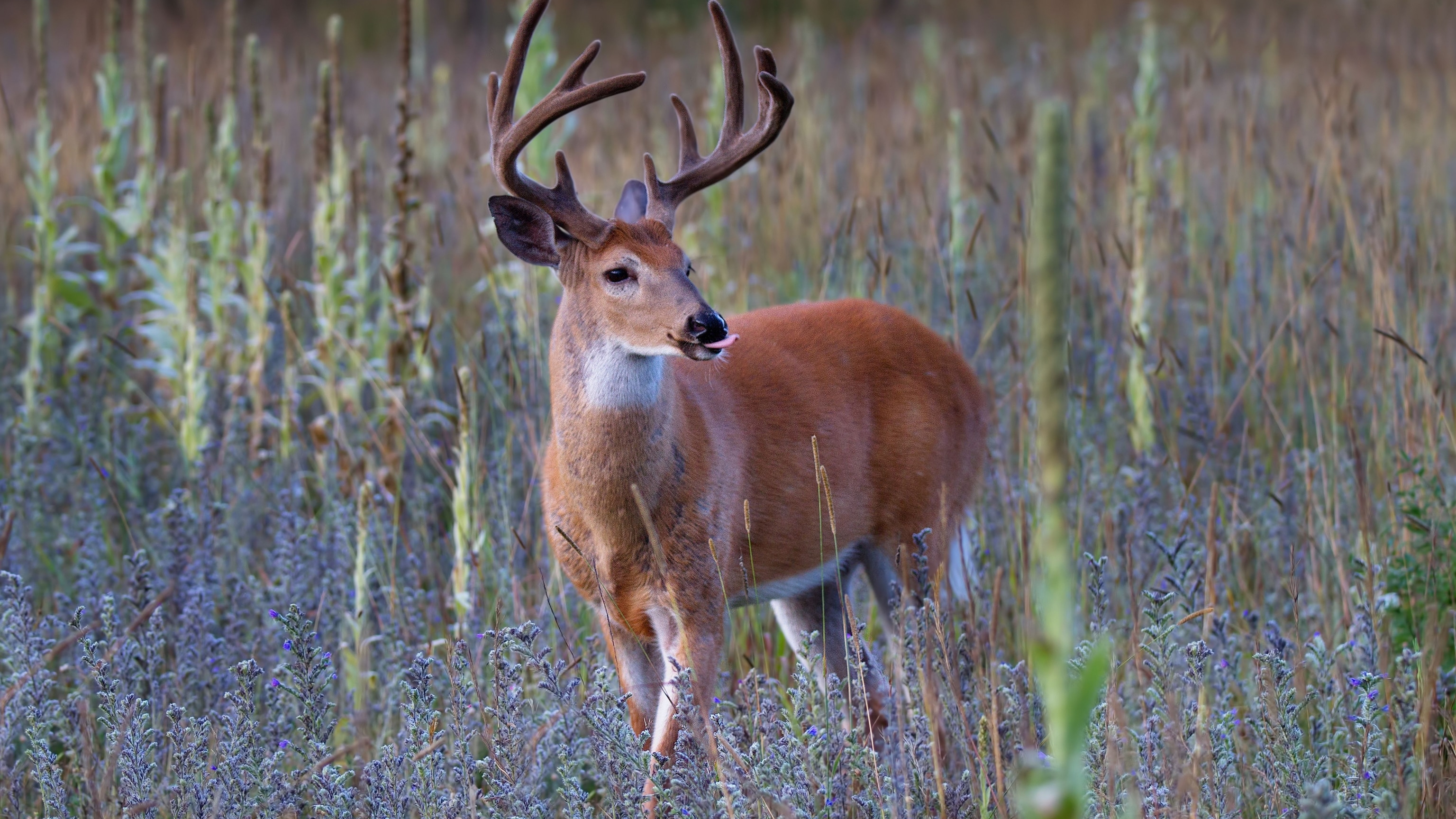
Maryland farmers and officials are looking at ways to reduce the multimillion-dollar crop damage caused by deer.
“Going around the state, universally the No. 1 topic that I’m hearing from farmers is deer,” Ag Secretary Kevin Atticks said.
Atticks convened a Maryland Deer Summit on May 11 at the Ag Department headquarters.
Though some people fear Maryland is being overrun by deer, that’s not the case. The state’s deer population is stable, but some areas have too many of the animals, said Brian Eyler, associate director of wildlife and heritage services at the Department of Natural Resources.
In a 2011 survey, deer accounted for three-quarters of Maryland’s wildlife-related crop damage.
Black bear damage has since increased in western Maryland, but deer are still the main problem, said Colby Ferguson, director of government relations at the Maryland Farm Bureau.
Based on his conversations with farmers, Ferguson estimated deer cause about $50 in damage per acre, which could add up to $55 million statewide. Add in neighboring states, where farmers also have problems with deer, and the number would be higher still.
Hunting is Maryland’s primary tool for managing the deer population. About 80,000 deer are killed during deer season, which runs from early September to Feb. 3.
In much of the state, hunters can take 35 or more deer per year. In the suburban archery zone, hunters can take an unlimited number of antlerless deer.
“There’s far more opportunity to harvest females than males because that’s how you control the population,” Eyler said.
The state also offers permits to shoot deer for the protection of crops. These permits can be used any day of the year, but only in the daytime.
Under 1,900 crop damage permits issued last year, almost 10,000 deer were killed. Farmers were authorized to take as many as 34,000.
“There’s logistics and all with using these permits, but they are generally underutilized,” Eyler said.
Maryland also offers a deer cooperator license, essentially a sharpshooter permit. This license can be used on farms, though it is more applicable to government properties, airports and other areas where special care is needed.
The cooperator permit allows nighttime shooting but also requires a one-time test and a $100 annual fee.
About 2,000 deer are killed under 50 cooperator permits per year. Half a dozen of those permits are for agriculture.
If farmers haven’t used a special permit to hunt deer before, Eyler recommends they start with the crop damage permit rather than the more complicated cooperator license.
The right hunting strategy can improve population control. Focusing on does, for one thing, reduces the number of fawns that can be born.
Luke Macaulay, a University of Maryland wildlife management specialist, recommends having five to eight people to hunt one area on the same day. The group can quickly cut back the herd and then leave the area alone for a while.
“If you’re just one person out there shooting deer, they become nocturnal. They become very wise to you,” Macaulay said.
Most conflicts over deer damage happen because landlords don’t want farmers to use a crop damage permit.
Often the landowners want to preserve the deer herd so their family can shoot a few deer during hunting season. That’s not enough to make a dent in the population that is feeding on the crop, Ferguson said.
Farm Bureau is seeking legislative approval for the Department of Natural Resources to hire someone who can talk with landowners about the value of crop damage permits.
“That’s going to come better from the Department of Natural Resources than it will coming from the farmer or Farm Bureau,” Ferguson said.
To encourage doe harvesting, the state could look at the commercial sale of venison from hunted deer, Ferguson said.
Federal regulations prevent such marketing of wild animals, but the state might be able to create its own rules. Maryland already supports the donation of hunted deer to needy people through a network of approved butchers.
Still, hunting is only a partial solution to protecting farms from deer.
Some farmers plant sacrifice crops, either to direct deer to areas where they can be hunted or to keep them out of adjacent cash crops.
One farmer on the Eastern Shore found it was cheaper to plant forage soybeans on 2 acres near the tree line than to allow the deer to encroach beyond that field into his corn, Ferguson said.
Forage soybeans won’t grow big and bushy if deer are browsing on them, but the plants can survive, he said.
The effect of deer diversion on crop yield can be hard to gauge, and it does nothing to reduce the deer population. But many farmers who use this strategy think it has helped, Macaulay said.
Farm Bureau also wants the state to provide cost-share funding for deer fencing, as New Jersey does for its farmers. For produce growers, keeping deer out often makes more sense than having a sacrifice area or a crop damage permit, Ferguson said.
Farmers have several options for fencing, from tall, plastic mesh fences to single-strand electric fences. The latter are a thin line of defense against high-jumping deer, so they should be baited to train deer to stay away.
On the downside, hard-to-see fences can harm small animals, such as turtles and grouse, and installing gates can be tricky.
On one of its research farms, the University of Maryland uses a cattle guard with in-ground slats. Vehicles can drive across it, but deer won’t step on it, Macaulay said.
Repellents are another option to keep deer away from crops, but these treatments only last two weeks or until rainfall.
Contraception and sterilization are even available for deer. But they are too expensive to be practical right now, Macaulay said.
For now, hunting and fencing are two of the best tools for keeping deer at bay.
Source - https://www.lancasterfarming.com