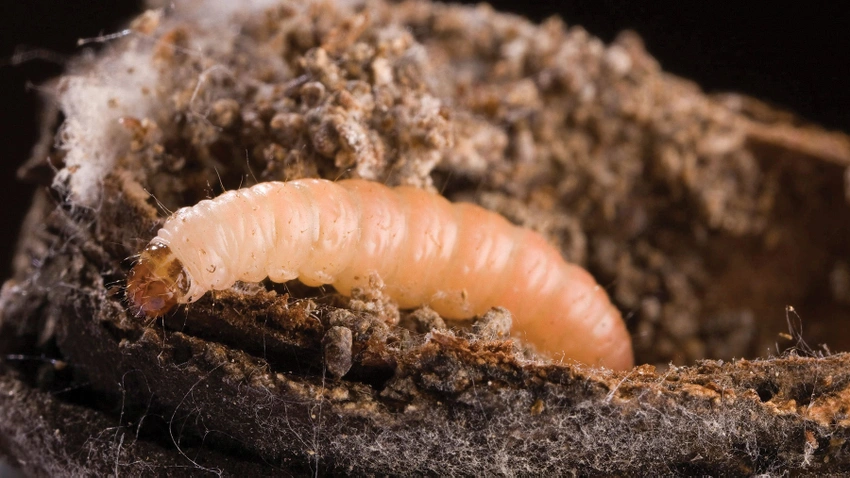
The picture is becoming clearer as to the extent of navel orangeworm damage in California almond orchards this year, and it’s not a pretty picture.
University of California Cooperative Extension farm advisor Franz Niederholzer, an orchard systems expert involved with tree nuts and navel orangeworms, is finding “massive losses” in at least four counties due to a major infestation.
“The picture is not yet totally clear, but NOW damage has been heavy, particularly in the Western Sacramento Valley in Glenn, Colusa, Yolo, and into Sutter counties," he says. "These places were hard hit by frost and freeze that virtually wiped out some growers. There was no crop. There was no money for sanitation, removing old nuts, and that signaled a massive ‘stop on by’ invitation to the navelworm population.”
They responded in large numbers.
“This may be the worst worm damage, historically, in the last 20 years,” Niederholzer says, “topping that of other 21st century NOW episodes. Part of the story centers on economics, specifically because cost of clean-up produced limited (or lack of) sanitation area wide that encouraged a huge pest population…one you can’t spray your way out of because of its size.”
Although it’s still early in the season to predict its final outcome, “Early season reject numbers from one large area processor shows damage levels more than double that of 2022 in those counties, Colusa and Yolo in particular because it got so cold there. And it was a late, wet year on top of that.
“And this year’s damage lays right over the top of last year’s devastating freeze damage. Economically, there is a consistency that the economics of the tree nut business being what it is, NOW populations were higher this year as growers weren’t able to afford proper sanitation, mating disruption, or multiple sprays. It was the perfect storm.”
Orchards devastated
Niederholzer’s latest observation is consistent with what industry professionals have been telling Western Farm Press all fall – that this year’s NOW infestation has devastated orchards. Mel Machado, vice president of member relations for Blue Diamond Growers, said in September that almond reject levels this season were significant and widespread.
Lack of sanitation ahead of almond bloom was one of the deciding factors in NOW damage, Machado said. A backlog in orchard removals also enabled moths to multiply.
The current economics of the tree nut business being what it is, coming off of last year’s bad crop, lots of ‘should do’ items got postponed or cancelled, Niederholzer says.
Have things progressed beyond a turning point or can corrective measures be taken over coming months to minimize damage and destruction so this doesn’t happen again next year?
“Growers can reduce the population, the numbers that will go into next year, if they participate in widespread sanitation, removing mummy nut worm habitat from the orchard,” he says. “Going into next year, the numbers could be reduced by proper sanitation, removing the pest and its old nut habitat, resulting in some percentage of reduction.
“That wouldn’t mean we were rounding the corner to normalcy because the wild card is economics and it’s expensive to sanitize, especially if it’s not your own equipment,” he adds.
Bleak picture
“It’s too early to tell, but in past bad years a real effort was made to control the pest and reduce the damage in the following year. That helped and proved it could be done, but it’s really hard to do at a time when the economic picture is pretty bleak. Unfortunately, if you don’t sanitize and your neighbors don’t sanitize, you risk another damaging year and if you pass that window for cleanup, things line up the wrong way and you can’t turn back the clock and fix it beyond a certain point.”
Asked to rank the seriousness of this season’s NOW damage on a scale of one to 10, Niederholzer says: “For some growers, it’s a nine or 10. Other growers with large, fairly isolated blocks, may have less damage, so it varies from grower to grower, but it’s true there are massive losses in some places.”Citing earlier NOW iterations, he noted that Blue Diamond in 2017 reported it cost $20 million to clean up that mess in their orchards and, “From what I can tell, this is much worse,” he says.
Source - https://www.farmprogress.com